



A pharmaceutical plant is not one workplace. The operator weighing potent powder in a containment suite, the technician filling vials on a sterile line, the cleaner disinfecting a Grade B room, and the warehouse worker handling solvent drums face different hazards — and the protective equipment that protects one of them can be useless, or even a contamination risk, for another. That is why PPE for pharmaceutical manufacturing should be chosen zone by zone, not from a single generic list. This guide explains what to specify for each zone, which standards to ask for, and how to buy in bulk without ending up with the wrong kit at the gowning bench.
Why Pharma PPE Is Different: Protect the Worker and the Product
Pharmaceutical PPE has two jobs at once: protect the worker from the product, and protect the product from the worker. Drug manufacturing in the United States is governed by the FDA’s Current Good Manufacturing Practice (CGMP) regulations — 21 CFR Parts 210 and 211 set the minimum requirements for the methods, facilities, and controls used in manufacturing, processing, and packing a drug product — see the FDA’s CGMP regulations overview. Under CGMP, the gowning and protective equipment used in production areas is part of the contamination-control system, not a personal choice. The same principle applies in Europe through EU GMP Annex 1, which sets the cleanroom grades and gowning requirements for sterile manufacturing. A hazard assessment that lists each zone, the exposure it creates, and the protection that matches it is the starting point — it is also what OSHA’s general PPE standard expects before any equipment is selected.
The second reason is the cleanroom itself. Production areas are classified by how clean the air must be — ISO 14644-1 classes, and EU GMP Grades A to D for sterile manufacturing — and every person entering a classified area is a contamination source. Skin flakes, hair, fibres from clothing, and microbes all have to be contained by the gowning system. That is why pharma PPE is specified by zone: what is right for a Grade D corridor is not enough for a Grade B filling room, and a glove that is fine for handling cartons in the warehouse is not acceptable for aseptic work. Buying one kit for the whole plant is how both worker protection and product quality fail.
Zones and Gowning: Match the Kit to the Grade
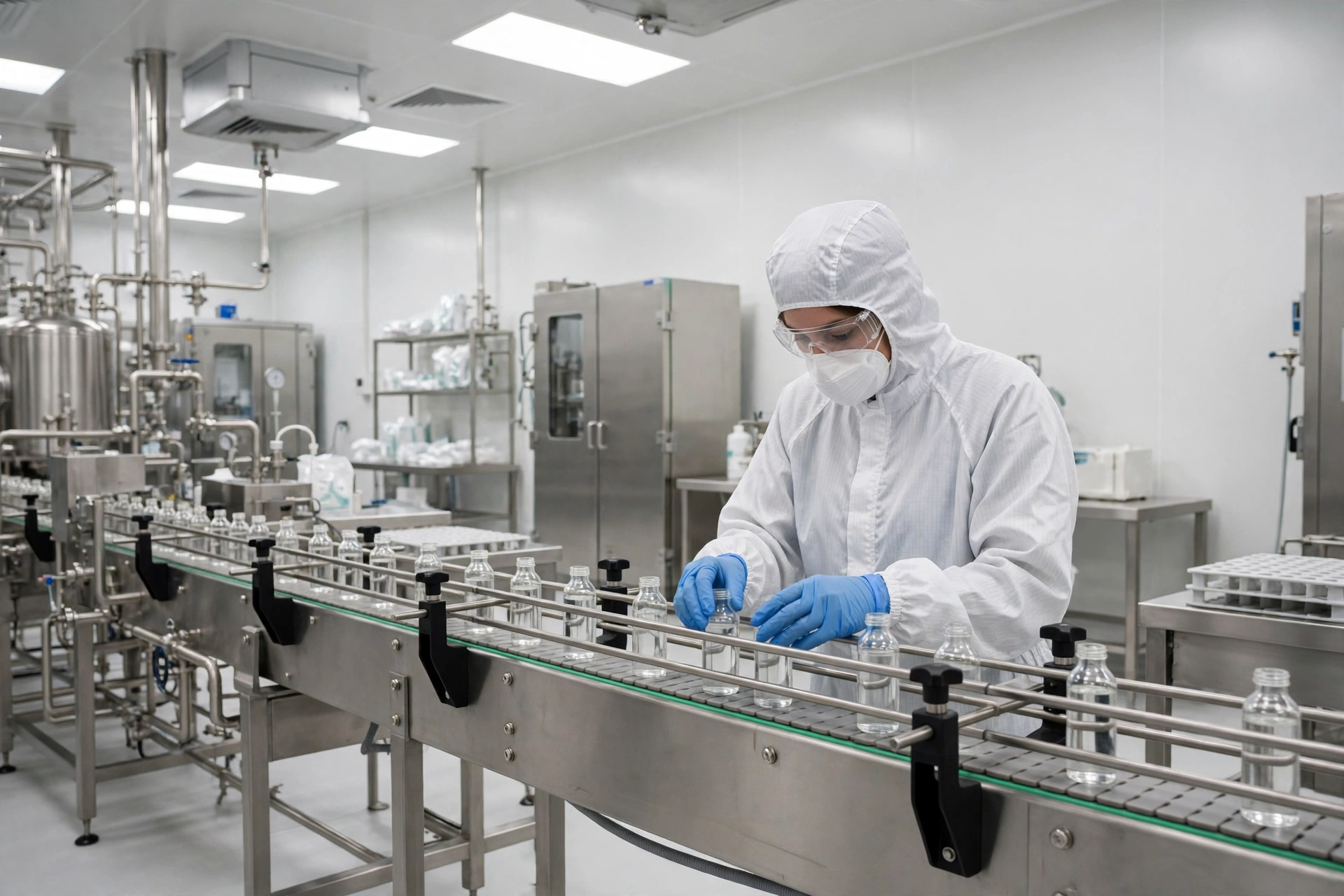
Start with the zone map. In a typical plant, the warehouse and secondary packaging areas need standard industrial PPE; the manufacturing and primary packaging areas need controlled gowning; and the sterile core — Grade A/B areas where open product is handled — needs full sterile gowning, usually with a gowning qualification for each operator. Coveralls for classified areas should be low-linting, with closed cuffs and collars, and they should be worn with a hood or cap, mask, and dedicated cleanroom footwear or shoe covers so that no skin or street clothing is exposed. Sterile areas need sterile, individually packed garments; non-sterile areas can use clean, laundered reusable coveralls or disposable coveralls, depending on the site’s validated procedure. Our guide to how to choose disposable coveralls sets out the material and barrier choices that matter here.
Gowning is a skill, not a formality. Operators should be trained and qualified in the site’s gowning sequence — the order in which each item is put on, how to avoid touching the outside of the garment, and how to remove it without contaminating skin or the next garment. A gowning failure is a contamination event even if nothing spills. When you buy coveralls, ask the supplier for the garment’s particle-shedding and lint data, the sterilisation method used for sterile packs, and the shelf life — and confirm that the garment’s sizing allows the operator to move, reach, and sit without the cuffs riding up or the hood slipping.
Gloves: The Most-Used Item in the Plant
Gloves are the most-used item in pharmaceutical manufacturing, and the choice is not just a size. Examination gloves are for routine handling and sampling; sterile gloves are required wherever open product or sterile surfaces are touched; and chemical gloves are needed wherever solvents, cleaning agents, or potent compounds are handled. The material matters: nitrile is the default for most plants because it resists a wide range of chemicals and avoids the latex allergy problem that affects a significant share of workers. For the full comparison, see our guide to nitrile vs latex vs vinyl gloves. Medical examination gloves in Europe should meet EN 455, which covers freedom from holes, physical properties, and biological evaluation; chemical resistance is a separate claim under EN ISO 374 and should be checked when gloves are used for handling solvents, disinfectants, or potent compounds.
For potent compounds — highly active pharmaceutical ingredients and cytotoxic materials — double gloving with extended cuffs is standard practice in many facilities, and gloves should be changed between tasks, after contact with contaminated surfaces, and whenever they are torn. A glove with a hole is worse than no glove, because it gives a false sense of safety while the compound reaches the skin. Where the work involves solvents, the glove choice should follow permeation data for the specific chemicals in use — our explainer on chemical glove breakthrough time sets out how to read it. A glove that holds for 30 minutes against one solvent is not the same as one that holds for a full shift against another, and a glove that resists the bulk solvent may fail against the cleaning agent used after it.
Respiratory and Eye Protection: Powders, Vapours, and Splash
Powder handling is the respiratory risk in pharma: weighing, dispensing, and milling active ingredients can generate airborne dust, and potent compounds have very low occupational exposure limits. Where containment — isolators, downflow booths, and closed transfer — cannot fully control the exposure, respiratory protection is the backstop. A surgical mask is not a respirator: it does not seal to the face and does not filter inhaled air to a certified level. For powder work, specify a properly fitted respirator — FFP2 or FFP3 in Europe, N95 or higher in the US — and our guide to N95 vs FFP2 vs FFP3 respirator ratings explains what each class guarantees. Fit matters as much as the filter, so fit testing for every wearer is part of the programme — see our guide to respirator fit testing. For solvent vapours, a half mask with the correct gas filter is the right tool, not a dust respirator.
Eye protection should be sealed goggles rather than open safety glasses wherever powder, liquid splash, or chemical vapour can reach the face — and in a pharma plant, that covers most production and cleaning tasks. EN 166 markings tell you whether a lens is rated for dust, liquid splash, and impact. Anti-fog coatings matter in warm, humid production areas and under a hood, where a fogged lens gets pushed up and leaves the eyes unprotected. Where hazardous drugs are handled, eye protection is part of the same kit as double gloves and a gown — the US Pharmacopeia’s chapter on handling hazardous drugs sets the expectation, and the kit should be treated as one system rather than separate items.
Footwear, Cleaning, and Chemical Handling
Footwear in pharma splits by zone. In classified areas, dedicated cleanroom shoes or shoe covers keep the floor clean and the operator’s street shoes out of the controlled environment; in the warehouse and plant rooms, safety footwear to EN ISO 20345 with toe protection and slip-resistant soles is the baseline, and our guide to EN ISO 20345 safety footwear explains the S1–S7 ratings. Where solvents and cleaning agents are handled — drum decanting, spill clean-up, CIP chemical handling — the glove and apron choice should follow the chemical’s safety data sheet, with breakthrough-time data for the specific products in use. Store chemical PPE separately from cleanroom gowning, and never carry a chemical glove into a sterile area: cross-contamination runs both ways.
Cleaning and disinfection deserve their own line in the PPE plan. The disinfectants used in cleanrooms — alcohols, oxidisers, sporicides — are themselves chemical hazards, and the staff who apply them need gloves, goggles, and sometimes respiratory protection matched to the product, not just the production kit. Rotate disinfectants as the site’s procedure requires, and check that the glove material resists each product in the rotation.
Buying in Bulk: What to Check Before You Order
Pharma PPE is usually bought in volume — a quarter’s worth of gloves, coveralls, and masks for a whole plant. That makes the supplier check more important, not less. Before placing a bulk order, verify the certificates behind the products: EN 455 for examination gloves, EN ISO 374 for chemical gloves, EN 166 for eyewear, EN ISO 20345 for footwear. Ask for the EU declaration of conformity and the test reports, and check them against the model you are actually buying — a certificate for one model does not cover another. For sterile items, ask for the sterilisation validation and the shelf life, and confirm that the packaging survives your storage conditions. Our guide on how to verify PPE certifications before a bulk order walks through the checks step by step.
Size mix is the detail most bulk orders get wrong. A plant is not one size, and gloves, coveralls, and respirators that do not fit are not worn — or are worn badly. Order a size range based on a real headcount, not a guess, and include a small trial quantity of any new product before committing to the quarter’s volume. Check the supplier’s lead time and re-order reliability too: running out of sterile gloves mid-batch is not a problem you want to solve at retail prices. For the wider supplier questions — MOQ, sampling, audits — see how to choose a PPE manufacturer and what PPE distributors look for in a manufacturer partner.
Fit, Training, and Storage
Even the right equipment fails if it is not fitted and used correctly. Respirators need fit testing; gloves need the right size so operators keep dexterity on instruments and vials; coveralls need to be the right length so cuffs stay closed during a full shift. A short fitting session before a new product goes live — with the actual products, on the actual operators — pays for itself in compliance. Training should be practical and tied to the site’s procedures: the gowning sequence, how to put on and take off chemical PPE without contaminating skin, how to check a respirator seal, and when to change a glove. Storage matters as well: keep PPE away from sunlight, heat, and chemicals, keep sterile packs intact until use, and keep chemical PPE separate from cleanroom gowning. A sterile glove pack that has been crushed in a crowded store is not sterile, and a respirator left open in a dusty warehouse is already spent. See our guide to PPE inspection and replacement schedules for the routine that keeps the kit honest.
Related Guides
For the standards behind the choices in this guide, read Nitrile vs Latex vs Vinyl Gloves: How to Choose, Disposable Coveralls: How to Choose the Right Type, and PPE for Healthcare Workers: A Buyer’s Guide.
Get a Quote for Your Plant
Aceppe supplies pharmaceutical manufacturing PPE in bulk — cleanroom coveralls, examination and chemical gloves, respirators, eye protection, and safety footwear — built to the standards above and shipped worldwide. Tell us the zones in your plant, the compounds and solvents you handle, and your headcount, and we will put together a zone-matched kit with samples before you commit. Free samples are available — the buyer covers shipping. Contact us for a quote today.


