



Protective clothing looks simple on a purchase order — a garment type, a size run, a quantity — but it fails in complicated ways: wrong garment for the hazard, sizes that do not fit the workforce, fabric that does not survive laundering, and suppliers who cannot repeat the first delivery. The checklist below is the one to run before you commit to protective clothing suppliers, whether you are buying coveralls, jackets, aprons, high-visibility garments, or chemical and heat protective apparel. Work through it in order, and you will filter out most bad suppliers before they cost you anything.
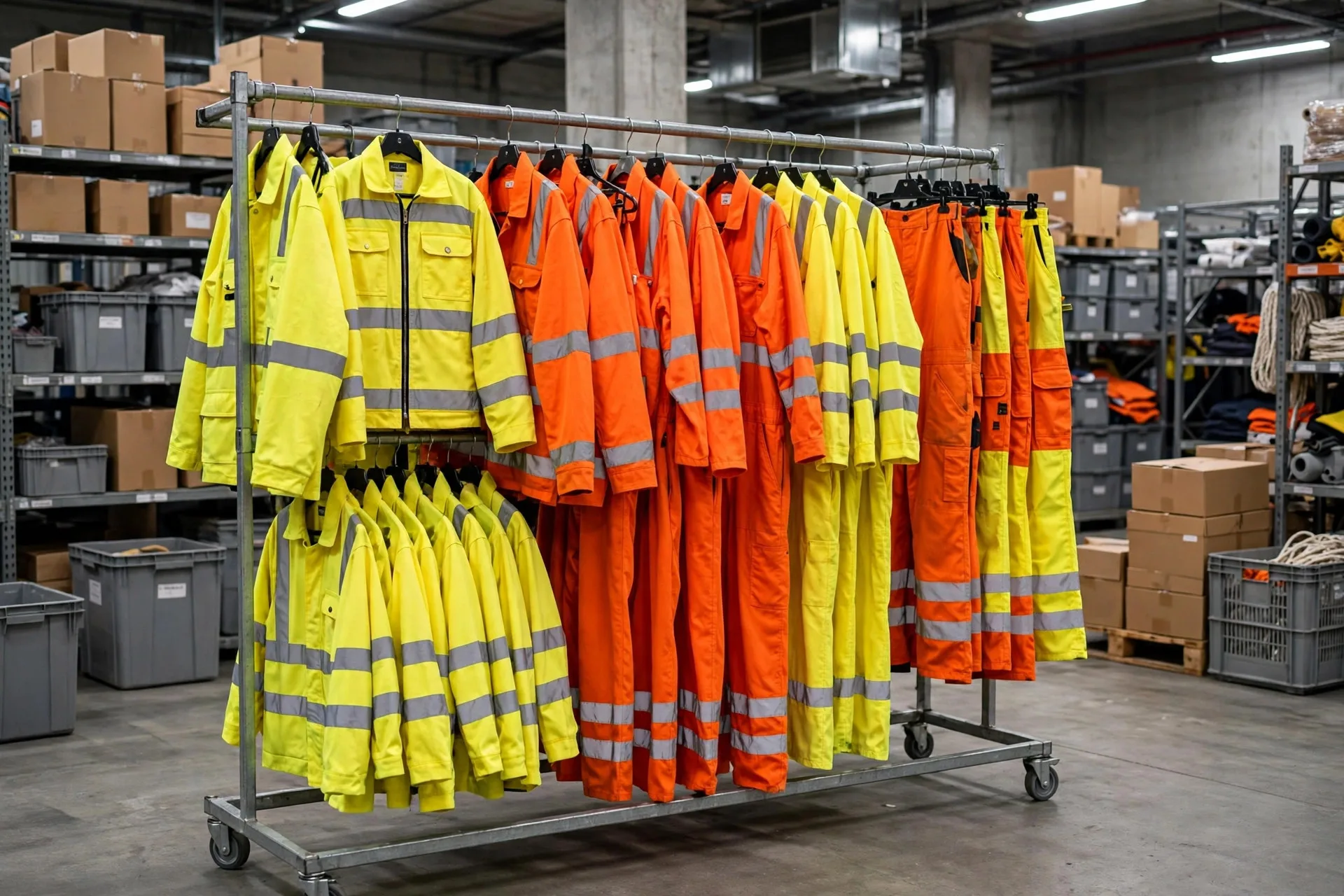
First, Know What Kind of Supplier You Need
Protective clothing reaches you through different kinds of suppliers, and the right kind depends on your order. A manufacturer makes garments and usually controls fabric sourcing and construction, which matters for custom sizing, specific materials, and consistent repeat runs. A distributor holds stock across brands and can supply mixed garments quickly, which matters when you need speed and variety more than customization. Some suppliers sit between the two, cutting and finishing garments from bought-in fabric. Ask each candidate which model they operate and which parts of the garment they actually control. A supplier that is vague about its own role will be vaguer about your order.
Match the model to the job. If every worker needs the same standard garment in standard sizes, a stock-holding distributor may serve you fastest. If you need extended sizes, custom colours, company branding, or a fabric specification your site has standardized on, a manufacturer or finisher with direct control is the safer choice. The mistake is choosing by price alone and discovering the model mismatch later — for example, a distributor that cannot repeat a custom colour, or a manufacturer whose lead process does not suit an urgent one-off need.
Match the Garment to the Hazard and the Task
Start from a risk assessment, not a catalogue page. List the hazards the garment must address — liquid splash, dust, heat, flame, visibility, static, or a combination — and the tasks it must survive: reaching, kneeling, climbing, working outdoors, working near moving parts. Then check the garment against that list, feature by feature: coverage for the exposed areas, closures that stay closed during the task, compatibility with other PPE worn at the same time, and freedom of movement for the actual work. A garment that protects on paper but restricts the task will be worn open, modified, or abandoned, and all three defeat its purpose.
Ask the supplier to explain the match in the same terms. A good supplier will ask about your hazards and tasks before recommending a garment, and will say plainly when a garment does not fit a hazard rather than stretching a claim. Be cautious of suppliers who recommend from a single product line for every hazard, or who cannot explain why one construction suits your task better than another. The explanation is part of the product: if they cannot explain it before the sale, they cannot support it after delivery.
Sizing and Fit: The Most Skipped Check
Protective clothing fails on fit more than on fabric. A coverall that is too short rides up and exposes skin and underlayers; one that is too long trips and snags; sleeves that do not reach the wrist leave a gap exactly where arms pass over work. Before ordering, ask for the supplier’s size chart for that exact garment — size labels are not standardized across suppliers — and run a fit trial across your real workforce, including tall, short, and larger wearers. Record sizes per person: a size register turns reordering into arithmetic and stops the slow drift toward a box of mediums that fits nobody well.
Between sizes, the general rule is to size up for garments that must close and cover: a slightly generous garment still covers and closes, while a tight one gets worn open. Then check the consequences of sizing up — cuffs, hems, and mobility — in the actual working posture, seated and reaching, not just standing. Fit trials should include the other PPE worn with the garment, because a coverall that fits alone may bind with a harness, respirator, or tool belt added.
Fabric and Construction Questions Worth Asking
You do not need to become a textile expert, but you should ask four construction questions about any protective garment. First, what is the fabric, and what does it do — what it resists, what it breathes like, and how it behaves after repeated laundering? Second, how are the seams made, and are they suited to the hazard — stitched, bound, or sealed, and what happens at stress points? Third, how do closures work under task conditions — zips, snaps, storm flaps — and can they be operated with the gloves the job requires? Fourth, what does the garment look like after use: how is it cleaned, how often can it be laundered before performance changes, and how do you tell when it is time to retire it? Suppliers with real product knowledge answer these directly; suppliers without it retreat to brochure language.
Laundering deserves its own question, because it is where many garments quietly degrade. Ask for laundering guidance specific to the garment — method, limits, and what to avoid — and ask how performance is affected over repeated cycles. If the supplier cannot describe the laundering regime, you cannot write a care procedure for your workforce, and the garment’s real service life becomes a guess. For reusable garments, the care procedure is part of the purchase, not an afterthought.
Compliance Documents: Ask, Don’t Assume
Performance claims need documentation, and documentation should be available on request for the garments you buy. Ask what documents support the claims made for a specific garment, and whether they can be provided with the shipment or on request. You do not need to collect every possible paper; you need the documents that match the hazards you are protecting against, and a supplier who can explain which documents apply to which garment without confusion. Vague, inconsistent, or shifting answers about documentation are information about the supplier, not a paperwork detail, and they should weigh heavily in your decision.
In the United States, OSHA’s general PPE standard (29 CFR 1910.132) requires employers to assess workplace hazards and provide appropriate PPE.
Keep your own file per garment: the specification you ordered against, the sample approval record, the compliance documents received, and the laundering guidance. When a question arises later — an audit, an incident review, a change of supplier — that file is what lets you answer from evidence instead of memory. Suppliers who make documentation easy are making your whole programme easier; factor that into the choice, not just the unit price.
Wear Trials: Judge Garments on Workers, Not on Desks
Desk inspection catches appearance and dimensions. It does not catch the problems that make workers stop wearing a garment: heat buildup, restricted reach, chafing seams, closures that fail with gloved hands, or a fit that works standing but fails kneeling. Run a wear trial before committing: put the garment on the people who will wear it, for the tasks they actually do, and record fit, comfort over a full shift, function in the real environment, and every complaint, however small. Agree in advance who trials, what tasks, and what feedback you will collect, so the trial produces a decision rather than impressions.
Include the edges of your workforce in the trial, not just the average wearer. If the garment fails for tall workers, larger workers, or workers who wear additional PPE, you will discover it in the trial rather than after a bulk delivery. A trial that only covers the easiest cases is a demonstration, not a test.
Supply Reliability and Total Cost
A garment you cannot re-order is a garment you will replace twice. Before committing, discuss continuity: how replenishment works, how size assortments are handled on reorders, how the supplier communicates delays or changes, and what happens if a style is discontinued. Agree on change control in writing: no material, construction, or labelling change without your approval and, where performance is affected, a fresh sample. This matters more than any single delivery, because protective clothing is a repeating purchase, and the second order is where weak suppliers show themselves.
Finally, judge cost over the garment’s service life, not per unit alone. A cheaper garment that lasts half as long, needs more frequent replacement, or fails trials and gets abandoned is not cheaper. Compare durability, laundering life, replacement rate, and the cost of managing the programme — sizing, issue, inspection, retirement — alongside the purchase price. Suppliers who help you think in these terms are usually the ones whose garments survive that thinking.
Related Guides
- PPE Manufacturer — our full-range PPE manufacturing overview, including bulk supply and custom production.
- Anti-Static Workwear Guide — how electrostatic-safe garments fit into a broader protective clothing programme.
Next Step: Request a Sample Kit
The fastest way through this checklist is a sample on your workforce. Request a free sample kit through the contact form — free samples, you only cover shipping — and run the fit and wear trials above before committing to volume. A supplier worth a bulk order will welcome that sequence, because it is the same sequence that protects both sides once supply starts.


