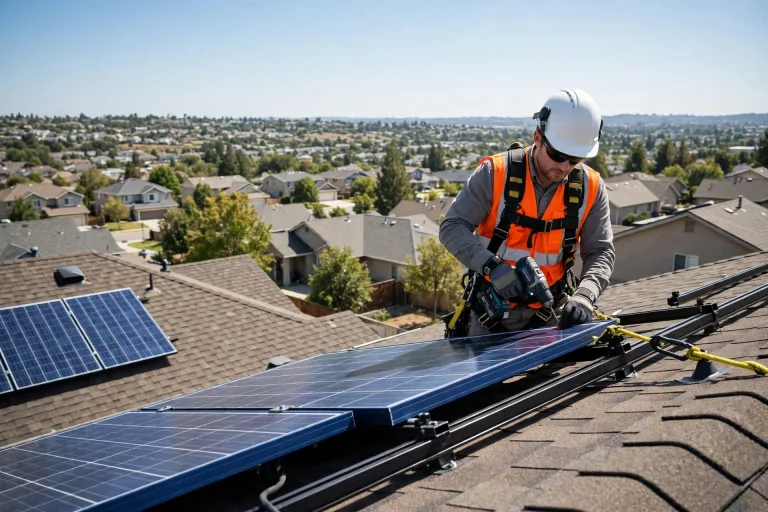
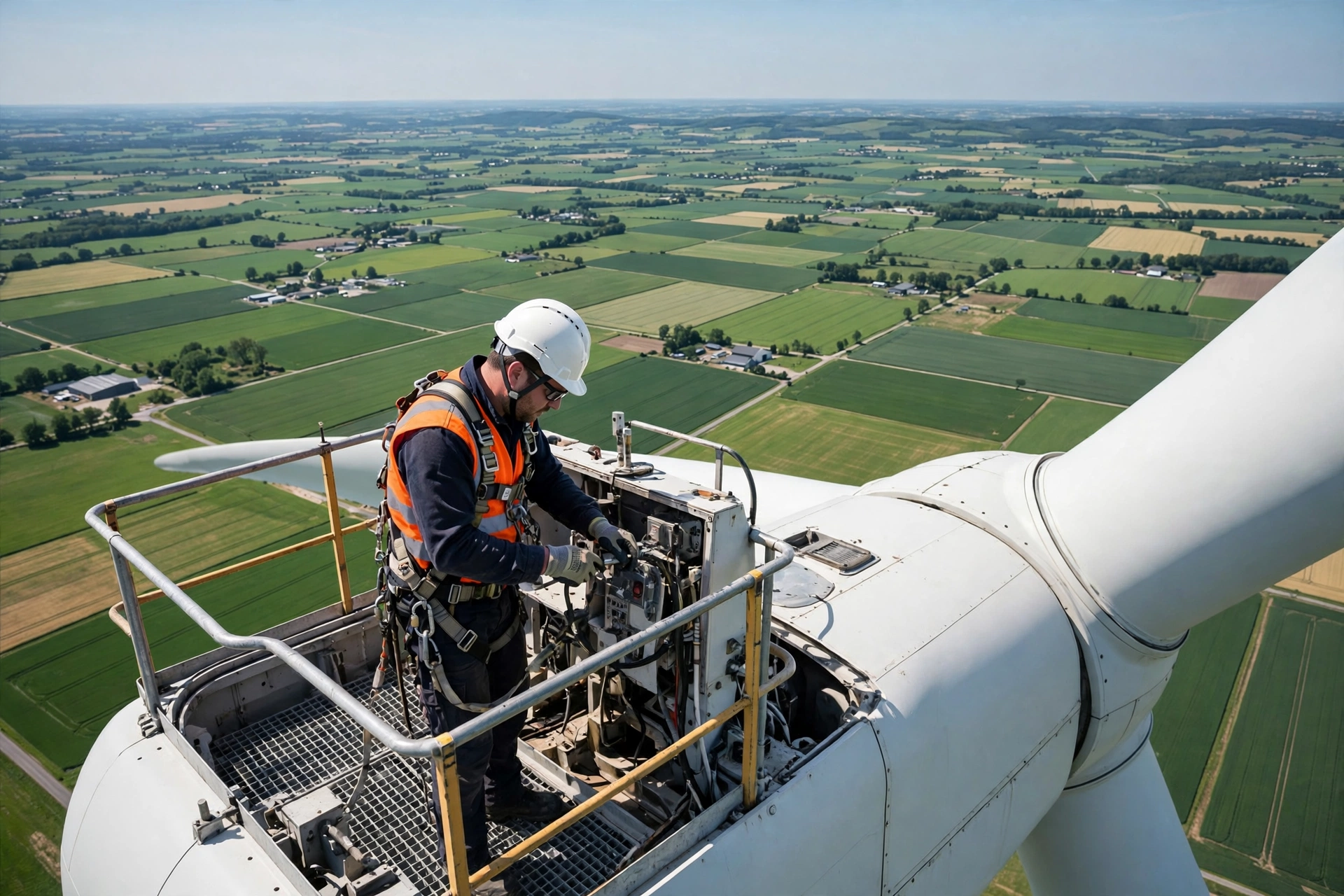
A wind turbine technician works in three hazard zones at once: a tower 80 metres or more above the ground, a live electrical system running from 690 volts at the generator to medium voltage in the collection circuit, and open weather that can turn from calm to a gale in an hour. The kit that is right for a blade inspection can be wrong — or dangerous — inside the nacelle beside an energised converter or on a ladder in a sleet shower. Buying PPE for wind turbine technicians therefore starts with the task, not the catalogue.
This guide walks through the kit task by task, explains which standards govern each item, and closes with the buying checks that keep a whole crew consistent: sizing, inspection, replacement, and certification verification.
Start With the Hazard Assessment
Under OSHA’s general PPE rule, 29 CFR 1910.132, the employer must assess the hazards of each work area, select the PPE that controls them, and make sure it is used and maintained. On a wind farm the assessment has to cover the tower, the electrical system, and the weather together: a wet or icy ladder changes the fall plan, a string voltage changes the glove class, and a summer heatwave inside a closed nacelle changes the work-rest schedule. Our PPE hazard assessment guide explains the process step by step, from walking the site to writing the specification.
Wind turbine work also falls under OSHA’s electric power standard, 29 CFR 1910.269, which covers the generation, transmission, and distribution of electric power, including the work practices and protective equipment for employees working on or near energised parts. A practical way to run the assessment is to map the job into tasks and list the dominant hazard of each: falls from the tower, ladder, and nacelle during access and blade work, electric shock and arc flash during switching and converter work, cuts and abrasions from blades, bolts, and cable trays, eye injuries from grinding and drilling, hearing damage from the drivetrain and yaw motors, and heat or cold stress from long shifts inside a metal nacelle. One technician may cross all six in a single day, so the kit has to be layered — a base kit worn all day, plus task-specific items added at the location.
The Task-by-Task Kit
Fall protection at height
Falls are the first hazard on any turbine job, because almost every task starts with a climb. OSHA’s walking-working surfaces rule, 29 CFR 1910.28, requires fall protection on unprotected sides and edges, and the criteria for the systems themselves are set out in 29 CFR 1926.502. In practice that means a full-body harness, a shock-absorbing lanyard or self-retracting lifeline, and a ladder safety system or vertical lifeline for the climb, plus a rescue plan that can get a suspended worker down — suspension trauma can become life-threatening in well under half an hour, so a rescue kit and a trained team are part of the PPE system, not an afterthought. Inspect the webbing, stitching, and connectors before every climb, and retire any harness that has arrested a fall immediately. Our fall protection harness inspection guide explains what to check and when.
Electrical protection and arc flash
Inside the nacelle, technicians work beside busbars, converters, and switchgear that can expose them to shock and arc flash. Insulating gloves are governed by 29 CFR 1910.137: the glove class must match the highest voltage the worker can touch, the gloves must be air-tested before each use and electrically tested on schedule, and a leather protector must be worn over them to guard against cuts and punctures that would defeat the insulation. A Class 0 glove is rated for use up to 1,000 volts AC, which covers the 690-volt generator circuits common in modern turbines, while higher-voltage collection work needs a higher class and a different procedure altogether. For arc flash, the clothing must be arc-rated to the incident energy of the task — our arc flash PPE categories guide explains the rating system and what each category actually protects. The common mistake is buying arc-rated clothing in one size for the whole crew: it only protects when it fits, and a jacket that rides up leaves skin exposed exactly where the arc hits.
Hands: cuts, grip, and dexterity
Most of a turbine technician’s day is hands-on: torqueing bolts, handling cable, cleaning blade surfaces, and climbing. Cut-resistant gloves rated under ANSI/ISEA 105 are the everyday choice, with the cut level matched to the task — a higher level usually means a thicker, stiffer glove, so the crew should test the shortlist on a real bolt-up before ordering for everyone. Keep the insulating gloves separate from the mechanical gloves and never use a cut glove as an electrical glove: a cut through an insulating glove is a shock path, not a scratch. Measure hands and order across the size range — a glove that is too tight tears and fatigues the hand, one that is too loose catches on rails and loses grip on a ladder rung. Our safety glove size chart shows how to measure correctly.
Head, eyes, ears, and feet
A hard hat to EN 397 is the base for head protection, and on turbine work it should have a chin strap — a helmet that falls off during a climb protects no one, and the crew below is the one at risk from dropped objects. Eye protection to EN 166 is needed for grinding, drilling, and any work under a component that can shed debris, and sealed goggles are the right call for blade repair dust. Hearing protection is governed by 29 CFR 1910.95, which sets the action level at 85 dBA as an 8-hour time-weighted average: nacelle drivetrain noise, yaw motors, and impact tools all add up over a long shift, so earplugs or earmuffs should be part of the base kit, not something fetched when the noise starts. Our hearing protection guide explains SNR and NRR ratings. Footwear should meet EN ISO 20345, with a puncture-resistant sole for the turbine base and yard, and a sole that grips a wet steel ladder rung — smooth soles and turbine ladders are a bad combination.
Respiratory protection and weather
Blade repair and composite work release dust that needs respiratory protection under 29 CFR 1910.134, which requires a written programme, medical evaluation, and fit testing — a respirator that leaks at the seal protects no one. Our respirator ratings guide explains what N95, FFP2, and FFP3 actually filter, and our fit testing guide explains why the seal matters more than the filter class. Weather is the other respiratory and comfort factor: a nacelle in summer is a metal box in full sun, and cold, wind, and rain at the top of a tower cut concentration and grip. Hi-vis clothing to EN ISO 20471 keeps technicians visible to the ground crew and to vehicles on the access roads, and our heat stress and PPE guide covers the work-rest schedules that keep a crew working safely in the heat.
Buying for a Whole Crew
Size it properly. A glove that is too tight tears and fatigues the hand; one that is too loose catches on rails and loses grip on a ladder rung. Measure hands and order across the size range, and do the same for harnesses and helmets, where a poor fit leaves gaps and loose straps. A crew that shares one size of everything ends up with kit that protects no one properly.
Plan inspection and replacement from day one. Cut-resistant gloves wear out in weeks on a busy crew, harnesses on a fixed schedule after any fall or visible damage, hard hats after any impact, insulating gloves on their electrical test cycle, and hi-vis when its fluorescence fades. A written inspection and replacement schedule keeps the fleet protective instead of decorative — see our PPE inspection and replacement guide. Ask the supplier for the manufacturer’s retirement instructions in writing before the first order, and confirm that identical models will still be available in a year: a fleet of mixed, incompatible models is far harder to inspect than a standardised one.
Verify the certificates before the bulk order. A glove claim is only as good as its test report, and a wrong claim is invisible until it fails. Ask for the certificate and the test report behind it, check the model number matches the product you are buying, and confirm the expiry date — our PPE certification verification guide walks through the checks. Judge the supplier, not just the price: consistent sizing across batches, a stable model range, honest lead times, and a willingness to supply samples are worth more than a small unit-price saving. Our guide to choosing a PPE manufacturer and our protective clothing suppliers checklist set out the questions that separate a reliable partner from a one-off shipment. For crews that also work on solar sites, our solar installation workers’ guide covers the shared kit, and our power utility workers’ guide covers the electrical side in more depth.
Related Guides
For the details behind this guide, see our PPE hazard assessment guide, our fall protection harness inspection guide, and our arc flash PPE categories guide.
Wind turbine work rewards buyers who specify per task and test before they commit. If you are putting together a kit for your crew — cut-resistant gloves, insulating gloves, fall protection, helmets, and eye protection in bulk — contact us with your crew size and job types. We supply free samples so your crew can wear-test the shortlist on your site before you order, and you cover only the shipping.