


Why TIG Welding Demands a Different Glove
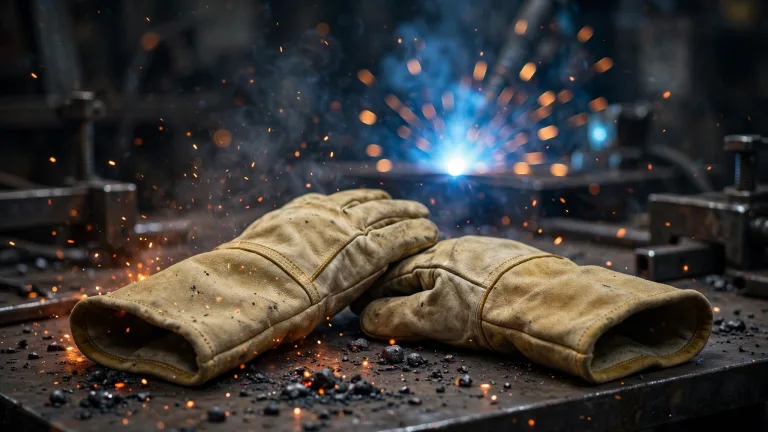
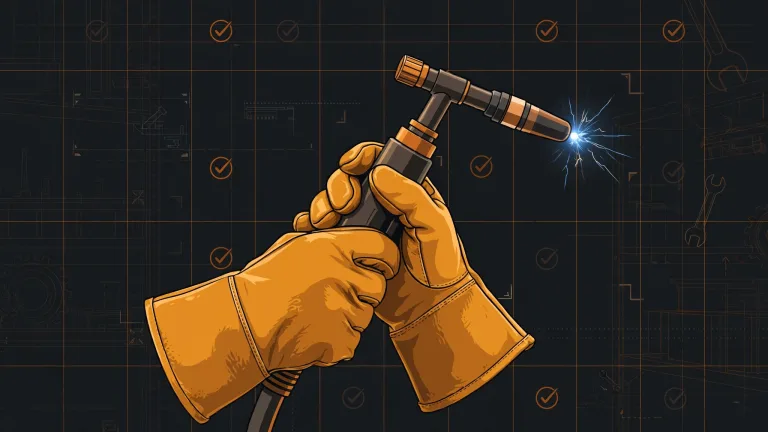
TIG (GTAW) welding — the process standardized by the American Welding Society (AWS) — is the precision end of the welding spectrum. You are feeding filler wire by hand, manipulating a torch with fingertip control, and working inches from an arc that runs far hotter than what MIG or stick welding throws at your hands. The glove that protects a stick welder will, in most cases, feel like an oven mitt on a TIG torch.
That is why TIG welding gloves are built differently: thinner, softer leather on the palm and back, a snug fit that follows the hand, and just enough cuff to block spatter without killing wrist mobility. Buy the wrong pair and you get one of two failure modes — a glove so bulky you cannot feed wire cleanly, or a glove so thin it cooks your knuckles on the first long bead.
This guide walks through the five things that actually matter when buying TIG welding gloves in 2026, so you can match the glove to the work instead of learning the hard way.
On the compliance side, OSHA’s Welding, Cutting, and Brazing overview is the authoritative reference for the heat, spatter, and fume hazards these gloves protect against.
1. Leather Type: Palm and Back Matter More Than You Think
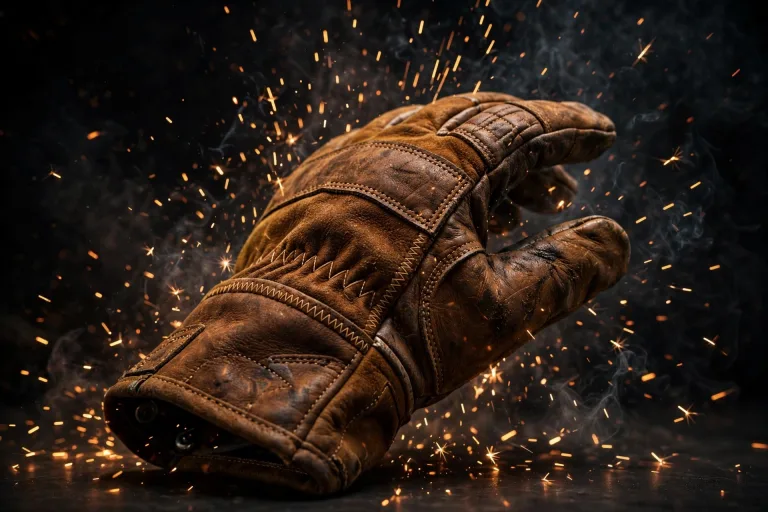
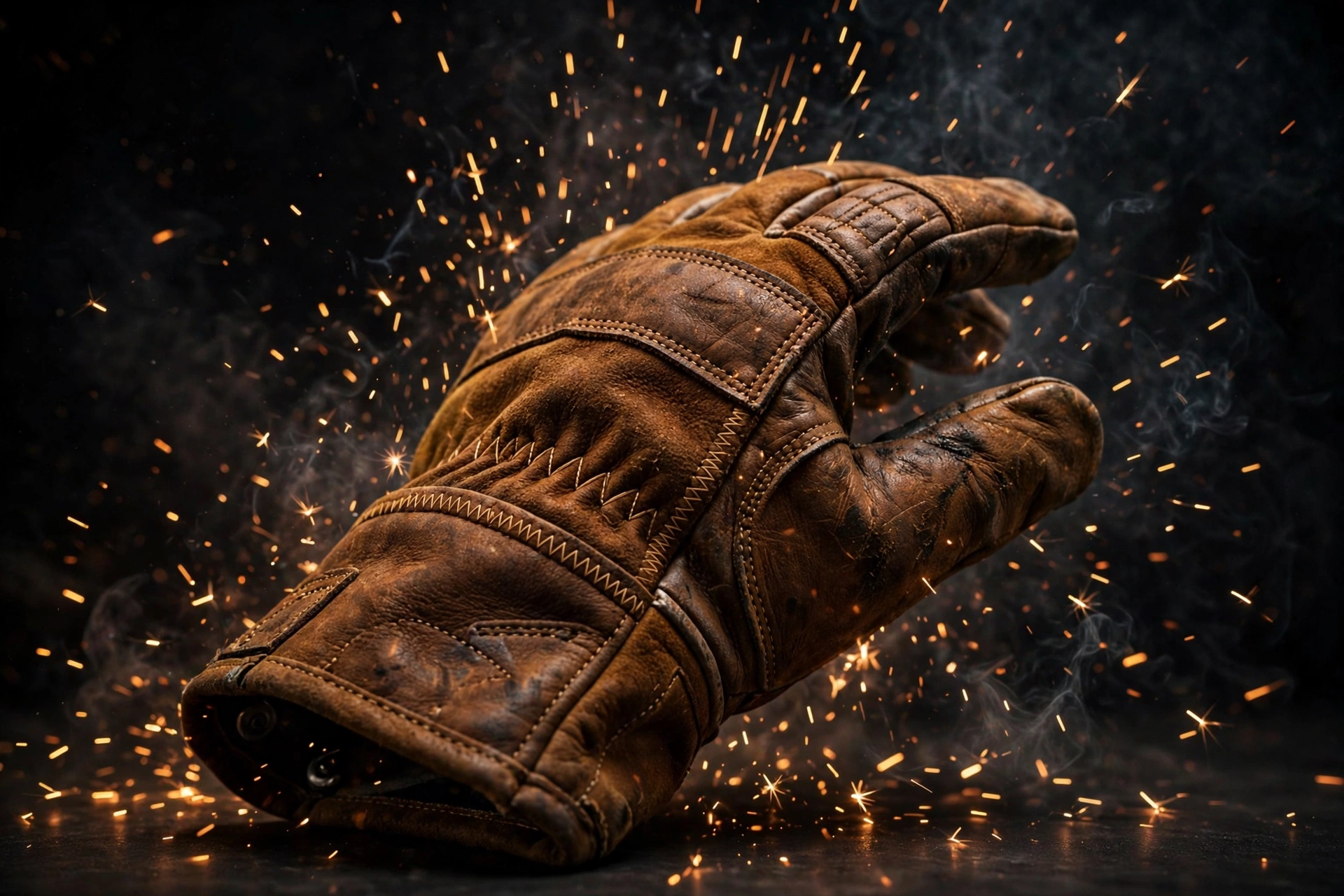
The single biggest difference between a good TIG glove and a mediocre one is the leather on the palm and back of the hand.
Sheepskin is the gold standard for TIG work. It is naturally soft and supple, which means the glove breaks in fast and moves with your fingers instead of fighting them. Good sheepskin is also inherently flame and heat resistant, giving you meaningful protection without the stiffness of thicker hides. If your work is mostly precision TIG — thin stainless, aluminum, root passes on pipe — sheepskin palms should be at the top of your shortlist.
Goatskin sits one step up in abrasion resistance while staying reasonably flexible. It is a solid compromise if you split time between TIG and general fabrication, or if your gloves take a beating from handling rough stock between welds.
Cowhide (split or grain) is the toughest of the three but also the stiffest. It belongs on MIG and stick gloves, and on cuffs — more on that below — rather than on the working surfaces of a TIG glove.
What to look for on the product page: the listing should name the leather used for the palm and back specifically, not just say “leather welding gloves.” Vague material descriptions are a red flag. Premium TIG gloves will call out sheepskin or goatskin construction explicitly.
2. Dexterity and Fit: The Seamless Index Finger Test
TIG welding lives in your index finger and thumb. You are pinching filler rod, rolling it between your fingers, and making micro-adjustments to torch angle — all while wearing leather. Any seam, bunching, or excess material in the index finger translates directly into sloppy wire feed.
Look for a seamless index finger design. Removing the seam from the most-used finger does two things: it eliminates a pressure point that causes fatigue over a long shift, and it removes the weakest link where threads typically fail first. It is one of the clearest quality markers separating purpose-built TIG gloves from generic “welding gloves” relabeled for TIG.
Fit matters just as much. A TIG glove should fit snugly with no loose material at the fingertips — if you can pinch more than a few millimeters of empty leather at the tip of your index finger, the glove is too big and your wire feed will suffer. Most quality TIG gloves come in at least two sizes (commonly L and XL); measure your dominant hand and check the maker’s size chart rather than guessing. A glove that fits right on day one, in leather that is soft from the start, needs almost no break-in.
3. Cuff Length: Blocking Spatter and Radiant Heat
TIG is a low-spatter process compared to MIG or flux-core, which tempts some welders to grab short-cuff gloves. That is a mistake. Your wrists and forearms still sit in the radiant heat zone, and the occasional hot tack or repositioned workpiece does not care that TIG is “clean.”
A cuff in the 10–15 cm range hits the sweet spot: long enough to shield the wrist and lower forearm, short enough to stay out of the way when you rest your wrist on the workpiece for steady torch control. Split cowhide is the right material here — tougher and more spatter-resistant than the soft leather on the palm, and cheaper to replace in the wear equation since cuffs take incidental abuse.
Total glove length around 33–36 cm is typical for a well-proportioned TIG glove. If a product page lists the cuff length and overall length, that is a good sign the maker actually engineered the glove rather than cutting a generic pattern.
4. Stitching: The Hidden Failure Point
Ask any welder how their last pair of gloves died and the answer is usually the seams, not the leather. Standard cotton or polyester thread chars, weakens, and lets go under repeated heat exposure — often long before the leather itself is worn out.
Kevlar (aramid) stitching is the upgrade that extends glove life the most per dollar. Kevlar thread is inherently flame resistant and dramatically more tear-resistant than conventional thread, so seams hold through high-temperature cycles that would destroy ordinary stitching. When comparing two gloves at similar prices, the one with Kevlar-reinforced seams will almost always outlast the one without.
Check that the stitching is reinforced at all seams, not just showcased on one or two. Stress points — between the thumb and index finger, along the cuff binding — are where cheap gloves unravel first.
5. Versatility and Sizing: One Glove for the Whole Bay
Very few shops do TIG exclusively. If your week also includes MIG, MAG, or CO2 gas-shielded work, a TIG glove with genuine heat resistance earns its keep across processes instead of sitting in the locker while you reach for a second pair.
The right TIG glove can cover light-to-medium MIG and tack work comfortably — the limitation runs the other direction, since a heavy MIG glove will never give you TIG-level dexterity. If cut protection matters in your shop too, see our ANSI/ISEA 105 vs EN 388 comparison. So when a glove is rated for TIG/MIG/MAG/CO2, read it as a genuinely versatile shop glove, not marketing fluff — provided the leather and stitching specs back it up.
On sizing: L and XL cover the large majority of adult male hands in welding. If you are between sizes, size down for TIG — a slightly snug glove stretches, while a loose glove never tightens up.
Quick-Buy Checklist
- Leather: sheepskin or goatskin palm and back; cowhide reserved for the cuff
- Dexterity: seamless index finger, snug fit, minimal fingertip excess
- Cuff: 10–15 cm split cowhide; ~35 cm total length
- Stitching: Kevlar/aramid thread at all seams
- Range: rated for TIG plus MIG/MAG/CO2 for shop versatility; L/XL sizing
A Pair That Checks Every Box: AceppePro TIG Welding Gloves
If you would rather skip the comparison spreadsheets, here is a pair built exactly to the spec above. The AceppePro TIG Welding Gloves use premium soft sheepskin across the palm and back — flame and heat resistant, supple from the first wear, with the dexterity precision TIG work demands. The 13 cm split cowhide cuff (35 cm total length) blocks spatter and radiant heat from wrist to forearm. The seamless index finger makes feeding fine wire and running small TIG torches noticeably easier, and every seam is reinforced with DuPont Kevlar fire-resistant thread for long service life in high-temperature environments. They are designed for TIG, MIG, MAG, and CO2 gas-shielded welding, and come in L and XL.
Watch the gloves up close:
They are available now on Amazon US:
Buy AceppePro TIG Welding Gloves on Amazon
Good gloves do not make you a better welder — but the wrong gloves will absolutely make you a worse one. Buy for the work you actually do, check the five points above, and your hands will thank you at the end of every shift.