



Heat is the hazard that makes every other hazard harder. A worker in a foundry, on a roof in July, or in a glass plant is dealing with the same problem: the body has to shed the heat it produces, plus the heat the environment adds, and personal protective equipment — the very gear that keeps the worker safe — makes shedding that heat harder. Coveralls block airflow, respirators add breathing resistance, gloves trap sweat, and helmets hold heat in. The answer is never to take the PPE off. It is to manage the heat around the PPE, so the protection stays on and the worker stays safe. This guide explains how heat stress develops, which PPE adds the most heat load, and the controls that keep a crew working through hot conditions.
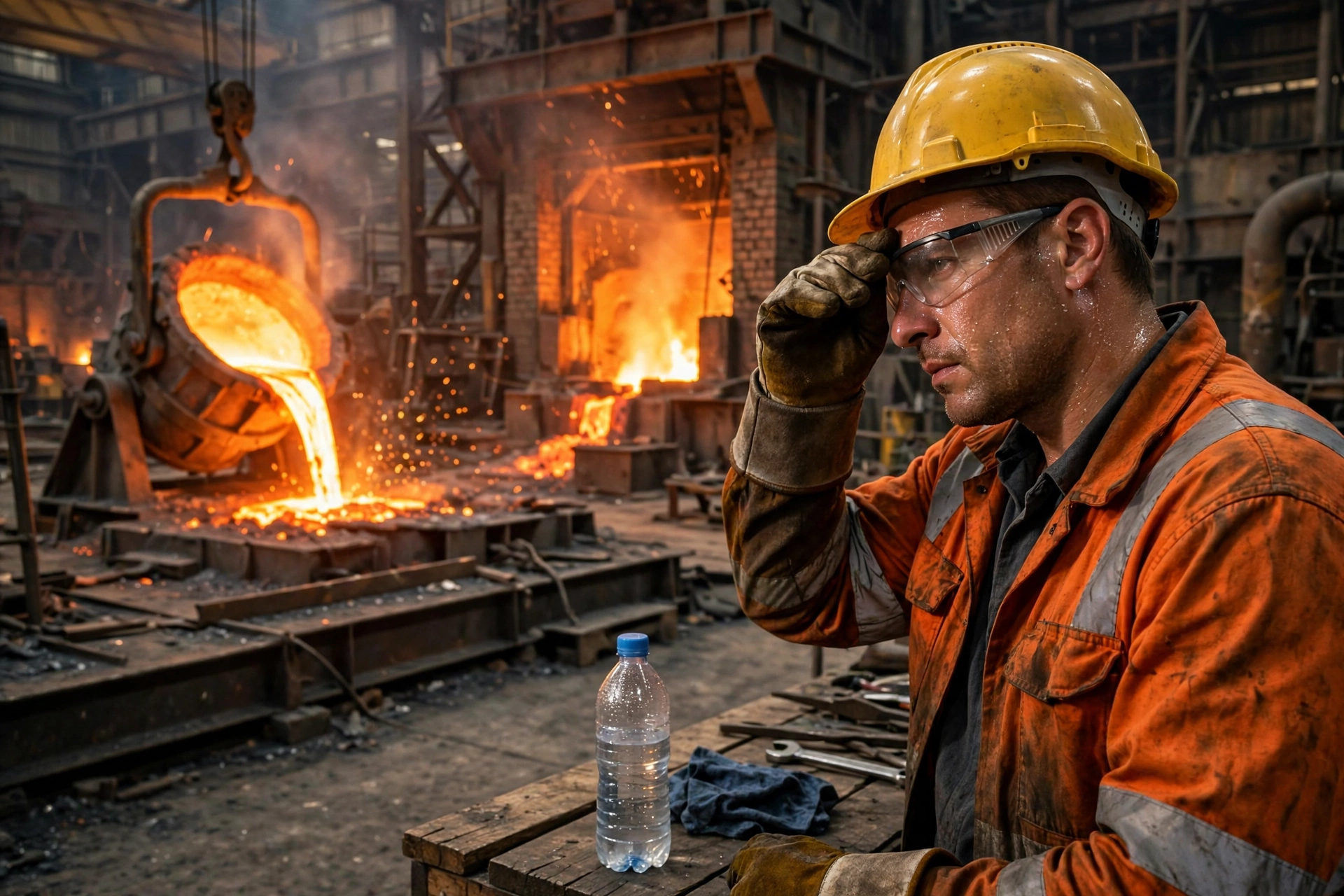
How Heat Stress Develops
The body cools itself mainly by sweating: sweat evaporates from the skin and carries heat away. That system works well in dry air and fails in humid air, because sweat that cannot evaporate does not cool — it just dehydrates. Add radiant heat from a furnace, a sun-baked roof, or hot machinery, and add heavy physical work, and the body’s core temperature starts to climb. When it climbs faster than sweating can bring it down, the worker is in heat stress. How fast that happens depends on four things: the air temperature, the humidity, the radiant heat, and the work rate. Safety professionals combine the first three into a single number, the wet bulb globe temperature (WBGT), which is the standard index for judging whether conditions are safe for a given workload. A WBGT reading, a weather forecast, and a look at the task are the three inputs to any honest heat plan.
Two groups of workers are at the highest risk. The first is anyone new to the heat: a new starter, a worker returning from leave, or a crew moved from a cool site to a hot one. The body adapts to heat over about one to two weeks of gradual exposure — a process called acclimatisation — and during that window, the same work in the same heat is far more dangerous. The second is anyone whose health or medication affects sweating or circulation. A heat programme that treats all workers as identical will miss both groups.
The Four Stages of Heat Illness
Heat illness is a progression, and catching it early is the whole point of training. Heat rash is the mildest stage: prickly, itchy skin where sweat ducts are blocked, usually under clothing. Heat cramps come next — painful muscle cramps during or after heavy work in heat, a sign the body is losing salt as well as water. Heat exhaustion follows: heavy sweating, weakness, headache, nausea, dizziness, and pale or clammy skin. A worker with heat exhaustion must stop work, rest in a cool place, and drink water — and must not be left alone, because the next stage can arrive quickly. Heat stroke is the emergency: the body’s cooling system fails, sweating may stop, the skin turns hot and red, and the worker becomes confused, slurred, or unconscious. Heat stroke can kill within minutes if untreated. It is a call for emergency services first, and cooling second — move the person to shade, remove excess clothing, and cool them with water, ice, or wet cloths while help is on the way.
When PPE Makes Heat Worse
Some PPE adds more heat load than others, and knowing which is which helps a supervisor choose the least-bad option for a hot task. Impermeable coveralls and chemical suits are the worst: they block sweat evaporation almost completely, so the body heats up fast even at moderate air temperatures. Tight-fitting respirators add breathing effort and trap warm, humid air around the face. Gloves keep hands safe but stop them shedding heat — and hands are a meaningful part of the body’s cooling surface. Helmets and hard hats hold heat in around the head, and heavy boots add effort to every step. None of this is a reason to drop the PPE: the chemical splash, the falling object, and the airborne hazard are still there. It is a reason to treat heat as part of the PPE decision, and to compensate with rest, water, and scheduling instead of with less protection. The general PPE standard, OSHA 1910.132, requires employers to provide PPE where hazards exist — and the heat controls around it are what make that requirement workable in practice. See the OSHA general requirements for personal protective equipment for the underlying duty, and OSHA’s heat hazard guidance for how the agency expects employers to manage heat itself.
Where the hazard assessment allows a choice, choose the cooler option. A breathable coverall beats an impermeable one where the chemical risk allows it. A vented helmet with a shade brim beats a solid shell in full sun. Light-coloured clothing reflects more radiant heat than dark. And for tasks where the hazard allows it, cooling accessories — phase-change vests, evaporative neck shades, air-fed cooling — can extend safe working time meaningfully. These are supplements to rest and water, not replacements for them. If you are mapping hazards before choosing PPE, our guide to how to conduct a PPE hazard assessment shows how to weigh the heat load alongside every other hazard on the task.
The Controls That Actually Work
Heat control is famously simple, and that is why it is so often skipped. Water, rest, and shade — in that order — prevent most heat illness. Water should be cool, close to the work, and freely available, and workers should drink on a schedule rather than waiting for thirst, which lags behind dehydration. A worker doing heavy labour in heat can sweat a litre an hour, so a bottle brought from the office at the start of the shift is not a water programme. Rest means scheduled breaks in a shaded or cooled area, with the break frequency rising as the heat rises — and the breaks must be real, with the PPE loosened or removed in the shade, not a five-minute pause in the same sun. Shade means a canopy, a cooled rest area, or a vehicle with air conditioning, not the shadow of the machine the worker is operating.
On top of those three, four more controls complete the programme. Acclimatisation: new and returning workers build up exposure over one to two weeks, starting at a fraction of the normal workload and increasing gradually. Scheduling: heavy work moves to the cooler hours — early morning and late afternoon — and the hottest hours are reserved for lighter tasks or indoor work. The buddy system: workers watch each other for symptoms, because a person developing heat exhaustion rarely recognises it in themselves. And an emergency plan: everyone knows where the nearest cool water, ice, and shade are, who calls emergency services, and what to do while waiting. A plan that exists only on paper is not a plan; run through it at the start of the hot season, and again when a new worker joins.
Choosing PPE for Hot Work
Start from the hazard, not the heat. The hazard assessment decides what protection is required; heat decides how to deliver it with the least burden. For head protection, a vented hard hat with a brim or a neck shade keeps sun off the neck without removing the impact protection — our guide to safety helmet standards under EN 397 explains what a helmet must do and where vents are permitted. For eye protection, a lightweight pair that stays put when sweating beats a heavy goggle that fogs and gets pushed up onto the forehead; see our guide to EN 166 eye protection markings for how to read the ratings. For hands, choose the thinnest glove that meets the cut or chemical requirement for the task, and change gloves when they become soaked — a wet glove is a blister waiting to happen. For clothing, light colours, loose fits, and breathable fabrics where the hazard allows them, and keep a dry spare shirt available: changing out of a sweat-soaked shirt at a break is a small thing that makes a real difference.
Two details are easy to get wrong. The first is sun protection: sunscreen under PPE, and on any exposed skin, is part of the heat programme on outdoor work, not a personal choice — and it must be reapplied through the shift. The second is the opposite extreme: crews that work in both hot and cold conditions need both programmes. A worker who goes from a furnace to a cold store in the same shift faces two different hazards, and the PPE for one can be dangerous in the other. Our guide to PPE for cold storage and freezer work covers the cold side of that coin.
A Simple Heat Programme for a Small Crew
A small crew does not need a consultant to run a heat programme. It needs a one-page routine, followed every hot day. Check the forecast and the WBGT reading at the morning briefing, and set the work-rest schedule for the day from it. Put cool water within a short walk of every work position, and assign someone to check the supply at midday. Give new workers a lighter first week and pair them with an experienced buddy. Put shade or a cooled rest area on the site before the work starts, not after the first incident. Keep a first-aid kit with instant cold packs and a means of cooling a person fast. Give the crew stop-work authority for heat symptoms — no permission needed. And write it down: a short log of temperatures, breaks, and any symptoms is the record that proves the programme ran, and the evidence that improves it next season.
Frequently Asked Questions
How much water should a worker drink in the heat?
There is no single number, because sweat rate depends on the work, the heat, and the person. The practical rule is to drink regularly through the shift — a cup every 20 minutes during heavy work in heat is a common guideline — and to keep drinking at breaks. For sweating that lasts several hours, an electrolyte drink helps replace the salts lost with the water. Urine colour is a useful check: pale yellow is about right, dark yellow means drink more.
Can a worker be acclimatised and still get heat stroke?
Yes. Acclimatisation lowers the risk, it does not remove it. A heatwave hotter than anything the crew has worked in, an illness, a change of medication, or a task with heavier PPE can push even an experienced worker over the edge. The controls — water, rest, shade, and the buddy system — apply to everyone, every hot day.
Does air conditioning in a rest area really help?
Yes, more than most people expect. A cool rest area lets core temperature drop between bouts of work, which is what a break is for. A shaded area at the same temperature as the work area is better than nothing, but a genuinely cool room — even a vehicle with the air conditioning running — restores a worker far faster. If you can only afford one upgrade to a heat programme, a cool rest area is usually the one to buy.
Sourcing PPE for Hot Work Environments?
If you are equipping a crew for hot conditions, request a free sample kit — the samples are free, you only cover shipping. For bulk and OEM supply across our full PPE range, see our PPE manufacturer and wholesale supplier page, or send your task list, hazard, and headcount for a quote.


