



Power utility work combines two hazards that almost no other trade faces together: electric shock and arc flash, plus the ordinary hazards of outdoor work at height, in traffic, and in all weather. A lineworker, a substation technician, and a meter installer do not need the same kit — and buying one “electrical PPE set” for all three is how crews end up under-protected where it matters and over-burdened where it does not.
This guide walks through the kit by task, explains the standards that govern each item — OSHA 1910.269, OSHA 1910.137, and NFPA 70E — and closes with the buying checks that keep a utility fleet consistent: voltage ratings, test dates, inspection, and certification verification. It is written for safety managers and procurement buyers who order in bulk for a whole utility or contractor crew.
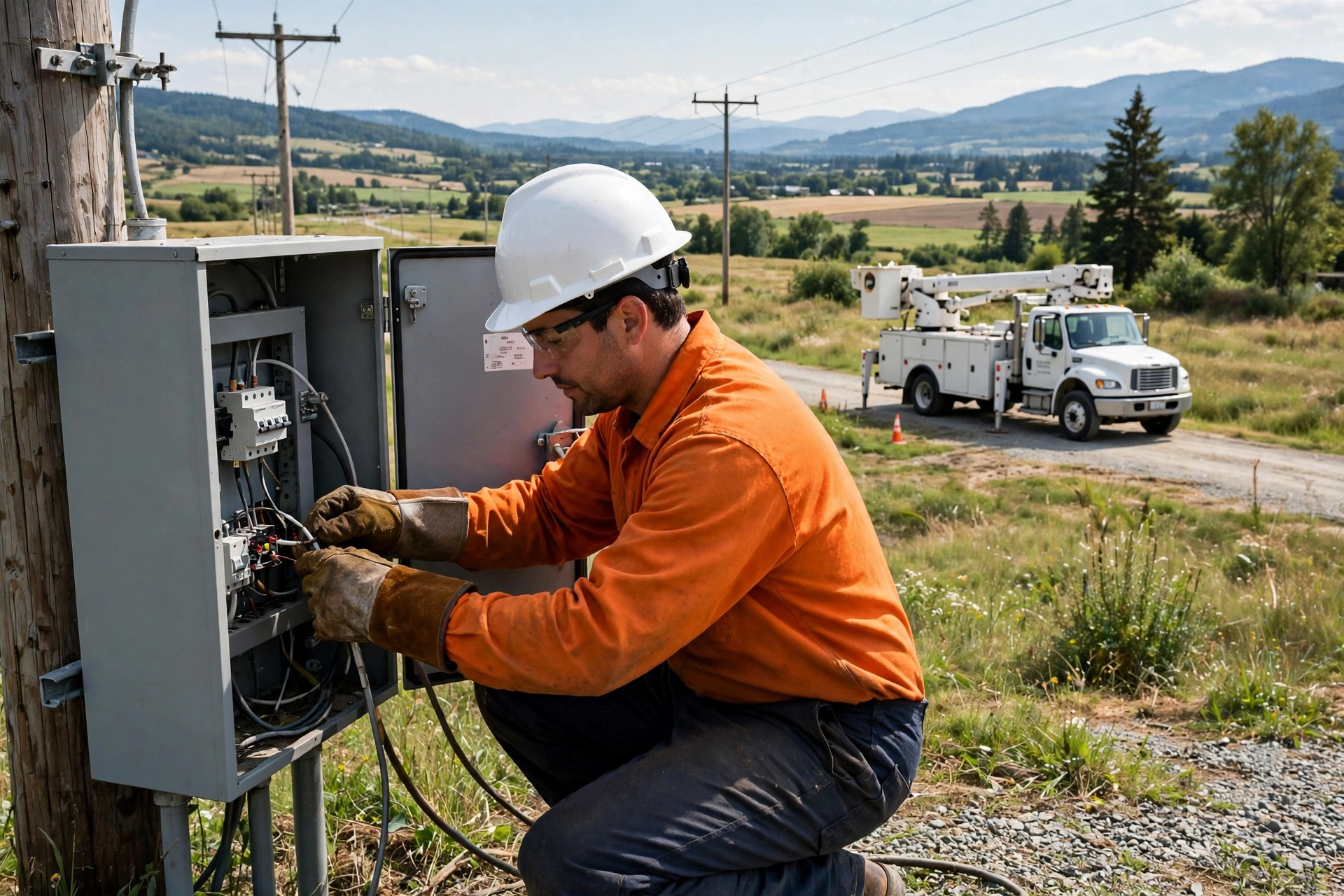
Start With the Hazard Assessment: Shock Is Not Arc Flash
The first distinction in any utility PPE programme is between electric shock and arc flash. They are different hazards, and the protection against each is different: insulating gloves and tools protect against shock; arc-rated clothing protects against the thermal energy of a flash. A crew can be correctly dressed for one and exposed to the other.
Under OSHA’s general PPE rule, 29 CFR 1910.132, the employer must assess the hazards of each task and select the PPE that controls them. For electric power work, OSHA 1910.269 sets the specific requirements for generation, transmission, and distribution, including the use of insulating equipment and arc-rated clothing. Our PPE hazard assessment guide explains the assessment process step by step — and for utility work, the assessment must record the voltage, the task, and the available incident energy for each job, because those three numbers decide the kit.
Arc-Rated Clothing: Match the Rating to the Incident Energy
Arc-rated clothing is rated in calories per square centimetre (cal/cm²), and the rating must meet or exceed the incident energy of the task. NFPA 70E, the US standard for electrical safety in the workplace, assigns every task on or near energised equipment a PPE category from 1 to 4, each prescribing a complete clothing system. Our arc flash PPE categories guide explains the four categories, the two selection methods — the incident energy analysis and the category tables — and the mistakes that leave workers under-protected.
Three buying points matter. First, ordinary work clothing is not arc protection: untreated cotton can ignite and continue burning after the flash ends, which is why NFPA 70E requires arc-rated clothing inside the arc flash boundary, not merely flame-resistant clothing. Second, the rating applies to the whole clothing system, not a single garment — shirt, trousers, underlayers, and outer layers must work together, and the lowest-rated layer caps the system. Third, arc-rated garments need care: laundering with the wrong detergent, or contamination with flammable substances, can degrade the rating, so the supplier should provide written care instructions with the first order.
For distribution work, Category 2 (minimum 8 cal/cm²) is the most commonly specified level; higher-energy substation and transmission tasks run to Categories 3 and 4. Buy the category the incident energy study calls for — not the category the last contractor happened to wear — and keep a record of the study alongside the purchase order.
Insulating Gloves: Classes, Protectors, and Test Dates
Insulating rubber gloves are the critical item for live work, and they are the item buyers most often under-specify. OSHA 1910.137 governs electrical protective equipment: gloves are classed by maximum use voltage, from Class 00 (500 V) through Class 0, 1, 2, 3, and 4 (36,000 V), and the class must exceed the voltage of the work. A glove rated for one voltage is not a glove rated for the next.
Four rules belong in every purchase specification. First, insulating gloves are always worn with leather protectors over them — the rubber insulates, the leather takes the mechanical damage, and a glove used without its protector is a glove being destroyed. Second, every pair must be electrically tested on schedule: OSHA requires testing at intervals not exceeding six months for gloves in service, and the test date must be stamped on the glove. Third, gloves are inspected before each use — air-tested by rolling the cuff and checked for cuts, punctures, and ozone damage — and any glove that fails is removed from service immediately, not set aside for light duty. Fourth, storage matters: gloves kept folded, compressed, or near heat and sunlight age faster, so the fleet needs proper glove bags and a dry store.
When ordering, ask the supplier for the test certificate for the batch, the class and voltage marking on each glove, and the retest service or schedule. A supplier who cannot provide test dates is not a supplier for live-line work.
Head Protection: Class E Helmets, Not Ordinary Hard Hats
A standard hard hat is not enough where live work is possible. The helmet must be a Class E (electrical) helmet, rated to 20,000 volts, with the rating marked on the shell — and the rating must be verified, not assumed from the colour. Our EN 397 safety helmet guide explains the types, the markings to check, and when a chin strap is worth specifying: for pole and tower work, a helmet that falls off at height protects no one, so a chin strap is standard, not optional.
Face and head protection work as a system on live equipment: an arc-rated face shield with a wrap-around guard, or an arc-rated hood, over safety glasses — never glasses alone inside the arc flash boundary. Eye protection markings tell the buyer what the product is rated for; our EN 166 eye protection markings guide decodes them. For substation work, add hearing protection: circuit breaker operations and switching can produce impulse noise well above the level where protection is required.
Fall Protection: Poles, Towers, and Buckets
Utility work at height is not construction work at height: the anchor points, the climbing systems, and the rescue plan are different, and the harness must be chosen for the structure — pole, lattice tower, or bucket. A full-body harness is the baseline, with a positioning lanyard for pole work and a fall arrest lanyard where the anchor allows it. The harness is inspected before each use and formally inspected by a competent person at least once a year — our fall protection harness inspection guide explains both inspections, what to look for at every point, and when retirement is the only correct decision.
Two buying mistakes recur. The first is ordering a construction harness for line work: the D-ring placement and the adjustability are wrong for climbing, and workers will fight the harness all day. The second is ignoring rescue: a worker suspended after a fall faces suspension trauma within minutes, so the crew needs a rescue plan and the equipment to execute it — not just the harness.
Footwear, Hi-Vis, and the Outdoor Conditions
Utility boots do three jobs: protect the toes, insulate against step and touch voltage where the assessment calls for dielectric footwear, and keep the wearer standing on wet grass, mud, gravel, and ice. The European ladder is EN ISO 20345, from S1 to S7 — our EN ISO 20345 safety footwear guide explains each level. For most utility field work, S3 is the sensible baseline, with dielectric properties specified separately where the electrical assessment requires them. Check the sole compound against the real ground: a boot that grips dry concrete can slip on wet grass.
Hi-vis is a roadside item first: wherever crews work near live traffic, EN ISO 20471 Class 2 or 3 is required, and the class must be chosen for the traffic speed, not the budget — our EN ISO 20471 hi-vis guide sets out when each class applies. In summer, heat stress becomes a real hazard for crews in arc-rated layers under the sun: our heat stress and PPE guide covers work-rest schedules, hydration, and the clothing choices that keep workers cool without giving up the arc rating. In winter, the layering system must preserve the arc rating of the outer layer while adding insulation underneath.
Hearing, Hands, and the Rest of the Kit
Hearing protection is easy to forget on a quiet pole and essential at a substation: switching operations and generator work produce impulse and continuous noise that needs measured protection. Ear muffs are easy to fit and supervise; ear plugs fit under helmets and hoods. Our SNR vs NRR guide explains the two rating systems and why the labelled number is not the protection the worker actually gets.
General work gloves — leather or cut-resistant — cover the non-live tasks: handling poles, hardware, and tools. They must never be confused with insulating gloves: different product, different marking, different store, different test schedule. Fit matters here too; our safety glove size chart shows the measurement method, and a size run should cover the full spread of the crew. Respiratory protection enters the picture for substation cleaning, battery rooms, and enclosed spaces: the rating and the fit test decide the product — see our N95 vs FFP2 vs FFP3 guide and our respirator fit testing guide.
Buying in Bulk: The Checks That Keep a Fleet Consistent
Specify per task and per voltage, order per task. A single “utility PPE set” is how fleets go wrong. Write the specification task by task — line work, substation, metering, storm response — with the voltage and the incident energy recorded for each. The order will contain several clothing categories and several glove classes; that is normal.
Verify certificates and test dates before paying. Every claim on a datasheet — an arc rating, a glove class, a helmet voltage rating — should trace to a test certificate for that exact model, and every insulating glove should carry a current test date. Our PPE certification verification guide explains what to ask for, how to read an EU type-examination certificate, and the red flags that mark a claim as untested.
Plan inspection and replacement from day one. Insulating gloves are tested every six months, harnesses are formally inspected annually, helmets are retired after any impact, and arc-rated clothing is retired when its care history is unknown. A written inspection and replacement schedule keeps the fleet protective instead of decorative — see our PPE inspection and replacement guide. Ask the supplier for the manufacturer’s inspection and retirement instructions in writing before the first order, and confirm that identical models will still be available in a year.
Judge the supplier, not just the price. Consistent sizing across batches, a stable model range, honest lead times, and a willingness to supply samples are worth more than a small unit-price saving. Our guide to choosing a PPE manufacturer and our protective clothing suppliers checklist set out the questions that separate a reliable partner from a one-off shipment.
Related Guides
For the details behind this guide, see our arc flash PPE categories guide, our PPE hazard assessment guide, and our fall protection harness inspection guide.
Utility work rewards buyers who specify per task and verify before they commit. If you are putting together a kit for your crews — arc-rated clothing, insulating gloves, Class E helmets, harnesses, and boots in bulk — contact us with your task list, voltages, and headcount. We supply free samples so your crews can wear-test the shortlist on the job before you order, and you cover only the shipping.


