



A water treatment plant is several workplaces under one fence. The chemical dosing hall, the clarifier decks, the pump rooms, the digesters, and the laboratory each carry a different hazard profile, and the kit that is right for handling disinfectant can be wrong — or dangerous — inside a wet well or a confined tank. Buying PPE for water treatment workers therefore starts with the task and the location, not the catalogue.
This guide walks through the kit task by task, explains which standards govern each item, and closes with the buying checks that keep a workforce consistent: sizing, inspection, replacement, and certification verification.
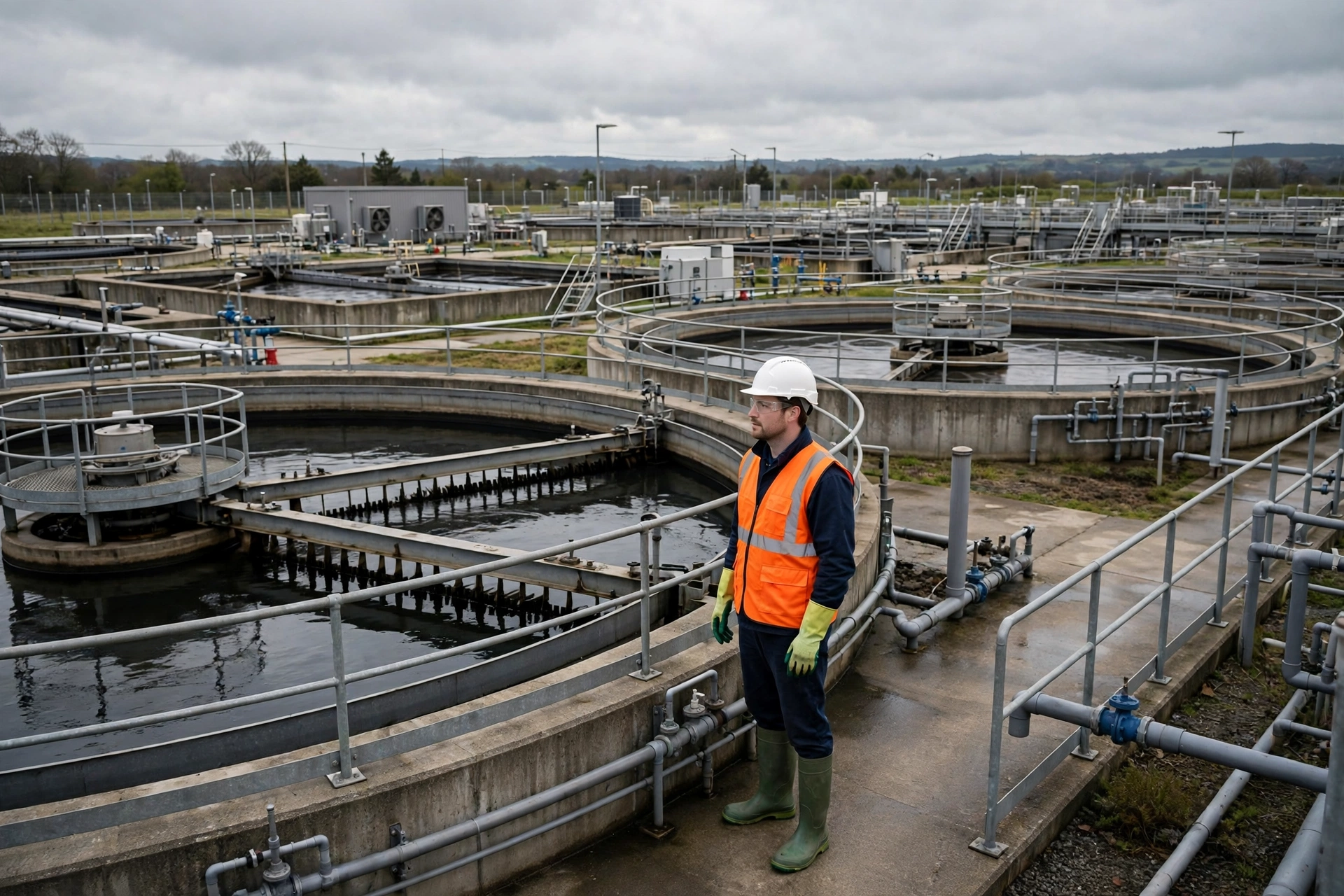
Start With the Hazard Assessment, Not the Catalogue
Under OSHA’s general PPE rule, 29 CFR 1910.132, the employer must assess the hazards of each work area, select the PPE that controls them, and make sure it is used and maintained. That assessment is the document a buyer should ask for before ordering anything: it names the hazards per task and per location, and the kit follows from it. Our PPE hazard assessment guide explains the process step by step, from walking the site to writing the specification.
A practical way to run the assessment is to map the plant into tasks and list the dominant hazard of each: chemical splash and vapour where disinfectants and coagulants are handled, biological exposure where raw sewage and sludge are present, oxygen-deficient or toxic atmospheres inside tanks and wet wells, slips on wet walkways and decks, and noise from pumps, blowers, and generators. One worker may cross several of these in a shift, so the kit has to be layered — a base kit worn all day, plus task-specific items added at the location.
The Task-by-Task Kit
Chemical handling and dosing. Disinfection chemicals such as sodium hypochlorite and coagulants are the sharpest chemical hazard in a treatment plant: a splash to the eyes or skin, and vapour in a poorly ventilated dosing room. The glove must be chosen against the specific chemical and the contact time — not by thickness alone. Our chemical glove breakthrough time guide explains how to read a permeation chart, and our chemical protective clothing types guide explains Type 1–6 garments and when a splash suit or apron is enough. Match the glove material to the chemical in the safety data sheet, confirm the breakthrough time covers the whole task, and pair the gloves with sealed eye protection and, where splashing is likely, a face shield. A chemical glove with the wrong material is worse than no glove at all, because it gives false confidence.
Working with raw sewage and sludge. Wastewater carries bacteria, viruses, and parasites, and the exposure routes are splashes, aerosols from aeration and pressure washing, and hand-to-face contact. The PPE answer is waterproof gloves and boots, eye protection against splashes, and a strict hygiene routine — handwashing and changing out of contaminated clothing before eating or going home. Where aerosols are heavy, for example around aeration basins and sludge dewatering, respiratory protection enters the kit: our respirator ratings guide explains N95, FFP2, and FFP3, and our fit testing guide explains why a respirator that leaks at the seal protects no one. Under OSHA’s respiratory protection rule, 29 CFR 1910.134, any respirator use must be backed by a written programme, medical evaluation, and fit testing — a loose dust mask is not a substitute.
Confined spaces: tanks, wet wells, and digesters. A tank, a wet well, or a digester can be oxygen-deficient or hold toxic gas, and a worker who enters without the right controls can collapse before anyone notices. OSHA’s permit-required confined spaces rule, 29 CFR 1910.146, sets the framework: a written entry permit, atmospheric testing before and during entry, an attendant outside, a rescue plan, and retrieval equipment. The PPE side is a harness for retrieval, a supplied-air or self-contained breathing apparatus where the atmosphere requires it, and chemical-resistant clothing where sludge contact is expected. Entry PPE is the most demanding kit in the plant, and it must be inspected and tested on a fixed schedule — a harness that has been hanging damp in a store room is not rescue-ready.
Wet walkways, decks, and basins. Much of a treatment plant is wet by design, and slips are the most common injury on site. Waterproof safety boots with a tested slip-resistant sole are the baseline — see our EN ISO 20345 safety footwear standards guide for toe protection, penetration-resistant soles, and slip ratings. Knee-high rubber boots are the usual choice where standing water or sludge is expected, while safety shoes with waterproof uppers suit the drier control rooms and laboratories. Hi-vis clothing matters outdoors and near vehicle routes on large sites: specify garments to EN ISO 20471 and retire them when the fluorescence fades.
Pump rooms, blowers, and generators. The noise in a pump hall is steady rather than sudden, which makes it easy to ignore — and that is exactly why it damages hearing over years. OSHA’s noise rule, 29 CFR 1910.95, sets the framework, and the practical step is hearing protection rated for the task, worn for the whole exposure — ear muffs that fit under a helmet for long maintenance sessions, or plugs for workers who move between quiet and noisy areas. Our hearing protection ratings guide explains SNR and NRR so the buyer can compare products on the same basis. The rule for the crew is simple: if you have to raise your voice to be heard at arm’s length, the protection goes on.
Head, Eye, and Hearing Protection
A helmet to EN 397 is the baseline wherever overhead work, pipework, and low structures create a struck-by risk, and the chin strap should be worn: a helmet that falls off at the first bend is decoration. Eye protection to EN 166 should be matched to the task — splash-rated goggles for chemical handling, sealed goggles for aerosol areas, and impact-rated lenses for maintenance work with hand tools.
Gloves deserve the same task-by-task thinking. Chemical handling needs a glove chosen by chemical and breakthrough time; sludge and cleaning work needs a waterproof glove with a good grip when wet; maintenance work needs a cut-resistant palm for handling pipe, flanges, and tools. No single glove covers all three, so the plant should stock the range and train workers to change gloves with the task. Our safety glove size chart explains the measuring method — a glove that is too loose snags and slips, and a glove that is too tight gets taken off.
Heat, Hygiene, and the Kit That Stays On
Outdoor work at a treatment plant combines physical effort with sun and humidity, and PPE that traps heat gets discarded. Our heat stress and PPE guide covers scheduling, hydration, and choosing lighter garments where the risk assessment allows it. Hygiene is the other half of the same discipline: contaminated gloves and clothing must be removed and washed on site, hands washed before eating, and street clothes kept separate from work clothes. The kit that stays on the worker — and gets cleaned properly after the shift — is the only kit that protects.
Buying in Bulk: The Checks That Keep a Fleet Consistent
Verify certificates before you pay. Every item in the kit should arrive with a certificate or declaration that matches the standard claimed on the label — and the certificate must name the model you actually received, not a similar one. Our PPE certification verification guide explains what to ask for, how to read an EU type-examination certificate, and the red flags that mark a claim as untested. This matters most for chemical gloves and respirators, where a wrong claim is invisible until it fails.
Plan inspection and replacement from day one. Chemical gloves wear out in days or weeks depending on the chemical, boots in months, helmets on a fixed schedule after any impact, and hi-vis when its fluorescence fades. A written inspection and replacement schedule keeps the fleet protective instead of decorative — see our PPE inspection and replacement guide. Ask the supplier for the manufacturer’s retirement instructions in writing before the first order, and confirm that identical models will still be available in a year: a fleet of mixed, incompatible models is far harder to inspect than a standardised one.
Judge the supplier, not just the price. Consistent sizing across batches, a stable model range, honest lead times, and a willingness to supply samples are worth more than a small unit-price saving. Our guide to choosing a PPE manufacturer and our protective clothing suppliers checklist set out the questions that separate a reliable partner from a one-off shipment.
Related Guides
For the details behind this guide, see our PPE hazard assessment guide, our chemical glove breakthrough time guide, and our chemical protective clothing types guide.
Water treatment rewards buyers who specify per task and test before they commit. If you are putting together a kit for your plant — chemical gloves, respirators, confined-space gear, and waterproof boots in bulk — contact us with your task list and headcount. We supply free samples so your crew can wear-test the shortlist on your site before you order, and you cover only the shipping.


