



A farm is not one workplace. The worker mixing pesticide in the morning, the operator driving a tractor at noon, and the hand harvesting fruit in the afternoon face different hazards — and the protective equipment that protects one of them can be useless for another. That is why PPE for agriculture workers should be chosen task by task, not from a single generic list. This guide explains what to specify for each farm task, which standards to ask for, and how to buy in bulk without ending up with the wrong kit in the shed.
Why Farm Work Needs Its Own PPE Plan
Farmworkers face a wider mix of hazards than almost any other workforce. OSHA notes that agricultural workers are at high risk for fatalities and injuries, work-related lung diseases, noise-induced hearing loss, skin diseases, and certain cancers associated with chemical use and prolonged sun exposure. One crew can be exposed to pesticide spray, grain dust, engine noise, sharp tools, animal kicks, and summer heat in a single day. A hazard assessment that lists each task, the exposure it creates, and the protection that matches it is the starting point — it is also what OSHA’s general PPE standard expects before any equipment is selected. See OSHA’s Agricultural Operations overview for the hazard categories regulators expect employers to cover.
The second reason is the workforce itself. Farms rely heavily on seasonal and migrant labour, often with mixed literacy and language backgrounds. Equipment that needs a manual to understand will not be worn correctly. The best farm PPE is simple to fit, hard to wear wrong, and comfortable enough for a full shift in heat. If workers are modifying kit, leaving it in the truck, or wearing it only when the supervisor is watching, the specification is wrong — not the workers.
Chemical Handling: Pesticides and Fertilisers
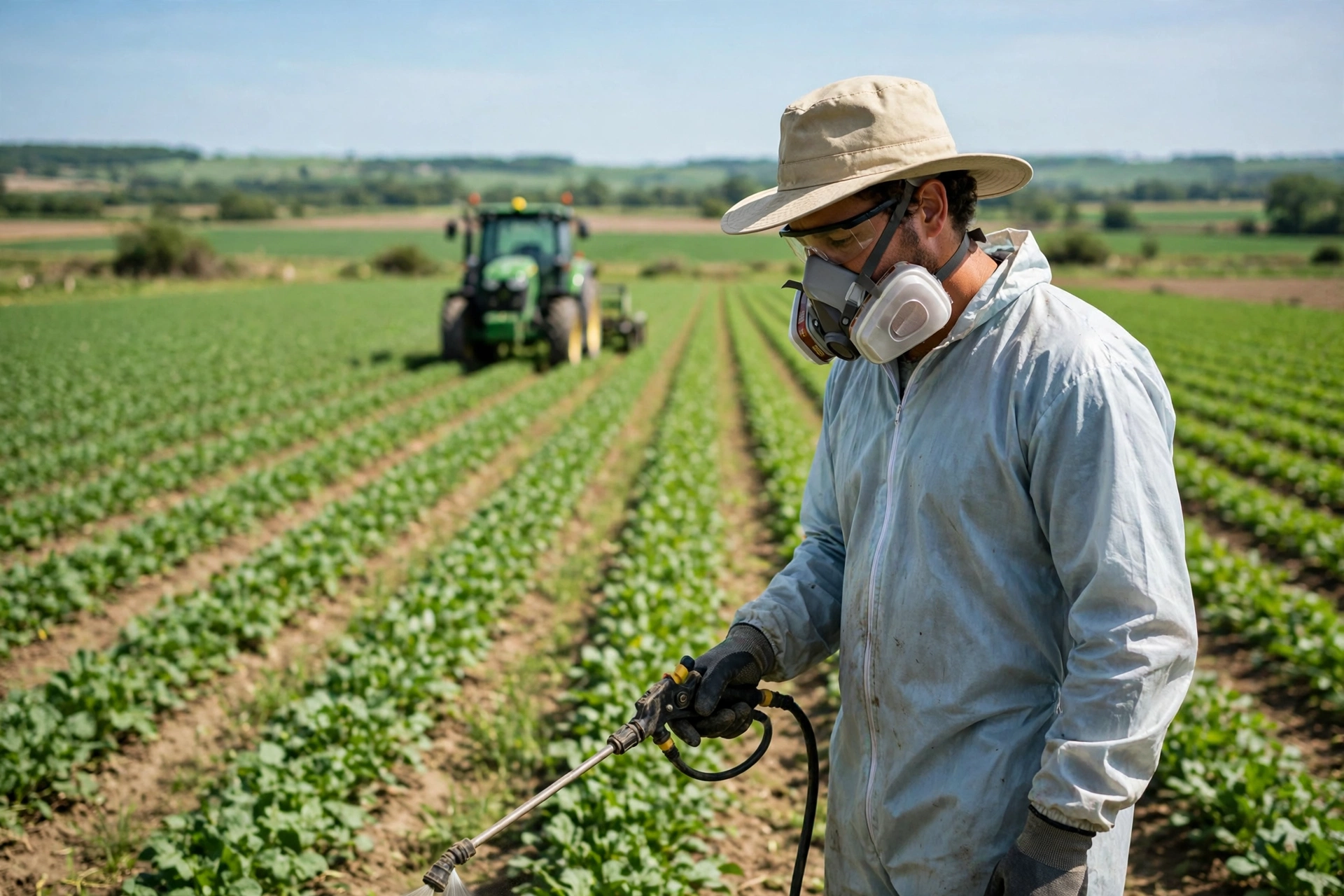
Pesticide work is the most regulated corner of farm PPE, and the rules start on the product label. In the United States, the EPA Worker Protection Standard requires handlers to wear the PPE stated on the pesticide label — typically chemical-resistant gloves, eye protection, long-sleeved coveralls, and sometimes a respirator — and the label is legally binding, not a suggestion. In the EU, the same principle applies through product authorisations and national rules. Before buying, read the labels of the products your farm actually uses and build the kit around them, rather than buying a generic chemical suit and hoping it covers everything.
Gloves That Survive the Chemical
Not every glove resists every chemical. Nitrile gloves are the usual starting point for pesticide mixing and handling, but the right choice depends on the active ingredient, the solvent it is carried in, and the contact time. This is where chemical glove breakthrough time matters: a glove that holds for 30 minutes is not the same as one that holds for 8 hours, and a glove that resists the concentrate may fail against the diluted spray. Ask the supplier for permeation data against the specific products you handle, and check the glove standard — EN ISO 374-1 for chemical risks — rather than relying on a generic “chemical resistant” claim. For a full comparison of materials, see our guide to nitrile vs latex vs vinyl gloves.
Coveralls, Eye Protection, and Respirators
For mixing and spraying, a coverall rated for liquid chemicals — Type 4 or Type 6 under EN 14605 / EN 13034 — keeps spray off skin and street clothes, and it should be worn with the hood or collar closed and the cuffs taped or sealed where the label requires it. Our explainer on chemical protective clothing Types 1–6 sets out which type matches which exposure. Eye protection should be sealed goggles rather than open safety glasses when spray can reach the face; EN 166 markings tell you whether a lens is rated for liquid splash. For respirators, the pesticide label again decides: a half mask with the correct filter for the product’s vapour and particle hazard, fit-tested for the wearer. A dust mask is not a substitute for a chemical respirator.
Machinery, Tools, and Livestock
Away from chemicals, the hazards are mechanical. Tractors, harvesters, chainsaws, and cutting tools cause the cuts, crush injuries, and amputations that dominate farm injury statistics. Safety footwear to EN ISO 20345 — usually S3 with toe protection and puncture-resistant soles — is the baseline for anyone working around machinery, and our guide to EN ISO 20345 safety footwear explains the S1–S7 ratings. Cut-resistant gloves to EN 388 are worth specifying for handling wire, sheet metal, and cutting tools, but loose gloves must never be worn near rotating machinery such as PTO shafts — entanglement kills, and a glove that catches is worse than bare hands.
Livestock work adds kicks, bites, and biological exposure. Sturdy boots with good grip, coveralls that can be washed or disposed of, and gloves for handling animals and veterinary products are the basics. Where zoonotic disease is a risk — birthing, handling sick animals, cleaning pens — disposable coveralls and gloves plus eye protection are the practical answer, and contaminated kit should be removed and disposed of before the worker re-enters clean areas.
Dust, Noise, Sun, and Heat
Grain dust, hay dust, and soil dust are respiratory hazards, not just a nuisance. Harvesting, threshing, and working in grain stores call for a properly fitted respirator — FFP2 or FFP3 in Europe, N95 or higher in the US — rather than a loose paper mask. Noise is the slow injury: tractors, chainsaws, and grain dryers run loud enough to damage hearing over a season, so hearing protection should be specified by the noise level of the actual machines, not by habit. See our comparison of SNR vs NRR hearing protection ratings to match protectors to the job.
Sun and heat deserve the same attention as chemicals. Long outdoor shifts mean UV exposure and heat stress, and the PPE plan should include wide-brim or neck-protecting headgear, UV-rated eyewear, and light-coloured, breathable coveralls — plus shade, water, and rest breaks. Our guide to heat stress and PPE covers how to keep workers protected without overheating them. Hi-vis clothing to EN ISO 20471 is essential wherever workers are near moving vehicles on public roads or around the yard; EN ISO 20471 hi-vis classes explain which class fits which speed and setting.
Buying in Bulk: What to Check Before You Order
Farm PPE is usually bought in volume — a season’s worth of gloves, coveralls, and respirators for a whole crew. That makes the supplier check more important, not less. Before placing a bulk order, verify the certificates behind the products: EN ISO 374 for chemical gloves, EN 14605 or EN 13034 for coveralls, EN 166 for eyewear, EN ISO 20345 for footwear. Ask for the EU declaration of conformity and the test reports, and check them against the model you are actually buying — a certificate for one model does not cover another. Our guide on how to verify PPE certifications before a bulk order walks through the checks step by step.
Size mix is the detail most bulk orders get wrong. A crew is not one size, and gloves, coveralls, and respirators that do not fit are not worn — or are worn badly. Order a size range based on a real headcount, not a guess, and include a small trial quantity of any new product before committing to the season’s volume. Check the supplier’s lead time and re-order reliability too: running out of pesticide gloves mid-spray season is not a problem you want to solve at retail prices. For the wider supplier questions — MOQ, sampling, audits — see how to choose a PPE manufacturer and what PPE distributors look for in a manufacturer partner.
Fit, Training, and Storage
Even the right equipment fails if it is not fitted and used correctly. Respirators need fit testing; gloves need the right size so workers keep dexterity; coveralls need to be the right length so they do not snag. A short fitting session at the start of the season — with the actual products, on the actual workers — pays for itself in compliance. Training should be practical and in the workers’ languages: how to put on and take off chemical PPE without contaminating skin, how to check a respirator seal, and when to replace a glove. Storage matters as well: keep PPE away from sunlight, chemicals, and damp, and keep chemical PPE separate from clean kit. A helmet that has been baking in a tractor cab all summer is not the helmet you tested in spring; see our guide to EN 397 safety helmet standards for inspection and replacement signs.
Related Guides
For the standards behind the choices in this guide, read Chemical Protective Clothing Types 1–6 Explained, Safety Footwear Standards: EN ISO 20345 S1–S7 Explained, and How to Conduct a PPE Hazard Assessment.
Get a Quote for Your Farm
Aceppe supplies farm PPE in bulk — chemical-resistant gloves, coveralls, respirators, eye protection, safety footwear, and hi-vis workwear — built to the standards above and shipped worldwide. Tell us the tasks your crew does, the products you handle, and your headcount, and we will put together a task-matched kit with samples before you commit. Free samples are available — the buyer covers shipping. Contact us for a quote today.


