



A solar installation crew works in three hazard zones at once: a sloped roof high above the ground, a live direct-current electrical system, and open sun and heat for hours at a time. The kit that is right for carrying panels up a ladder can be wrong — or dangerous — beside an energised inverter or on a hot roof in July. Buying PPE for solar installation workers therefore starts with the task, not the catalogue.
This guide walks through the kit task by task, explains which standards govern each item, and closes with the buying checks that keep a whole crew consistent: sizing, inspection, replacement, and certification verification.
Start With the Hazard Assessment
Under OSHA’s general PPE rule, 29 CFR 1910.132, the employer must assess the hazards of each work area, select the PPE that controls them, and make sure it is used and maintained. On a solar job the assessment has to cover the roof, the electrical system, and the weather together: a steep or wet roof changes the fall plan, a string voltage changes the glove class, and a heatwave changes the work-rest schedule. Our PPE hazard assessment guide explains the process step by step, from walking the site to writing the specification.
A practical way to run the assessment is to map the job into tasks and list the dominant hazard of each: falls from the roof edge and through skylights during panel handling, electric shock and arc flash during stringing and commissioning, cuts and abrasions from panel frames, rails, and flashing, eye injuries from drilling and cutting, and heat stress from working in direct sun on a dark roof. One installer may cross all five in a single day, so the kit has to be layered — a base kit worn all day, plus task-specific items added at the location.
The Task-by-Task Kit
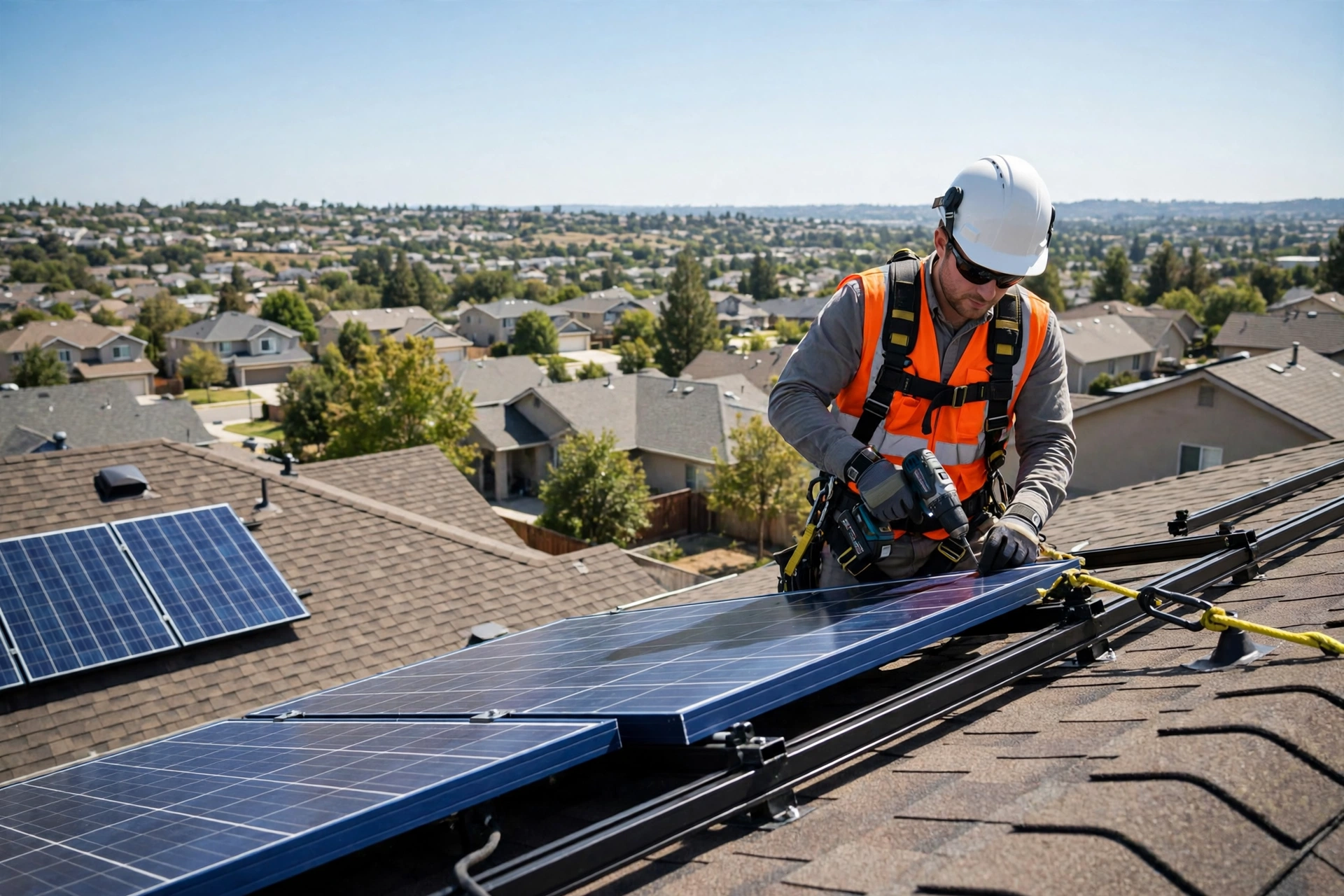
Roof work and fall protection. Falls are the leading cause of death in construction, and a solar crew spends most of its day at height. The construction fall protection standard, 29 CFR 1926.502, requires guardrails, safety nets, or a personal fall arrest system for work six feet or more above a lower level, and the anchor point must be planned before the first panel goes up — not improvised after. A full-body harness with a shock-absorbing lanyard is the default for residential roofs; guardrails or warning lines suit larger commercial roofs. See our fall protection harness inspection guide for the pre-use checks that catch a worn strap or a damaged connector before it is trusted with a life. Footwear matters here too: safety shoes to EN ISO 20345 with slip-resistant soles and a protective toe cap are the roof-wide default; see our safety footwear standards guide.
Electrical work: strings, inverters, and arc flash. A photovoltaic string produces direct current whenever the sun shines — there is no off switch for daylight — and utility-scale systems run at up to 1,500 volts DC. Electrical protective equipment is governed by 29 CFR 1910.137, and work on electric power systems falls under 29 CFR 1910.269. Rubber insulating gloves are rated by class and must be matched to the system voltage, always worn with leather protectors over them and air-tested before each use. For work near live parts, arc-rated clothing is specified by the incident energy of the task, and a face shield is added where an arc flash is possible. Only qualified workers should open a combiner box or commission an inverter; the rest of the crew needs to know where the live parts are and stay clear.
Gloves: cut protection first, electrical second. Most of a solar installer’s day is handling, not electrical work: lifting panels, cutting rails, driving fixings, and trimming flashing. Cut-resistant gloves rated under ANSI/ISEA 105 or EN 388 protect against the sharp edges of aluminium frames and steel rails, and they must still allow the grip and dexterity to handle a panel on a slope. Keep the two glove jobs separate in the kit: cut-resistant work gloves for handling and mounting, and rubber insulating gloves with leather protectors for electrical work — never use one in place of the other. See our safety glove size chart for measuring hands and ordering across the size range.
Eye protection and head protection. Drilling into tile or concrete, cutting rails, and grinding brackets all throw particles, so eye protection rated to EN 166 is part of the base kit; a face shield is added for grinding. See our EN 166 eye protection markings guide for choosing the right lens marking. A hard hat to EN 397 is required wherever panels or tools are lifted overhead or work goes on below an installer — see our safety helmet standards guide. On a roof, a chin strap keeps the helmet on in wind and after a slip.
Heat, sun, and noise. A dark roof in summer is one of the hottest workplaces in construction, and heat stress is a real risk, not a comfort issue: schedule heavy lifting for the cooler hours, provide shade and water, and build in rest breaks — our heat stress and PPE guide covers work-rest schedules and cooling for hot work. Sun protection belongs in the kit too: long sleeves, a neck shade under the hard hat, and sunscreen on exposed skin. Drills, saws, and hammer drills push many tasks over the 85 dBA action level in 29 CFR 1910.95, so hearing protection belongs in the base kit — see our SNR vs NRR guide for choosing it. High-visibility clothing to EN ISO 20471 is needed wherever vehicles and delivery trucks move around the site — see our hi-vis classes guide. Foot protection is covered by 29 CFR 1910.136, which requires protective footwear where there is a danger of foot injuries from falling or rolling objects.
Choosing Gloves and Harnesses Without Guessing
Two numbers decide a cut-resistant glove: the cut level and the dexterity the task allows. A higher cut level usually means a thicker, stiffer glove, so a crew that handles glass panels all day needs the highest level it can still grip with — test the shortlist on a real panel before ordering for the whole crew. For harnesses, the fit is the test: a harness that is too loose will not arrest a fall correctly, and one that is too tight will not be worn. Buy the harness in sizes, adjust it to each installer, and inspect the webbing, stitching, and connectors before every use — a harness that has arrested a fall is retired immediately, never reused.
Buying for a Whole Crew
Size it properly. A glove that is too tight tears and fatigues the hand; one that is too loose catches on rails and loses grip on a panel. Measure hands and order across the size range, and do the same for harnesses and helmets, where a poor fit leaves gaps and loose straps. A crew that shares one size of everything ends up with kit that protects no one properly.
Plan inspection and replacement from day one. Cut-resistant gloves wear out in weeks on a busy crew, harnesses on a fixed schedule after any fall or visible damage, hard hats after any impact, and hi-vis when its fluorescence fades. A written inspection and replacement schedule keeps the fleet protective instead of decorative — see our PPE inspection and replacement guide. Ask the supplier for the manufacturer’s retirement instructions in writing before the first order, and confirm that identical models will still be available in a year: a fleet of mixed, incompatible models is far harder to inspect than a standardised one.
Verify the certificates before the bulk order. A glove claim is only as good as its test report, and a wrong claim is invisible until it fails. Ask for the certificate and the test report behind it, check the model number matches the product you are buying, and confirm the expiry date — our PPE certification verification guide walks through the checks. Judge the supplier, not just the price: consistent sizing across batches, a stable model range, honest lead times, and a willingness to supply samples are worth more than a small unit-price saving. Our guide to choosing a PPE manufacturer and our protective clothing suppliers checklist set out the questions that separate a reliable partner from a one-off shipment. Dust masks are sometimes needed on roof work too — our respirator ratings guide explains what N95, FFP2, and FFP3 actually filter, and our fit testing guide explains why a respirator that leaks at the seal protects no one.
Related Guides
For the details behind this guide, see our PPE hazard assessment guide, our fall protection harness inspection guide, and our heat stress and PPE guide.
Solar installation rewards buyers who specify per task and test before they commit. If you are putting together a kit for your crew — cut-resistant gloves, fall protection, helmets, and eye protection in bulk — contact us with your crew size and job types. We supply free samples so your crew can wear-test the shortlist on your site before you order, and you cover only the shipping.


