



An aerospace plant is several different workplaces under one roof: a machine shop cutting aluminium, a composites bay laying up carbon fibre, a paint shop spraying primers and topcoats, an avionics bench full of static-sensitive electronics, and a final assembly line where technicians work at height around a fuselage. The PPE that protects a machinist will not protect a painter, and the kit that is right for the composites bay is wrong for the avionics bench. This guide explains what to specify for each area of an aerospace manufacturing plant, which standards to ask for, and how to buy it in bulk.
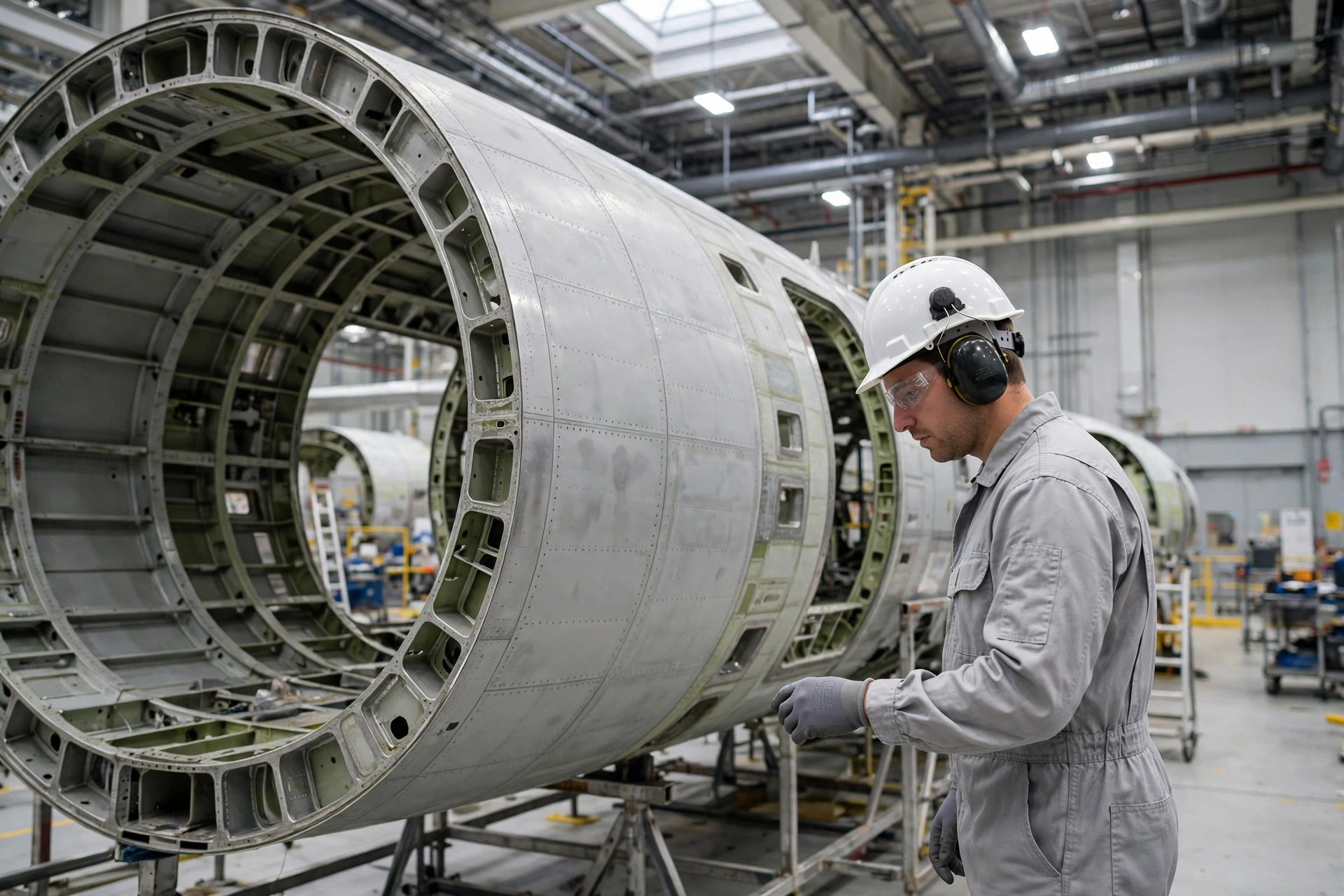
Why Aerospace Manufacturing PPE Is Different
Three things set aerospace apart from general factory work. The first is precision: parts are machined to tight tolerances and surfaces are inspected for the smallest defect, so gloves and clothing must protect the worker without shedding fibres, leaving residues, or scratching finished surfaces. The second is foreign object debris — FOD. A loose glove fragment, a dropped earplug, or a torn sleeve near an open airframe can become a defect that grounds an aircraft, so every item of PPE has to be accounted for and checked at the end of a shift. The third is the mix of hazards in one building: metal cutting, composite dust, solvents, paints, noise, and work at height all sit metres apart, and a single generic kit cannot cover them.
Regulation sits underneath all of it. In the United States, OSHA’s general PPE standard requires employers to assess the hazards of each task and provide the matching protection, and OSHA’s respiratory protection standard sets out the rules for respirator selection, fit testing, and medical evaluation wherever airborne contaminants are present.
Head, Eye, and Hearing Protection
Hard hats are the baseline wherever overhead work, cranes, and suspended loads are part of the day — final assembly, hangar work, and any area under a mezzanine or gantry. Specify helmets to EN 397 and check the shell and harness for damage on a schedule; a helmet that has taken a knock should be retired, not returned to the rack.
Eye protection has to be matched to the task as well. Clear safety glasses to EN 166 cover machining and assembly; sealed goggles are needed where fine composite dust or paint overspray is in the air, and a face shield goes over the top where liquids can splash — paint mixing, solvent handling, chemical cleaning. Prescription wearers need prescription safety glasses or over-goggles that fit over their own frames; a worker who cannot see clearly through their eye protection will take it off. Our guide to EN 166 eye protection markings explains what the lens and frame ratings mean, so you can check a supplier’s claim against the marking on the product.
Hearing protection belongs in the kit wherever riveting, drilling, and machining run for a full shift. Ear muffs are easy to check and hard to lose, which suits shared workstations; earplugs suit workers who also wear a hard hat and safety glasses, where muffs can clash with the helmet. Either way, the protection must match the measured noise level — our comparison of SNR vs NRR hearing protection ratings shows how to read the numbers — and workers need a short fitting session so the protection is worn correctly, not just issued.
Hands: Cut, Chemical, and Composite Work
Hands face three different risks in an aerospace plant, and no single glove covers all three. Sheet metal and machined aluminium edges cut, so the machine shop and assembly areas need cut-resistant gloves matched to the task — ANSI/ISEA 105 grades run from A1 to A9 and EN 388 grades cut resistance from A to F, and most aerospace sheet-metal work sits in the middle of both scales. Our guide to cut-resistant gloves for metal work explains how to match the level to the task. Two rules matter here: gloves must never be worn near rotating machinery, where they can catch and pull a hand in, and a glove that is too stiff slows precision work — workers will take it off, so trial the actual glove on the actual task before ordering in volume.
The second risk is chemical. Solvents, sealants, adhesives, and cleaning agents are part of daily work in the paint shop and composites bay, and a general-purpose glove is not a chemical glove. Choose from permeation data for the specific chemical, not from a generic claim — our explainer on chemical glove breakthrough time shows how to read it. Nitrile is the usual default for disposable chemical handling; our comparison of nitrile vs latex vs vinyl gloves sets out the trade-offs, including the latex allergy risk that matters in any plant with a large workforce.
The third risk is the composite bay itself. Carbon fibre dust and uncured resin irritate skin and lungs, and the gloves used there must be chosen for the resin system in use, changed on a schedule, and disposed of rather than laundered back into service. Fit matters as much as material: a glove that is too large kills the dexterity needed for lay-up work, and a glove that is too small tears. Measure hands properly before ordering — see our safety glove size chart — and run a trial with the actual crew.
Respiratory Protection: Dust, Solvents, and Paint Spray
Respiratory protection is where aerospace buying most often goes wrong, because the right device depends on the contaminant. Composite dust and machining dust call for particulate filtering — a disposable respirator or a half mask with particulate filters, chosen to the right protection factor. Solvents and paint spray need gas and vapour protection as well, which means a half mask or full face mask with the correct chemical cartridges, and a supplied-air system where the paint shop runs spray booths. OSHA’s respiratory protection standard requires fit testing, medical evaluation, and a written programme wherever respirators are required — a respirator that leaks around the seal protects nobody, whatever its rating.
Two practical points decide whether respirators actually get used. The first is fit testing: every wearer must be fit tested on the exact model they will use, and re-tested if their face shape changes or the model changes — our guide to respirator fit testing explains why it matters and what a programme looks like. The second is comfort over a full shift: a heavy full-face mask that fogs up will be worn on the forehead, not the face. Trial the mask on the real task, in the real booth, before committing to a bulk order. Our comparison of N95 vs FFP2 vs FFP3 respirator ratings helps match the filter class to the dust level.
Footwear, Hi-Vis, and Work at Height
Safety footwear to EN ISO 20345 is the baseline across the plant — toe protection where pallets, tooling, and aircraft parts move, and slip resistance on floors that carry oil, coolant, and cleaning fluids. Our guide to safety footwear standards explains the S1–S7 ratings and what each one adds. In the paint shop and composites bay, footwear also needs chemical resistance on the sole and upper; in the avionics bench and clean areas, it needs to be part of the static-control system, not a separate decision.
High-visibility clothing to EN ISO 20471 matters wherever vehicles, tugs, and forklifts move — the apron, the hangar floor, and any area shared with moving equipment. Our guide to EN ISO 20471 hi-vis classes explains the class system. Work at height needs its own kit: technicians working on fuselages, wings, and scaffolding need a harness, lanyard, and anchor point matched to the task, and the harness must be inspected before every use — see our fall protection harness inspection guide for the routine.
ESD Control in Avionics Areas
Avionics benches and electronics assembly areas are a different world from the machine shop: here the hazard is invisible. An electrostatic discharge too small to feel can damage a circuit board worth more than a month’s wages, so the PPE in these areas is part of the static-control system — ESD garments, ESD footwear or heel grounders, wrist straps, and grounded work surfaces, all working together. Ordinary coveralls and shoes generate and hold charge; ESD clothing and footwear are built to dissipate it safely. Our complete guide to ESD workwear explains the system end to end, and the clothing, footwear, and grounding have to be specified together — an ESD smock over street shoes protects nothing.
Buying in Bulk: What to Check Before You Order
Aerospace PPE is bought in volume — boxes of disposable gloves and respirators every week, plus seasonal runs of coveralls, helmets, and safety boots. That makes the supplier check more important, not less. Before placing a bulk order, verify the certificates behind the products: EN 388 for cut gloves, EN ISO 374 for chemical gloves, EN 166 for eye protection, EN ISO 20345 for footwear. Ask for the EU declaration of conformity and the test reports, and check them against the model you are actually buying — a certificate for one model does not cover another. Our guide on how to verify PPE certifications before a bulk order walks through the checks step by step.
Size mix is the detail most bulk orders get wrong. A crew is not one size, and gloves, coveralls, and boots that do not fit are not worn — or are worn badly. Order a size range based on a real headcount, not a guess, and include a small trial quantity of any new product before committing to the season’s volume. Check the supplier’s lead time and re-order reliability too: running out of nitrile gloves mid-shift is not a problem you want to solve at retail prices. For the wider supplier questions — MOQ, sampling, audits — see how to choose a PPE manufacturer and what PPE distributors look for in a manufacturer partner.
Fit, Training, and Storage
Even the right equipment fails if it is not fitted and used correctly. Gloves need the right size so workers keep dexterity on precision tasks; respirators need fit testing on the exact model; harnesses need adjusting to the wearer. A short fitting session at the start of a season — with the actual products, on the actual workers — pays for itself in compliance. Training should be practical: how to put on and take off chemical gloves without contaminating hands, when to change a respirator filter, how to check a harness, and why FOD discipline means accounting for every item at the end of a shift. Storage matters as well: keep PPE away from sunlight, solvents, and damp, and keep clean kit separate from used kit. See our guide to PPE inspection and replacement schedules for the routine that keeps the kit honest.
Related Guides
For the standards behind the choices in this guide, read ESD Workwear: The Complete Anti-Static Clothing Guide, Cut Resistant Gloves for Metal Work: A Selection Guide, and How to Conduct a PPE Hazard Assessment.
Get a Quote for Your Plant
Aceppe supplies aerospace manufacturing PPE in bulk — cut-resistant and chemical gloves, respirators, eye and hearing protection, helmets, ESD workwear and footwear, safety boots, and fall protection — built to the standards above and shipped worldwide. Tell us the areas in your plant, the tasks your crew does, and your headcount, and we will put together an area-matched kit with samples before you commit. Free samples are available — the buyer covers shipping. Contact us for a quote today.


