



Metal shops cut hands in predictable ways: the freshly sheared edge of sheet stock, the burr left by a punch press, the corner of a stamping, the sliver raised by a deburring wheel. Almost none of these injuries come from dramatic accidents — they come from ordinary handling, repeated hundreds of times a shift, in gloves chosen by price rather than by hazard. This guide walks through selecting cut resistant gloves for metal work: matching the cut level to the task, choosing a palm coating for dry versus oily parts, and getting the fit that makes people actually wear them.
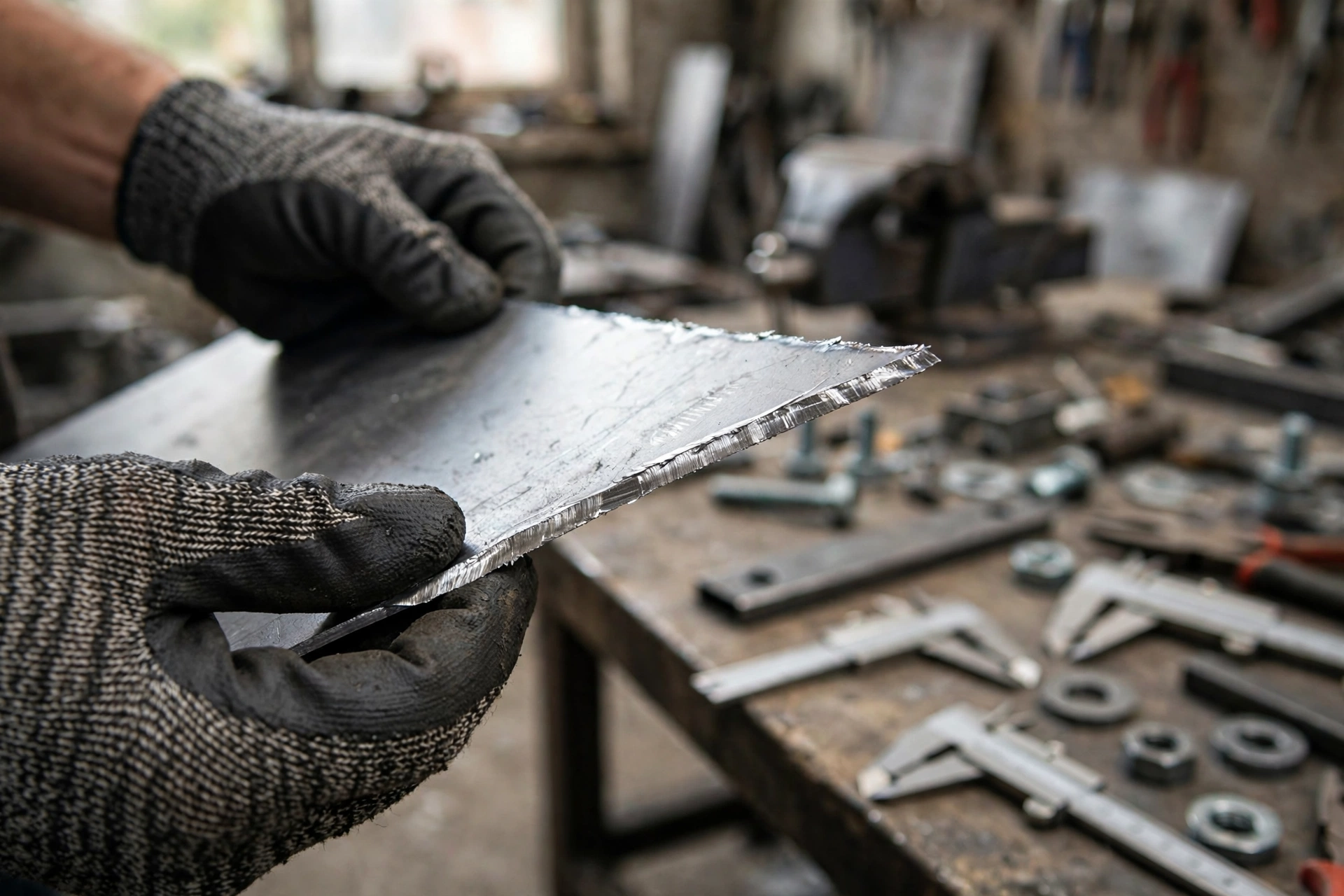
Start with the Edge, Not the Catalogue
Cut risk in metal work comes from edges under pressure: the combination of a sharp edge, a loaded grip, and any sliding motion. A light part with a clean, dressed edge is a different hazard from a heavy stamping with a raw burr, even if both are “sheet metal.” Before choosing a rating, walk the process and grade each station by edge sharpness, part weight (heavier parts mean higher grip force, which drives the edge deeper), and handling frequency. One glove for the whole plant usually means over-protection at the bench and under-protection at the press.
One boundary condition first: cut resistant gloves are for handling, never for contact with moving blades, rotating machinery, or powered saws, where entanglement is the dominant hazard and gloves of any kind may be prohibited. OSHA’s PPE guidance is explicit that glove selection must match the hazard assessment — and in rotating-equipment zones the correct assessment can be “no gloves.”
Choosing the Cut Level by Task
Using the ANSI/ISEA 105 scale (with EN 388 TDM letters alongside), typical metal-work tasks sort out like this:
- Light assembly, inspection, handling dressed parts: ANSI A2–A3 / EN 388 B–C. Edges are finished; the glove is insurance against incidental contact, and dexterity matters most.
- Sheet metal handling, HVAC duct fabrication, general fabrication: ANSI A4–A5 / EN 388 C–D. Raw sheared edges and moderate part weights — the heartland of metal-shop lacerations.
- Stamping, heavy-gauge stock, glass and sharp scrap handling: ANSI A6–A7+ / EN 388 E–F. Burrs, heavy loads, and sliding grips demand the top of the range; add forearm protection where parts are carried against the wrist.
Deburring deserves a special note: the hazard peaks in the moment a part slips or a burr catches, so grip quality is as protective as cut level. A mid-level glove with the right coating often outperforms a higher-rated glove that lets parts slide.
Palm Coatings: Where Metal Work Is Won or Lost
- Polyurethane (PU): the dexterity champion. Thin, tactile, excellent dry grip, and it doesn’t mark parts. Best for dry assembly and inspection; wears fast on abrasive stock and offers no oil grip.
- Nitrile (flat or sandy finish): the oily-parts answer. Sandy nitrile channels oil away and keeps grip on machined, coolant-wet components; it also adds abrasion life. Slightly less tactile than PU.
- Latex crinkle: strong grip on rough, heavy stock and good cushioning, at the cost of fine feel. A solid choice for scrap and heavy handling.
- Leather palm: heat tolerance and abrasion durability for hot or rough work, but bulky and slower to dry. Choose it where heat, not finesse, is the problem.
Metal shops rarely handle only metal. Parts washing, degreasing, and coolant management bring chemicals into the same shift — and cut gloves are not chemical gloves. Stations that combine sharp parts with solvents need a separate chemical specification governed by chemical glove breakthrough time, with gloves changed at the station boundary rather than one glove asked to do both jobs badly.
Fit and Dexterity: The Safety Feature Nobody Specifies
An oversized cut glove is a hazard multiplier: loose fingertip fabric folds over edges, catches on burrs, and forces the wearer to grip harder — increasing both fatigue and the pressure that drives edges into the glove. A correctly fitted knitted glove (13- or 15-gauge for dexterity, 18-gauge where fine work dominates, 10-gauge for heavier rugged knits) keeps the protective yarn where the edge actually lands. Fit the glove at the fingers first: fingertip seams should sit at the fingertip, with no more than a few millimetres of slack.
Comfort decides compliance. Breathable uncoated backs, snug knit wrists that keep metal swarf out, and sizes that actually span your workforce (including the smallest and largest hands) determine whether the specified glove is on the hand at the moment of the slip. Run a wear trial at the worst station, not the easiest one, and let operators vote between two finalists — the glove they choose is the glove they’ll wear.
The Rest of the Specification
Cut level headlines the datasheet, but three secondary specs decide service life in metal work. Abrasion resistance (the first digit of the EN 388 code) predicts how fast coatings wear through on rough stock. Cuff style matters where parts are carried against the wrist — extended cuffs or separate cut resistant sleeves close the gap between glove and sleeve. Washability decides economics: knitted HPPE and engineered-yarn gloves that survive industrial laundering cost a fraction per month of gloves retired early for coolant saturation. Retire gloves on condition — coating worn to the knit, yarn fraying, stiffness from dried coolant — not on a calendar.
Special Cases That Break the General Rules
- Glass handling. Glass edges are uniformly sharp and the loads are high and two-handed; stay at A5–A7 / EN D–F, add forearm sleeves, and prioritize coatings that grip when wet, because glass is routinely handled damp.
- Wire, strapping, and banding. Thin, hard edges concentrate force on a tiny area — effectively a blade. Treat as one level more severe than the part weight suggests, and inspect glove fingertips daily; these edges destroy gloves from the fingertip in.
- Deburring and grinding support. The glove’s enemy is the part slipping, so grip outranks raw cut level; also weigh spark and heat exposure — synthetic cut yarns melt, so tasks near hot work may need leather over-gloves or a different control entirely.
Finally, manage the gloves you already own. Metal swarf embeds in knit yarns and coatings, turning a protective glove into an abrasive one and silently shortening its life; gloves in machining areas should be shaken out, inspected, and laundered on a schedule — most modern engineered-yarn gloves tolerate industrial washing, and a laundering program typically costs far less than the replacement rate of coolant-soaked gloves retired early. Keep a simple retirement log by station: when gloves consistently die at the same spot (almost always the thumb crotch or index fingertip), that is data about the task, not the glove, and it should feed the next specification review.
Outfitting a fabrication or stamping operation? Aceppe supplies cut resistant gloves in bulk across the ANSI A2–A7 range with PU, nitrile, and leather palm options. Send us your station list and the parts your team handles through our contact page, and we will build a per-station specification with trial quantities.
📏 Free Tool: Glove Size Finder
Measure palm circumference and hand length, get your glove size to EN ISO 21420 — because a cut glove only protects where it actually fits. Free, no signup.


