


Most welders pick welding gloves by brand, leather, or price — and then wear the wrong size for years. A glove that is a size too big will bunch at the fingertips, slip on the torch, and leave gaps where spatter and heat can reach the skin. A glove that is a size too small restricts blood flow, tires the hand faster, and can tear at the seams after a few long shifts. Fit is not a comfort luxury in welding; it is a protection decision.
This guide walks you through how to measure your hand, how to read welding glove size charts, and the simple fit checks that tell you — in the shop, with the glove on — whether the pair you are holding is the right one for you.
Why Welding Glove Fit Is a Safety Issue
OSHA’s personal protective equipment standards require employers to select hand protection that fits the hand properly, because an ill-fitting glove is protection in name only. The same principle applies to self-employed welders buying their own gear. Here is what poor fit actually costs you:
- Heat and spatter find the gaps. Loose gloves shift during movement, exposing the wrist and the webbing between fingers — exactly where spatter lands when you strike an arc or weld out of position.
- Dexterity collapses. Extra material at the fingertips kills the fine control you need to feed filler rod in TIG or manipulate a MIG gun trigger. Our guide to dexterity in TIG gloves explains why fingertip feel decides weld quality.
- Hands fatigue faster. A glove that is too big forces your hand to work harder to hold the torch; a glove that is too tight cuts circulation. Both shorten your productive day.
- UV exposure sneaks in. Welding arcs emit intense ultraviolet radiation, and any bare skin between a loose cuff and your sleeve is an exposure point. Full wrist coverage only works when the glove stays where it is supposed to be.
If you want the regulatory background, OSHA’s overview of personal protective equipment requirements and its welding, cutting, and brazing standards are the authoritative starting points.
How to Measure Your Hand for Welding Gloves
You need two measurements and a soft tape measure (or a strip of paper and a ruler). Measure your dominant hand, and measure at the end of the day — hands swell slightly during work, and welding is physical work.
Step 1: Measure Palm Circumference
Wrap the tape around the fullest part of your palm, just below the knuckles, excluding the thumb. Keep your hand open and flat, fingers together but relaxed. Write down the circumference in inches or centimeters. This is the measurement most size charts are built around.
Step 2: Measure Hand Length
Measure from the tip of your middle finger to the base of your palm, where the wrist begins. Some manufacturers — particularly European brands following EN sizing conventions — prioritize length over circumference, so keep this number handy.
Step 3: Match to a Size Chart
Typical welding glove size charts look like the one below. Note that sizing is not standardized across the industry the way EN 12477 standardizes protection classes (our EN 12477 guide covers Type A vs Type B). Always check the specific manufacturer’s chart, but these ranges are a solid starting point:
| Glove Size | Palm Circumference | Hand Length |
|---|---|---|
| S | 7–7.5 in (18–19 cm) | 6.5–7 in (16.5–17.8 cm) |
| M | 7.5–8 in (19–20.5 cm) | 7–7.5 in (17.8–19 cm) |
| L | 8–8.5 in (20.5–21.5 cm) | 7.5–8 in (19–20.3 cm) |
| XL | 8.5–9 in (21.5–23 cm) | 8–8.5 in (20.3–21.6 cm) |
| 2XL | 9–9.5 in (23–24 cm) | 8.5–9 in (21.6–22.9 cm) |
If your circumference and length point to different sizes, size up — a slightly long glove protects better than a cramped one, and leather breaks in and molds to your hand over the first few shifts.
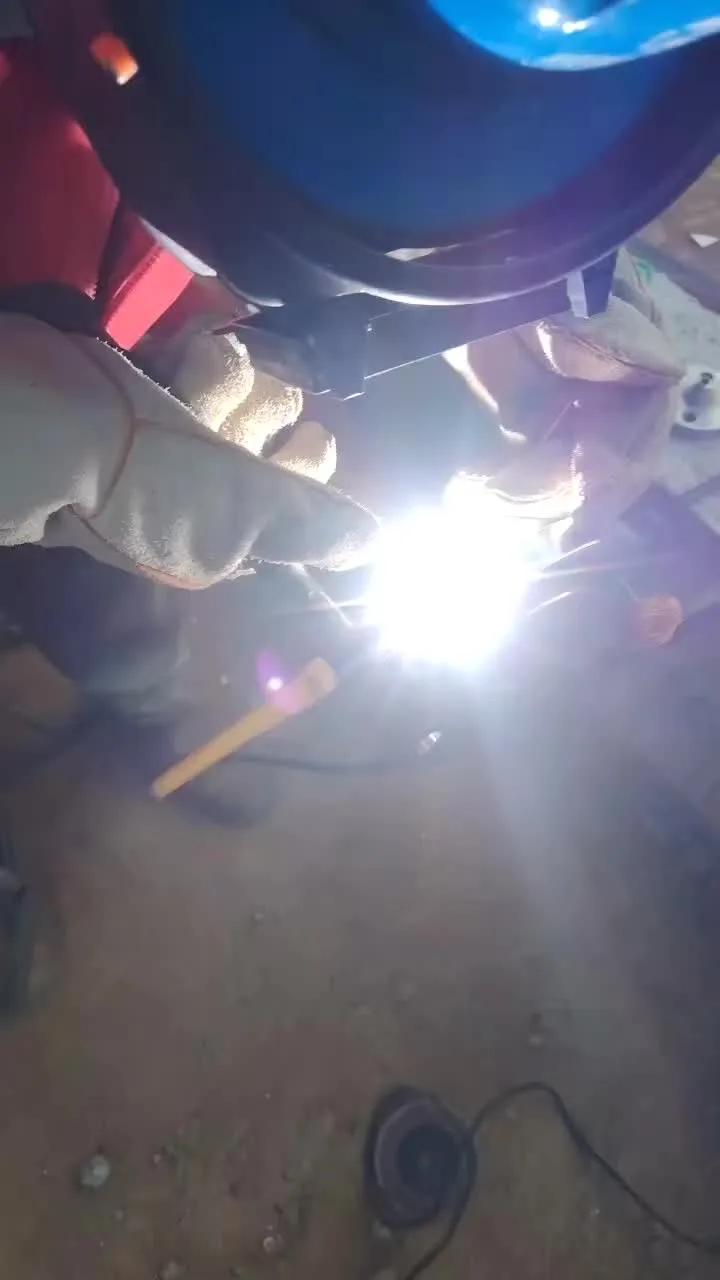
The Fit Check: 4 Tests to Run With the Glove On
Charts get you close; your hands confirm it. Run these four checks before you commit to a pair:
- The fingertip test. Put the glove on and press each fingertip against your palm. There should be no more than about a quarter inch of empty material at the tip. If your fingers swim, dexterity is gone — you will struggle to pick up filler rod or feel the torch.
- The palm test. Make a fist. The palm leather should be snug with no large folds bunching in your grip, but you should not feel tension across the knuckles. Bunching material under a hot workpiece is both uncomfortable and a burn risk.
- The grip test. Hold your torch or electrode holder. The glove should grip it securely without slipping, and you should be able to roll the torch between your fingers smoothly. This matters most for TIG, where torch angle control is everything.
- The cuff test. Raise your arms overhead and bend your wrists as if welding out of position. The cuff should stay put and overlap your sleeve — if it rides up and exposes bare skin, the cuff is too short or too loose for the work.
Signs Your Welding Gloves Are Too Big
Too-big gloves are the most common sizing mistake in welding, because many welders assume “roomy equals comfortable.” Watch for these signs:
- Fingertips fold over when you curl your fingers, and you lose the ability to pick up small items like filler rod or ground clamp parts.
- The glove rotates on your hand when you move the torch, so the padded palm is never where the heat actually hits.
- Spatter and hot metal can drop into the loose cuff opening and sit against your wrist.
- You compensate with a tighter grip, which fatigues the forearm over a long shift.
Signs Your Welding Gloves Are Too Small
Gloves that are too small are rarer but more damaging over time:
- The leather pulls tight across the knuckles when you make a fist, and you feel seams straining at the fingertips.
- Your fingers feel cold or numb during work — tight leather restricts circulation, and numb hands plus hot metal is a bad combination.
- Seams split early, especially at the thumb crotch, because the leather is under constant tension instead of flexing naturally.
- Putting the gloves on and taking them off becomes a struggle, so you start skipping them for “quick” tacks — the classic path to a burn.
Sizing Differences Across Welding Glove Types
Not all welding gloves size the same way, because the job each type is built for changes the fit priorities:
- TIG gloves are cut slimmer by design — a snug fit is the whole point, since fingertip feel is the product. If you are between sizes in a TIG glove, try both: the smaller size usually works better once the leather breaks in. Our TIG welding gloves buying guide covers the other four things to check when shopping.
- MIG and stick gloves are bulkier, with thicker palms and longer cuffs. They tend to run roomier than their chart size, so expect a slightly looser feel — that is normal, not a sizing failure.
- Leather type changes the break-in. Soft grain leathers like goatskin and deerskin stretch and mold faster than stiff cowhide, which means a snug pair of goatskin gloves will feel custom-fit within a few days. See our leather comparison guide for how each hide behaves.
- Women’s and narrow hands. Standard size charts skew toward average male hands. Welders with narrower hands often do better sizing down in slim-cut TIG gloves rather than floating in a small men’s glove.
Cuff Length and Wrist Coverage
Fit does not end at the knuckles. The cuff decides whether your wrists and forearms are protected from spatter, radiant heat, and UV — and different jobs call for different cuff lengths. Shorter gauntlet cuffs suit bench work and TIG; longer cuffs belong on stick and overhead work where spatter rains down. Make sure the cuff overlaps your sleeve comfortably when you move, so there is no exposed gap no matter the welding position.
Special Fit Notes for TIG Welders
TIG is the most fit-sensitive welding process, because you hold a torch in one hand and feed filler rod with the fingers of the other. A few TIG-specific pointers:
- Prioritize the filler-rod hand. Most TIG welders wear their thinner glove on the rod hand and can tolerate a slightly heavier glove on the torch hand — but both need to pass the fingertip test.
- Skip thick linings if dexterity is your priority. Lined gloves feel warmer and protect more, but each layer between your hand and the rod blunts the feedback you depend on.
- Recheck fit after the break-in week. Thin TIG leather stretches noticeably in the first few shifts. A pair that felt snug on day one should feel molded by day five — if it still feels loose, it was too big.
When Fit Changes Over Time
Leather is a natural material, and fit is not permanent:
- Stretching. Leather relaxes with heat and sweat. A glove that starts snug and ends roomy is normal — but one that starts roomy will end sloppy.
- Shrinking. Leather that gets soaked and dries too fast can stiffen and shrink. Let wet gloves dry slowly at room temperature, never on a heater or in direct sun.
- When to replace. If the palm has thinned, the seams are pulling apart at the thumb crotch, or the cuff no longer stays over your wrist, the glove is done — no amount of “breaking in” will fix worn-out leather.
Measure Once, Weld Comfortable for Years
Five minutes with a tape measure and the four fit checks above will do more for your welding comfort than any brand name or price tag. Fit is the cheapest upgrade you can make to your hand protection: it costs nothing, it applies to every pair you will ever buy, and it is the difference between a glove that protects you all shift and one that just sits on your hand.
AceppePro’s TIG welding gloves are designed to meet EN 12477 Type B requirements — the welding-glove classification built for higher dexterity — with a soft premium-leather palm for fingertip control and Kevlar stitching for seam durability.
Try them on the job: grab a pair on Amazon at amazon.com/dp/B0GZ235YZQ and run the fit checks yourself. For bulk orders or OEM inquiries, reach out through our contact page — we are happy to help you spec the right glove and size mix for your whole crew.