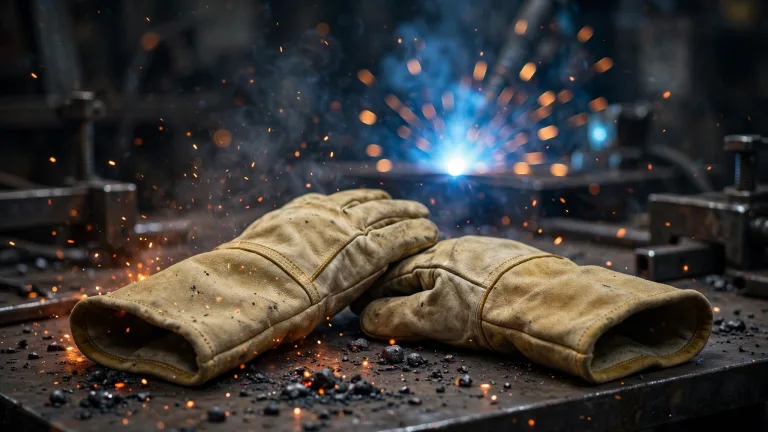



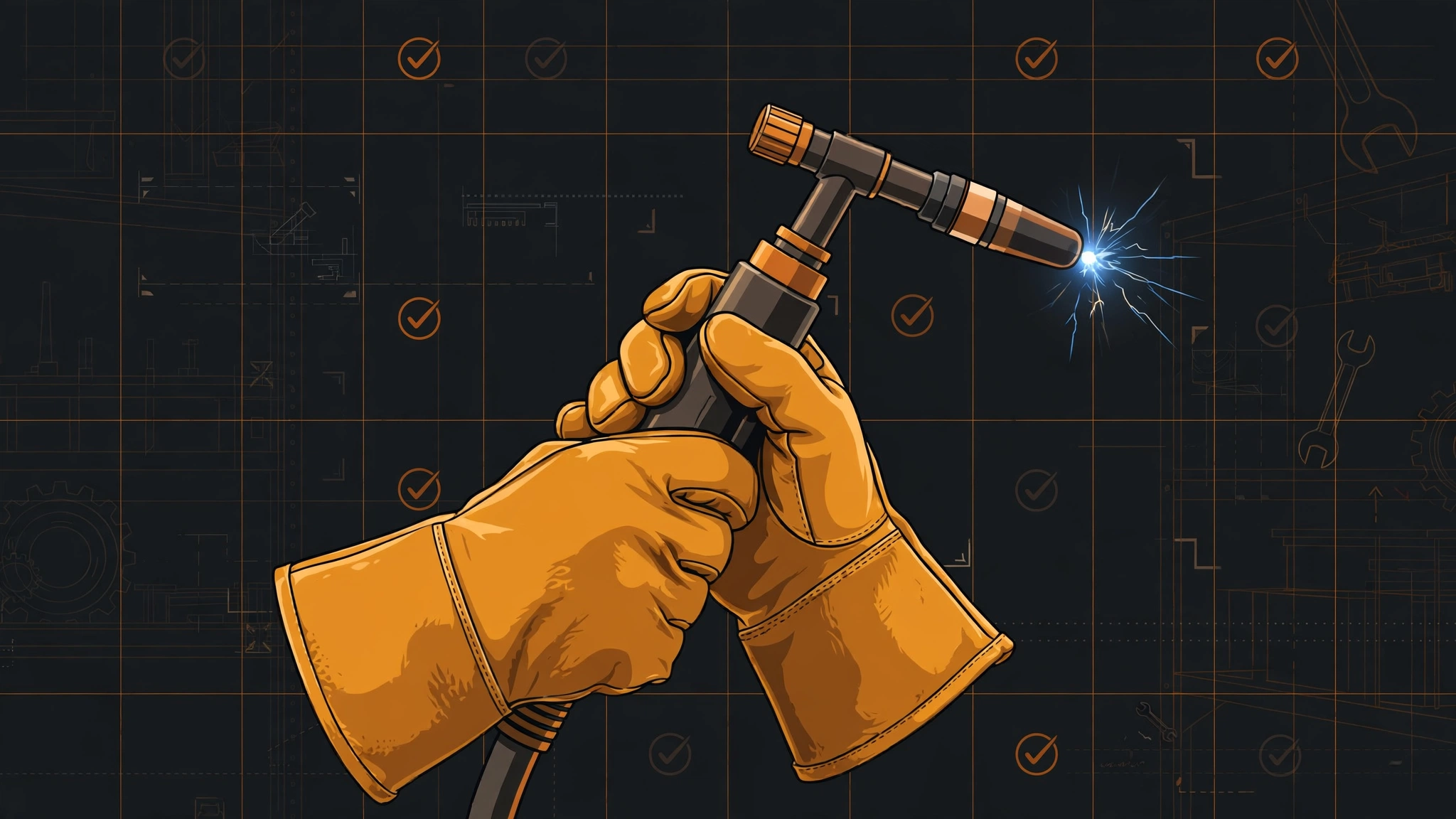
Walk into any welding shop and you’ll see a row of leather gloves hanging by the bench — most of them looking more or less the same. But if you work with welding PPE specifications, you’ll quickly notice a small line printed inside the cuff: EN 12477, followed by either Type A or Type B. That one letter tells you exactly what trade-off the glove was designed around — protection or dexterity — and choosing the wrong type for your welding process is one of the most common specification mistakes in industrial safety.
This guide breaks down what EN 12477 actually requires, how Type A and Type B differ test by test, and how to match the right type to your welding process.
What Is EN 12477?
EN 12477:2001 (with Amendment No. 1:2005) is the European standard for protective gloves for welders. Rather than inventing its own test methods, it acts as an application-specific wrapper around three existing standards:
- EN 420 / EN ISO 21420 — general requirements for gloves, including dexterity and sizing.
- EN 388 — protection against mechanical risks: abrasion, blade cuts, tears, and punctures.
- EN 407 — protection against thermal risks: burning behaviour, contact heat, convective heat, radiant heat, and small splashes of molten metal.
EN 12477 defines the minimum performance levels a glove must reach in each of these tests to be certified for welding — and splits gloves into two classes, Type A and Type B, with different minimums. If you’re new to cut ratings, our explainer on ANSI/ISEA 105 vs EN 388 covers how mechanical test levels work.
Type A vs Type B: The Core Difference
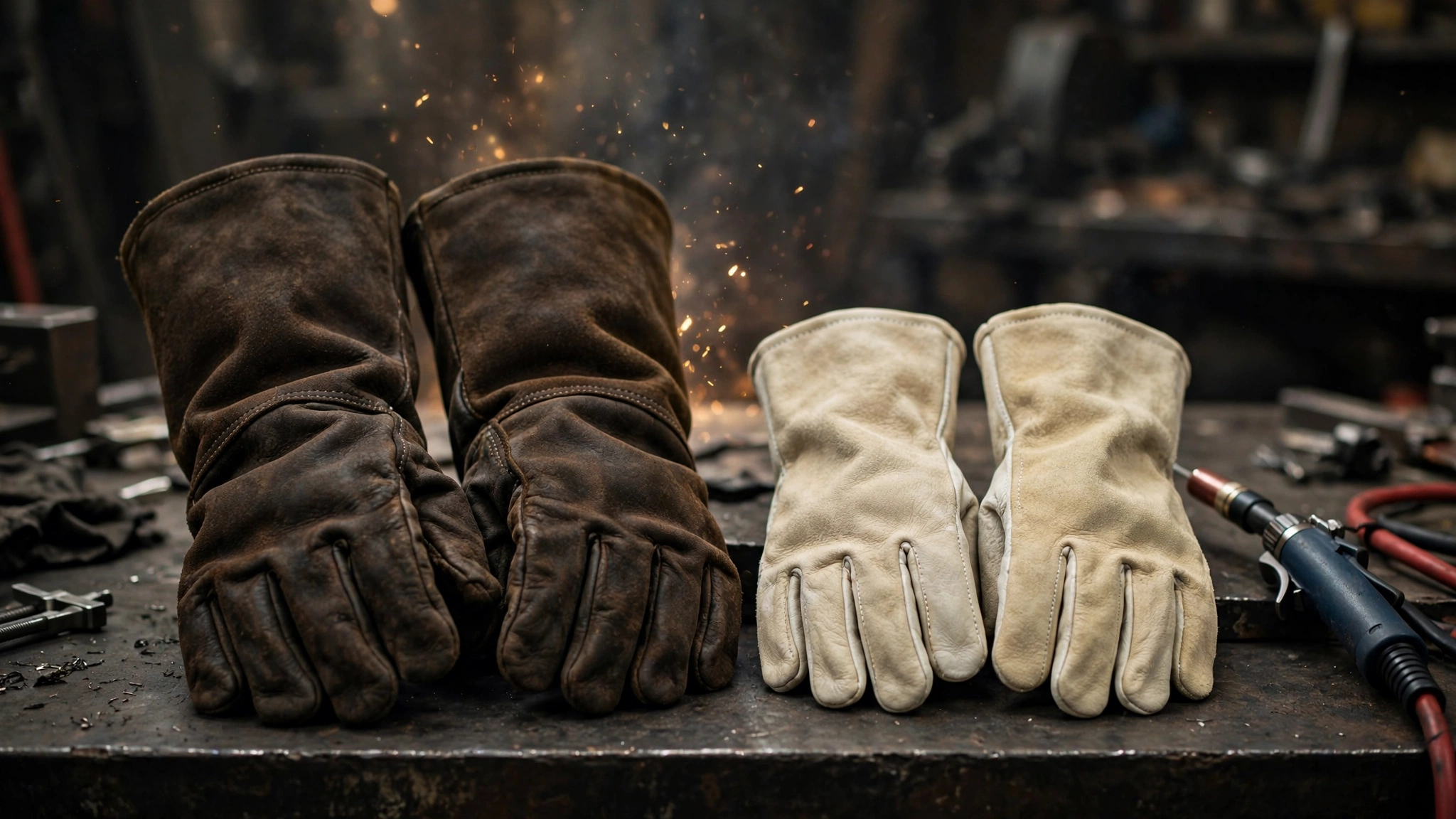
The entire standard is built around a single trade-off: you cannot maximize heat protection and dexterity at the same time. A thick, rigid leather glove blocks more heat; a thin, supple one lets you feel the filler rod. EN 12477 formalizes this:
Type A — Higher Protection, Lower Dexterity
Type A gloves are built for welding operations where protection against heat and mechanical hazards is the priority. They use thicker leather and heavier construction, reaching higher minimum levels for burning behaviour, convective heat, and molten metal splash. The cost is dexterity: Type A only needs to reach dexterity level 1. These are the gloves for general welding and cutting operations — MIG and stick welding, overhead work, and anywhere heavy spatter is flying.
Type B — Higher Dexterity, Lower Protection
Type B gloves trade protection for fingertip control. They must reach dexterity level 4, which means the wearer can pick up a pin as thin as 6.5 mm in diameter (versus 11 mm for Type A). That precision is exactly what TIG welding demands: feeding filler wire, manipulating the torch, and striking a stable arc all rely on fine finger movement. Type B still meets all minimum mechanical and thermal thresholds — just at the lower minimums.
Minimum Performance Levels Compared
The table below shows the minimum levels each type must achieve. (Test standards in parentheses.)
| Requirement (test standard) | Type A | Type B |
|---|---|---|
| Abrasion resistance (EN 388) | 2 | 1 |
| Blade cut resistance (EN 388) | 1 | 1 |
| Tear resistance (EN 388) | 2 | 1 |
| Puncture resistance (EN 388) | 2 | 1 |
| Burning behaviour (EN 407) | 3 | 2 |
| Contact heat (EN 407, 100 °C) | 1 | 1 |
| Convective heat (EN 407) | 2 | — (not required) |
| Small splashes of molten metal (EN 407) | 3 | 2 |
| Dexterity (EN 420) | 1 | 4 |
A few things stand out. First, contact heat is identical for both types — level 1 (100 °C). Second, Type B has no convective heat requirement, reflecting the fact that TIG welding generates less ambient heat around the hands than MIG or stick. Third, blade cut resistance is level 1 for both — if your application needs serious cut protection, welding gloves alone aren’t the answer, and you should look at purpose-built EN 388 cut-rated gloves for the material-handling portion of the job.
Which Type for Which Welding Process?
The standard doesn’t prescribe processes, but the intended applications are well established across the industry:
- TIG welding → Type B. TIG is a low-spatter, low-ambient-heat process, but it demands precise torch and filler control. Type B’s dexterity level 4 is designed for exactly this. Our TIG welding gloves buying guide covers what to look for in more detail.
- MIG welding → Type A. MIG produces heavy spatter and significant radiant heat. Type A’s level 3 splash protection and level 2 convective heat rating match this environment.
- Stick (SMAW) welding → Type A. High heat, heavy spatter, and frequent electrode changes favor thicker, longer gloves.
- Oxy-fuel cutting and heavy fabrication → Type A. The dominant risk is molten metal splash and sparks, not fine finger work.
- Precision fabrication with light TIG or plasma → Type B. Where control matters more than bulk heat shielding.
For a broader view of welding hazards beyond hand protection, see our complete welding PPE checklist.
Glove Length and Cuff Requirements
EN 12477 also sets minimum glove lengths by hand size — 300 mm for size 6 up to 350 mm for size 11 — so the wrist and lower forearm are covered during welding. This matters more than it sounds: spatter rolling off the workpiece typically lands on the wrist and cuff first. When evaluating welding gloves, check that the gauntlet cuff actually covers your wrist in your working posture, not just when your arm is straight. TIG-specific designs often pair a slimmer palm with an extended cuff to keep forearm protection without sacrificing finger control.
How to Read the Markings
A certified welding glove should show the following information printed on the glove or its packaging:
- The standard reference: EN 12477
- The type: Type A or Type B
- The EN 407 performance levels for thermal risks (shown alongside the EN 407 flame pictogram, since EN 12477 has no pictogram of its own)
- The EN 388 performance levels for mechanical risks (shown alongside the EN 388 hammer pictogram)
- Size, manufacturer name, and date of manufacture or obsolescence
- The CE mark and the notified body number (welding gloves are Category II PPE under the EU PPE Regulation 2016/425)
If a glove claims “welding glove” but shows no EN 12477 marking, treat it as a general leather work glove — it has not been tested to the welding-specific minimums above. Procurement teams comparing specifications should require the marking on the product itself, not just on a datasheet.
What EN 12477 Does Not Cover
No standard covers everything, and it’s worth knowing the limits:
- Special welding processes. The standard is written for general manual welding; highly specialized processes may need additional assessment.
- Electrical hazards. Welding gloves are not insulating gloves. Never use them as protection against electric shock — that’s a separate standard entirely.
- Cut levels beyond minimum. Both types cap at cut level 1; handling sharp plate edges between welds is a different risk.
- Chemical risks. Leather welding gloves offer no meaningful protection against solvents or welding fume condensate chemistry.
For the occupational health side — welding fumes, UV exposure, and facility-level controls — OSHA’s welding, cutting and brazing page is a solid starting point for employers, and SATRA’s summary of the EN 12477 test requirements covers the testing side in more depth.
How to Choose Between Type A and Type B
Use this decision sequence when writing a specification or buying gloves for a team:
- Start with the process. TIG → shortlist Type B. MIG, stick, or heavy cutting → shortlist Type A.
- Check the dominant hazard. Heavy spatter or overhead work overrides dexterity needs — go Type A. Fine torch control on thin material overrides bulk protection — go Type B.
- Verify the markings. EN 12477 + type designation + EN 407/EN 388 levels on the glove itself.
- Fit-test before bulk purchase. Dexterity ratings are measured on standard hands; have actual welders try the gloves with their torch and filler wire.
- Size the cuff, not just the palm. The 300–350 mm minimum exists because forearm coverage prevents a large share of burn injuries.
Try Them Yourself
Reading about dexterity is no substitute for feeling it. AceppePro’s TIG welding gloves pair a soft, thin sheepskin palm for fingertip control with a 13 cm extended cuff and Kevlar stitching for durability under radiant heat. Try them on Amazon — and for bulk orders or OEM inquiries, reach out via aceppe.com.