



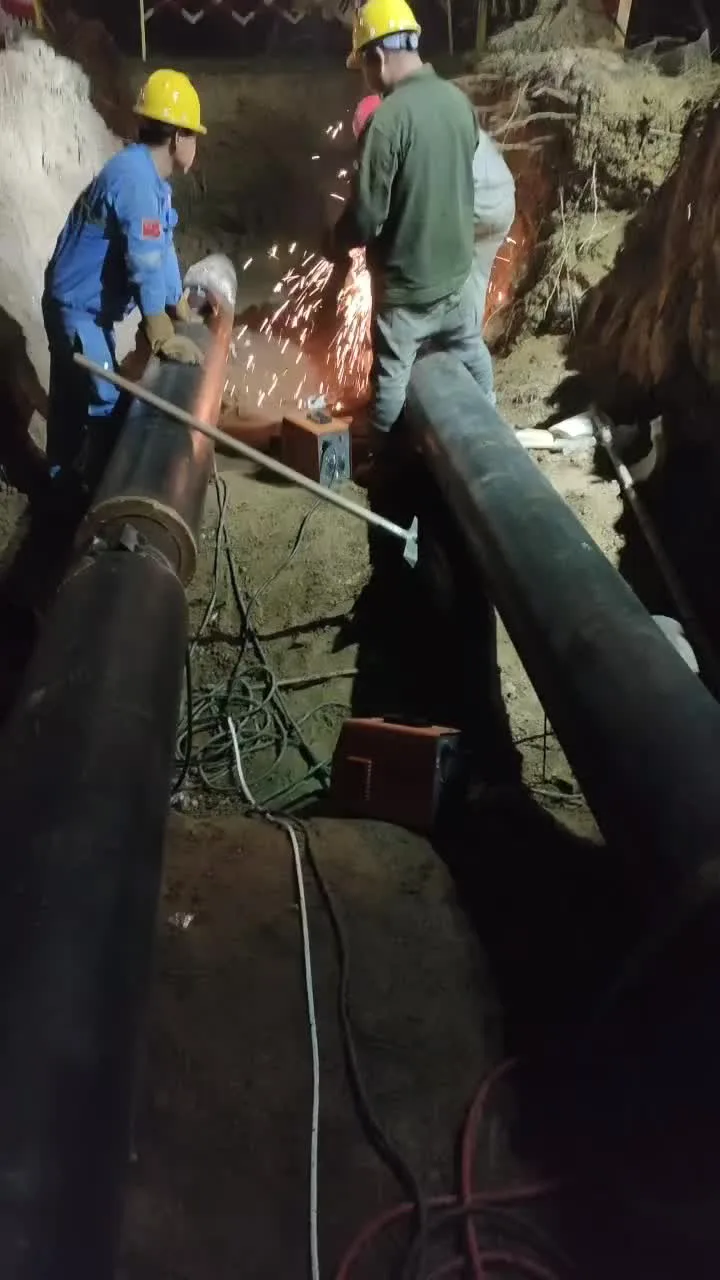
When welders shop for gloves, most of the attention goes to the palm: leather type, dexterity, heat rating. The cuff — that flared extension running up the wrist — rarely gets a second look. Yet cuff length is one of the most consequential specs on a welding glove. It decides how much of your wrist and forearm stays covered when you reach, twist, and weld overhead, and it can be the difference between a shift that ends comfortably and one that ends with a spatter burn in a spot your glove didn’t cover.
The two most common options are 4-inch and 6-inch cuffs. Neither is universally better — each suits different processes, positions, and work habits. This guide explains what each cuff length does, how to match it to your work, and the overlap rule that keeps the vulnerable wrist zone protected no matter which length you choose.
What a Welding Glove Cuff Actually Does
A welding glove cuff (also called a gauntlet) is the leather extension that runs past the wrist toward the elbow. Its job is simple but critical: close the gap between the glove and the sleeve so no bare skin is left exposed. During welding, that gap is under attack from three directions at once — ultraviolet radiation from the arc, radiant heat from the workpiece, and molten spatter that can fly several feet and land exactly where the glove ends and the sleeve hasn’t quite begun.
The wrist is a particularly unforgiving spot for a burn. The skin there is thin, the blood vessels sit close to the surface, and a spatter burn on the inner wrist can keep a welder off the job for days. A cuff that rides up and stays put converts that vulnerable zone into protected territory. This is why nearly all dedicated welding gloves — as opposed to general work gloves — come with a gauntlet cuff rather than a knit or elastic wrist: the coverage is the point.
The 4-Inch Cuff: Mobility and Ventilation
A 4-inch cuff ends roughly at mid-forearm. It is the standard on most dedicated TIG gloves, and the reasons are practical. TIG welding is usually done at a bench, seated or standing, with the work at a comfortable height and the welder’s forearms resting or moving in controlled arcs. In that position, spatter is minimal — the TIG process produces almost none — and the main things the cuff must block are UV radiation and radiant heat from the weld puddle.
Where the 4-inch cuff shines
- Precision work: a shorter cuff flexes less against the wrist, so it interferes less with the fine hand movements TIG demands — feeding filler rod and guiding the torch in tight, controlled passes.
- Cooler hands in warm shops: less leather on the forearm means more heat escapes. In hot weather or poorly ventilated shops, a 4-inch cuff runs noticeably cooler than a 6-inch one.
- Bench and fabrication work: when the workpiece is at table height and spatter is low, 4 inches of coverage is plenty — the sleeve handles the rest.
Where it falls short
The trade-off is coverage. Reach overhead to weld a pipe joint, or stretch into an awkward position on a structural frame, and the sleeve pulls back while the glove rides down — suddenly there’s a band of exposed wrist exactly where spatter lands. Welders who do a lot of out-of-position MIG or stick work often find a 4-inch cuff leaves them constantly tugging sleeves down. We cover process-specific glove choices in our TIG welding glove buying guide, but the cuff rule is the same everywhere: if your work regularly moves your arms through spatter zones, 4 inches may not be enough.
The 6-Inch Cuff: Maximum Forearm Coverage
A 6-inch cuff reaches well up the forearm, close to the elbow on many wearers. This is the classic choice for MIG and stick welding, where spatter is a fact of life and welding positions change constantly — overhead, vertical, horizontal, and everything in between. With a 6-inch cuff, the glove still overlaps the sleeve even when you reach straight overhead, which is exactly the position where falling spatter is most dangerous.
Where the 6-inch cuff shines
- Overhead and vertical welding: gravity pulls spatter down onto the forearm. Six inches of leather keeps it off the skin.
- High-spatter processes: flux-core and stick welding throw significantly more spatter than TIG or MIG. The extra two inches catch what the shorter cuff misses.
- Structural and pipeline work: on site, you weld where the joint is — inside trenches, under beams, against hot surfaces. Long cuffs are cheap insurance in unpredictable positions.
The trade-offs
Six inches of leather is six inches of heat insulation wrapped around your forearm. In summer or in hot shops, a long cuff can make your arms sweat noticeably more, and the extra material adds stiffness at the wrist — fine for MIG, but a handicap for the finger work TIG requires. Some welders also find long cuffs snag more easily in tight spaces. Like glove size itself, cuff length is a fit decision: more coverage costs mobility and comfort, and the right balance depends on what you weld.

Matching Cuff Length to Welding Process
As a starting rule of thumb, let the process and position decide:
- TIG (GTAW) at the bench: 4-inch cuff is the sweet spot. Low spatter, fixed position, and dexterity matters more than extra coverage. Pair it with a long-sleeve shirt or welding jacket and the overlap rule below keeps you protected.
- MIG (GMAW) and flux-core: 6-inch cuff is the safer default. More spatter, more position changes, more time with the torch in awkward angles.
- Stick (SMAW): 6-inch cuff, no debate for most welders. Stick welding produces the heaviest spatter of the common processes and is done outdoors and out-of-position more than any other.
- Overhead work, any process: go 6-inch. When the work is above your head, your forearm is the landing zone.
Many experienced welders keep both in the truck: a dexterous 4-inch pair for TIG and bench work, and a rugged 6-inch pair for MIG, stick, and field work. Given how much cheaper gloves are than a lost-time injury, owning two pairs matched to the work is one of the easiest safety upgrades there is.
The Overlap Rule: Cuff Plus Sleeve, No Gaps
Here’s the principle that matters more than the number on the spec sheet: the cuff and the sleeve must overlap at every working angle. A 6-inch cuff paired with a short sleeve still leaves skin exposed; a 4-inch cuff under a welding jacket’s cuff is fully protected. Before you buy, do the reach test: put the gloves on with your normal work shirt or jacket, then reach straight overhead, bend at the waist, and twist. If any bare wrist shows, your combination isn’t protecting you.
The correct layering order is simple — the jacket cuff goes over the glove cuff, never the other way around. A glove cuff tucked inside the sleeve lets spatter drop straight down into the glove. A sleeve overlapping the glove cuff sheds spatter outward. This is standard practice on industrial sites, and it’s the single most common cuff mistake new welders make: wearing the layers in the wrong order.
What Standards Say About Glove Length
You don’t have to take anyone’s word for the importance of cuff coverage — the standards bake it in. In the United States, OSHA 1910.138 requires employers to select and require appropriate hand protection wherever employees’ hands are exposed to hazards such as burns — and OSHA 1910.252, the welding, cutting, and brazing standard, sets the broader PPE expectations for hot work. The general-duty principle behind both is the same: protection must cover the exposed hazard, and for welding, the hazard doesn’t stop at the wrist.
In Europe, EN 12477 — the standard specifically for protective gloves for welders — specifies minimum overall glove lengths that scale with glove size: the larger the glove, the longer the minimum length, because a larger hand means more forearm to cover. Gloves are tested and marked as Type A (higher dexterity, typically TIG) or Type B (higher protection, typically MIG and stick). The distinction lines up neatly with the cuff discussion: Type A gloves tend to ship with shorter, more flexible cuffs, while Type B gloves favor the longer, heavier gauntlet. Our EN 12477 guide walks through the Type A vs. Type B decision in detail.
Cuff Details Worth Checking Before You Buy
Beyond raw length, a few cuff details separate good gloves from mediocre ones:
- Cuff material: most gauntlet cuffs use split cowhide or similar leather — thicker and more heat-resistant than the palm leather, which is exactly right for a part of the glove that takes spatter but never needs to feel a filler rod.
- Stitching: cuff seams take repeated flexing. Kevlar thread resists heat far better than cotton or polyester, so it won’t char and split after a few hot shifts. Our Kevlar stitching guide explains why it matters.
- Flare vs. straight: a slightly flared cuff slips on and off easily over jacket sleeves; a straight cuff seals tighter. Either works — pick based on how often you take gloves off between welds.
- Cuff condition: a cuff that has gone soft, cracked, or thinned at the fold is a cuff that no longer protects. Proper glove care keeps cuffs — and the rest of the glove — in service longer.
Quick Decision Checklist
- Name your process and position. Bench TIG → 4-inch. MIG/stick, overhead, or field work → 6-inch.
- Do the reach test with your actual work clothing. No bare wrist at any angle — ever.
- Layer correctly: jacket cuff over glove cuff, so spatter sheds outward.
- Check the standard: for TIG precision work look for EN 12477 Type A; for heavier MIG/stick work, Type B.
- Inspect cuffs for wear as part of your regular glove check — retire the pair when the cuff leather thins or seams fail.
The Bottom Line
Cuff length is a small spec with outsized consequences. Four inches buys you mobility, ventilation, and the unencumbered wrist that precision TIG work rewards. Six inches buys you coverage — the kind that matters the moment you weld overhead, out of position, or with a spatter-heavy process. Match the cuff to the work, overlap it with your sleeve, and inspect it like the rest of the glove. Your wrists will thank you.
Try before you commit: if you’re doing TIG work and want to feel the difference a well-built glove makes, the AceppePro TIG welding gloves are available to try on Amazon — certified to EN 388, EN 407 and EN 12477, in premium leather with the thin, flexible fit TIG demands. Running a welding school or outfitting a crew? Contact us through aceppe.com for bulk and OEM inquiries.
Get the AceppePro TIG Welding Gloves
Premium leather, certified to EN 388 / EN 407 / EN 12477 — the thin, flexible fit TIG welding demands. Available now on Amazon US.
🧪 Free Tool: Glove Size Finder
Cuff length matters, but so does the right size. Measure your hand and get your EN ISO 21420 glove size in seconds.


