



Custom safety gloves turn a commodity into a branded asset. Instead of handing workers a generic glove, a company puts its own logo, colors, and packaging on hand protection its people actually wear. Done well, custom gloves improve identification on site, reinforce a safety culture, and make the right glove easy to find in a busy store room. Done poorly, they become an expensive lesson in vague specifications and skipped approvals.
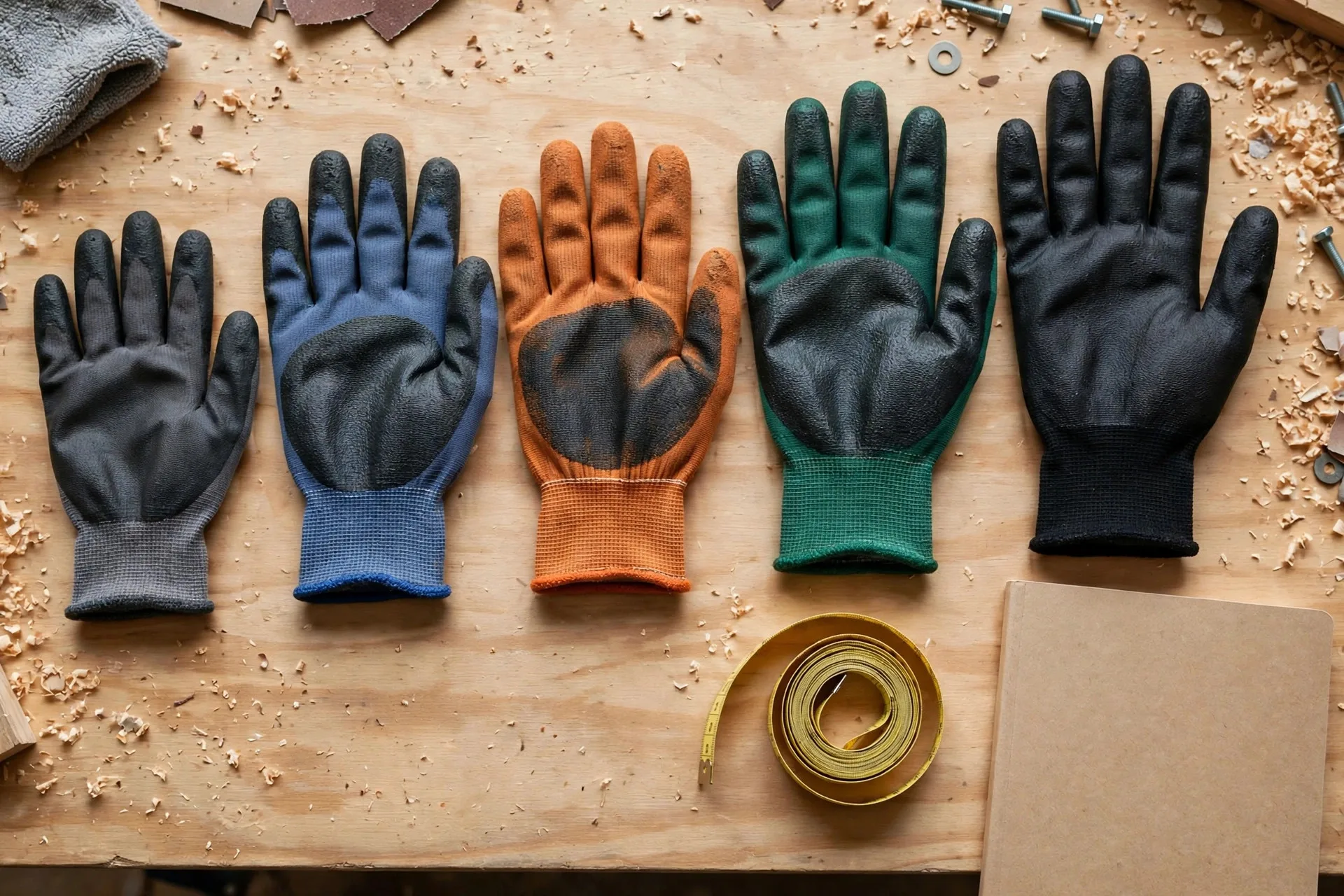
The difference between those two outcomes is process, not luck. A custom glove project moves through a clear sequence: define the specification, choose branding and packaging, approve a sample, check quality, and plan delivery. Each stage catches problems while they are still cheap to fix. This guide walks through that sequence so buyers know what to decide, what to ask, and what to check before money is committed.
Start with the spec, not the logo
The most common mistake in custom glove projects is starting with branding. A striking logo on the wrong glove helps nobody. The specification comes first: what tasks will the gloves be used for, what hazards must they protect against, and what do workers need in fit, grip, and dexterity? A glove chosen for chemical handling differs from one chosen for general assembly, and both differ from one chosen for cold outdoor work. Write the job tasks down before discussing colors.
Fit deserves its own attention. Hands vary widely across a workforce, and a size range that looks complete on paper can still leave workers with gloves that are too tight or too loose. Involve end users early: ask the people who will wear the gloves what they dislike about current pairs, and which tasks cause the most complaints. Their answers often change the specification in ways no catalog can predict, and they build acceptance for the final product before it arrives.
Comfort is not a luxury in this decision. A glove that protects well but is uncomfortable will be removed, adjusted, or swapped for something less protective. When defining the spec, weigh protection, dexterity, and comfort together rather than treating protection as the only criterion. A specification that workers accept is a specification that actually protects people.
Logo, color, and packaging choices
Once the specification is set, branding choices become straightforward. A logo identifies the company and the glove at a glance, which matters on sites where several glove types are in use. Color can serve the same purpose: different colors for different tasks or departments reduce mix-ups in the store room and on the job. Keep the design simple enough to reproduce cleanly at glove scale — fine detail that looks good on a screen may blur on fabric or coating.
Packaging decisions deserve the same care as the glove itself. Packaging protects the product in storage and transit, carries the information a buyer needs to reorder correctly, and presents the brand to the end user. Decide early whether gloves will be packed individually, in pairs, or in bulk, and what information each pack must show. Packaging chosen late tends to be improvised, and improvised packaging creates errors at goods-in and at issue.
Artwork approval is the control point for all of this. Before production, the buyer should see a proof of the logo, colors, and packaging as they will actually appear, and confirm them in writing. Screen colors shift, logos scale unpredictably, and assumptions about placement cause most branding disputes. A proof approved before production is cheap insurance; a correction after delivery is not.
Sampling and approval before production
No custom glove project should go to production without an approved sample. The sample is the buyer’s chance to check everything that matters: that the specification matches the job, that sizing runs true across the range, that the branding is accurate, and that the glove feels right in use. Treat the sample as a decision point, not a formality — if it is wrong, say so clearly and ask for a revision.
Wear trials make samples far more valuable. Put the sample on the hands of the workers who will use it, for the tasks they actually perform, and collect their feedback before approving. A glove that feels fine in a meeting room may grip poorly with oily hands or fatigue hands over a full shift. Trial feedback caught at this stage costs a revised sample; the same feedback caught after delivery costs a warehouse full of gloves nobody wants.
Approval should be explicit and recorded. Both sides should agree in writing that the approved sample is the standard the delivered goods will be judged against. That single discipline prevents most arguments about whether delivered gloves match what was ordered, because the comparison is against a physical sample rather than a memory of a conversation.
Quality checks before delivery
Quality checks protect the buyer twice: they catch problems before goods ship, and they create a record of what was checked. Before delivery, the buyer should confirm which checks apply to the order and how results are reported. The checks themselves should cover the points that matter most for the glove in question: materials and construction, sizing consistency across the range, branding accuracy, and packaging correctness.
For U.S. buyers, OSHA’s hand protection standard (29 CFR 1910.138) requires employers to select hand protection that fits the hazard and the task.
Just as important is agreeing what happens when a check fails. A clear process — report the issue, hold the affected goods, and agree on rework or replacement — turns a problem into a delay rather than a dispute. Ask the manufacturing partner to describe that process before ordering, not after the first failed check. A partner with a straight answer here is showing how the whole relationship will work.
- Materials and construction: do the delivered gloves match the approved specification?
- Sizing consistency: is the size range true across the whole order, not just the sample?
- Branding accuracy: does the logo, color, and packaging match the approved proof?
- Packaging correctness: is each pack labeled so the right glove reaches the right user?
Delivery, storage, and reordering
Delivery planning starts before goods ship. Confirm how the order will be packed for transit, what documentation travels with it, and how the buyer will know it is on its way. Clear carton labeling matters more than it sounds: a delivery that cannot be checked in quickly becomes a bottleneck at goods-in, and mislabeled cartons cause the wrong gloves to reach the wrong teams.
Storage and issue are part of the same plan. Custom safety gloves often sit alongside standard lines, so labeling must make the custom line instantly recognizable. Agree how reorders work while the first order is still fresh: the approved specification, artwork, and packaging should stay on file so a reorder reproduces the same glove without re-running the whole project. That continuity is the real payoff of doing the first custom order properly.
Mistakes that cost time and money
- Starting with the logo instead of the specification, and discovering the glove does not suit the job.
- Approving artwork on screen only, without a proof of how it will actually appear.
- Skipping wear trials, and learning about fit or grip problems after delivery.
- Leaving packaging decisions until the end, and improvising under time pressure.
- Approving samples informally, with no written record of what was agreed.
- Ordering without agreeing what happens when a quality check fails.
Every one of these mistakes is avoidable, and every one of them is common. The pattern behind them is the same: rushing past a decision that is cheap to get right early and expensive to fix late. A buyer who follows the sequence for custom safety gloves — spec, branding, sample, checks, delivery — avoids the pattern entirely, and ends up with gloves that workers wear, buyers can reorder, and a brand can stand behind.
Related Guides
Planning a custom glove project? Contact us through the contact form to discuss your specification, branding, and sampling needs. Free samples are available — you only cover shipping.


