




Most workplace eye injuries aren’t just about impact — they’re about the wrong lens for the wrong environment. The color of a protective lens isn’t aesthetic; it’s engineering.
Here’s a quick field guide to matching lens tint with task conditions — because the science behind that tint can mean the difference between eye fatigue and peak visual performance.
Understanding Visible Light Transmittance (VLT)
Every lens tint is defined by its VLT — the percentage of light that reaches the eye. Pair this with the wavelength spectrum of your work environment and you’ve got a recipe for smarter PPE procurement. When the spectrum is unknown, understanding the generalized benefits of each tint becomes your best guide.
Lens Tint at a Glance
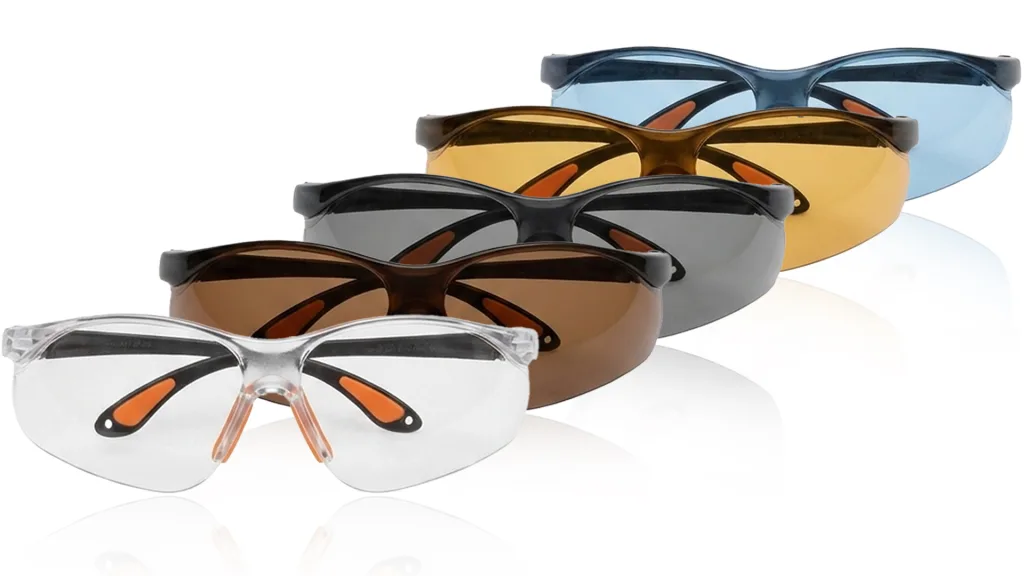
- Clear (VLT ~90%) — Maximum light transmission. Best for well-lit interiors and general-purpose tasks. The most versatile choice across industries.
- Amber (VLT ~90%) — Sharpens contrast and visual acuity in overcast or hazy daylight. Blocks blue light from screens and LEDs — a solid pick for precision inspection roles and digital-heavy workstations. Not suited for night driving.
- Brown / Light Brown (VLT ~25–70%) — A middle-ground tint when amber distorts color perception too much. Still boosts contrast while offering partial blue-light filtration.
- Indoor/Outdoor Gray (VLT ~68%) — Engineered for workers who move between bright sunlight and dim interiors constantly. Minimizes eye adjustment lag and reduces fatigue across both conditions.
- Dark Gray (VLT ~15%) — Outdoor workhorse. High glare suppression with minimal color distortion. Ideal for open-environment roles where sunlight exposure is prolonged.
- Light Blue (VLT ~80%) — Cuts fluorescent glare while keeping detail visibility high. Particularly valuable in food processing and inspection environments.
⚡ Beyond Tint: UV & Mirror Coatings
Polycarbonate lenses — even in clear — inherently block ~99% of UV radiation (200–380nm). Mirror coatings go a step further by physically deflecting light before it penetrates the lens, cutting surface glare in high-intensity environments.
The bottom line?
Choosing the wrong lens tint doesn’t just compromise protection — it creates discomfort that leads workers to remove their eyewear altogether. Lens tint optimization is a low-cost, high-impact step in any serious occupational health strategy.
Whether you’re in procurement, EHS management, or operations leadership — this one detail can shift how your workforce performs and how well they stay protected.