


High-temperature work is different from ordinary industrial work. In many jobs, workers may face radiant heat, sparks, welding spatter, hot surfaces, molten metal splash, steam, and long exposure near furnaces or heated equipment.
In these environments, standard workwear is not enough. Workers need heat-resistant PPE designed for the actual hazard.
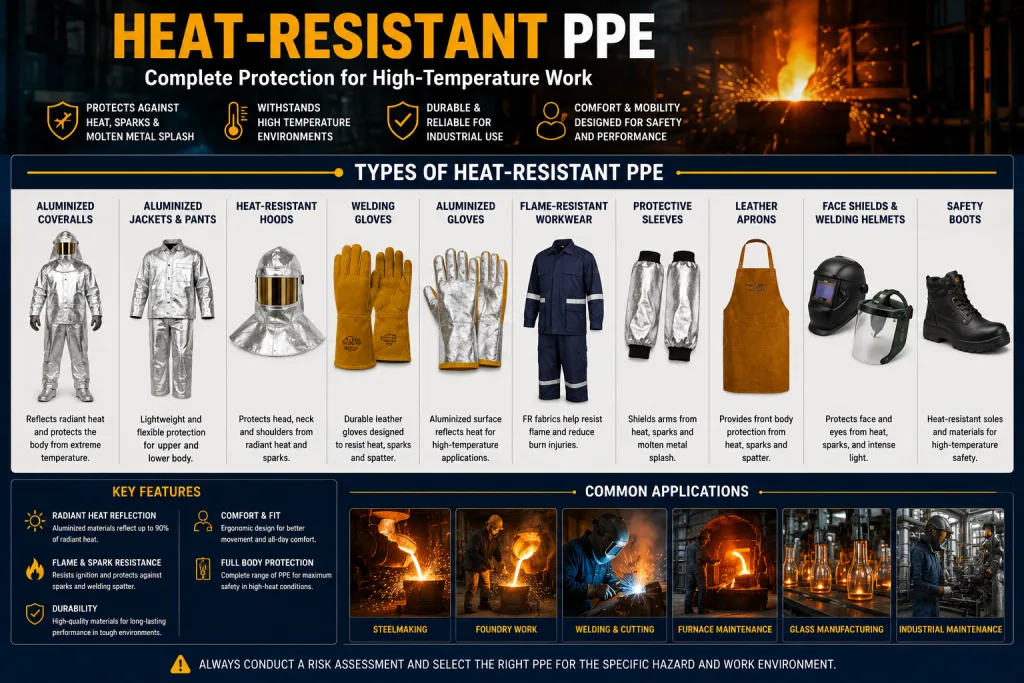
Heat-resistant PPE may include aluminized clothing, flame-resistant garments, welding gloves, heat-resistant hoods, face shields, protective sleeves, aprons, and safety boots. The right selection depends on the work environment, exposure time, temperature, and task.
In this guide, we explain what heat-resistant PPE is, where it is used, and how to choose suitable protective equipment for high-temperature industrial work.
What Is Heat-Resistant PPE?
Heat-resistant PPE is personal protective equipment designed to help protect workers from heat-related workplace hazards. These hazards may include radiant heat, sparks, flame exposure, hot surfaces, molten metal splash, welding spatter, and high-temperature industrial environments.
Common heat-resistant PPE includes:
- Aluminized coveralls
- Aluminized jackets and pants
- Heat-resistant hoods
- Welding gloves
- Aluminized gloves
- Flame-resistant workwear
- Protective sleeves
- Leather aprons
- Face shields
- Welding helmets
- Safety boots
The purpose of heat-resistant PPE is to reduce worker exposure while allowing the worker to complete the task safely.
Why Heat-Resistant PPE Matters
High-temperature work can create serious risks. Workers may suffer burns, eye injuries, heat stress, skin injuries, or damage from sparks and hot particles.
Common high-temperature hazards include:
- Radiant heat from furnaces
- Sparks from welding and grinding
- Molten metal splash
- Contact with hot tools or parts
- Flame exposure
- Hot pipes or equipment
- Steam or hot liquids
- High ambient temperature
- Heat buildup inside protective clothing
The correct PPE helps reduce exposure, but it must be selected carefully. A simple cotton uniform or ordinary work glove may not provide enough protection for hot work.
Common Heat Hazards in Industrial Work
1. Radiant Heat
Radiant heat comes from furnaces, molten metal, ovens, heated tanks, and other hot industrial equipment. Workers may feel intense heat even without touching the heat source.
Aluminized PPE is often used for radiant heat because the reflective outer surface helps reduce heat absorption.
Common environments include:
- Steel plants
- Foundries
- Glass factories
- Furnace maintenance
- Metallurgy work
- Smelting operations
- High-temperature processing areas
2. Sparks and Welding Spatter
Welding, cutting, grinding, and metal fabrication can produce sparks, hot particles, and welding spatter. These hazards can damage ordinary clothing and cause burns.
Workers may need:
- Welding gloves
- Flame-resistant clothing
- Welding jackets
- Leather aprons
- Safety glasses
- Welding helmets
- Protective sleeves
For welding work, PPE should protect against sparks while still allowing hand movement and visibility.
3. Molten Metal Splash
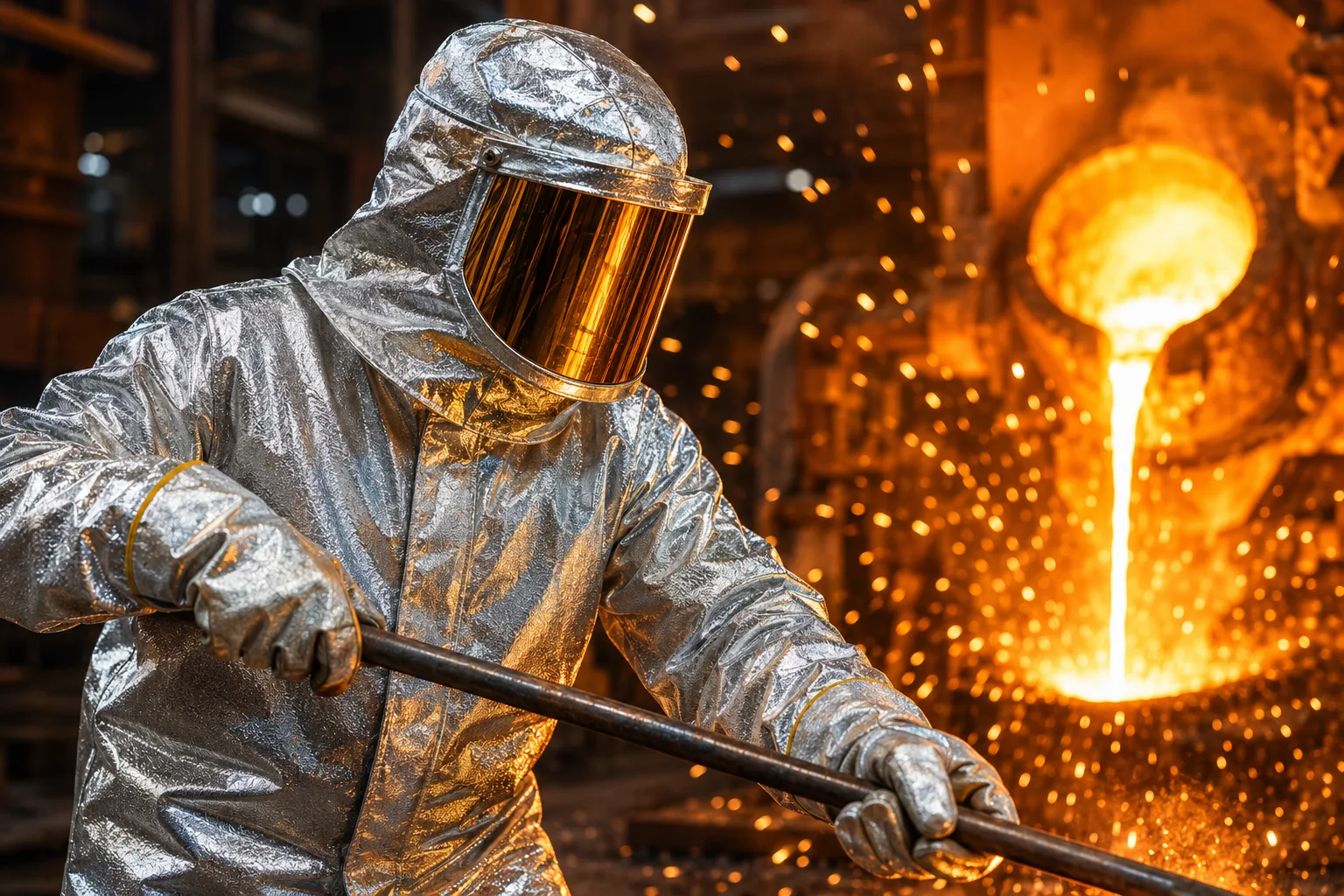
Molten metal splash is a serious hazard in foundries, steelmaking, casting, and metal processing. Workers may need full-body protection depending on the task and exposure.
Possible PPE includes:
- Aluminized suits
- Heat-resistant hoods
- Face shields
- Aluminized gloves
- Protective boots
- Flame-resistant inner clothing
For this type of work, PPE selection must be based on the specific process and risk level.
4. Contact Heat
Contact heat occurs when workers touch hot tools, parts, pipes, machine components, or surfaces.
Workers may need:
- Heat-resistant gloves
- Protective sleeves
- Aprons
- Insulated hand protection
- Proper tools to reduce direct contact
For contact heat, glove material, insulation, thickness, grip, and dexterity are all important.
5. Heat Stress
Heat-resistant PPE can protect against burns, but it can also increase body heat. Heavy clothing, limited airflow, and long shifts can increase heat stress.
Safety managers should consider:
- Work/rest schedules
- Hydration
- Ventilation
- Shade or cooling areas
- Job rotation
- Worker training
- Heat illness monitoring
Heat protection is not only about clothing. It is also about managing the full working environment.
Main Types of Heat-Resistant PPE
Aluminized Coveralls and Suits
Aluminized coveralls and suits are used in environments with strong radiant heat. The reflective outer surface helps protect workers from heat exposure during high-temperature tasks.
Common applications include:
- Steelmaking
- Foundry work
- Furnace inspection
- Furnace maintenance
- Glass manufacturing
- Smelting
- High-temperature industrial repair
When choosing aluminized coveralls, check:
- Material structure
- Heat protection level
- Coverage area
- Closure design
- Comfort
- Flexibility
- Size range
- Compatibility with gloves, boots, and hoods
Heat-Resistant Hoods
Heat-resistant hoods protect the head, neck, and face area. They are often used together with face shields, helmets, or full heat-resistant suits.
Common applications include:
- Furnace work
- Steel plants
- Foundries
- High-radiant-heat tasks
- Molten metal environments
- Heavy welding work
When choosing a hood, check:
- Face coverage
- Neck coverage
- Visibility
- Face shield compatibility
- Helmet compatibility
- Comfort
- Heat reflection
- Fit with other PPE
Welding Gloves
Welding gloves protect hands from sparks, heat, abrasion, and welding spatter. They are usually made from leather or other heat-resistant materials.
Common applications include:
- Welding
- Cutting
- Grinding
- Metal fabrication
- Machinery repair
- Shipbuilding
- Construction metal work
When choosing welding gloves, check:
- Heat resistance
- Glove length
- Leather quality
- Stitching
- Lining
- Dexterity
- Grip
- Abrasion resistance
Aluminized Heat-Resistant Gloves
Aluminized gloves are used where workers face radiant heat or high-temperature exposure. They may be used in furnace work, steelmaking, foundries, or high-heat industrial maintenance.
When choosing aluminized gloves, check:
- Radiant heat protection
- Contact heat resistance
- Glove length
- Insulation
- Flexibility
- Palm grip
- Durability
- Compatibility with sleeves or suits
Flame-Resistant Workwear
Flame-resistant workwear is designed to resist ignition and reduce burn injury risk in certain hot work environments. It may be used by welders, electricians, oil and gas workers, and industrial maintenance teams.
Common products include:
- FR shirts
- FR pants
- FR coveralls
- FR jackets
- Welding jackets
- Protective aprons
FR clothing should be selected based on the actual flame, spark, arc, or heat hazard.
Face and Eye Protection
High-temperature work often includes eye and face hazards. Workers may face sparks, bright light, flying particles, heat, and splash.
Possible PPE includes:
- Welding helmets
- Face shields
- Safety goggles
- Tinted safety lenses
- Heat-resistant face shields
Eye and face protection should match the task. Welding, grinding, and furnace work may each require different protection.
How to Choose Heat-Resistant PPE
Before buying heat-resistant PPE, review the job carefully.
1. Identify the Heat Source
Start by identifying where the heat comes from.
Common heat sources include:
- Furnace
- Welding arc
- Grinding sparks
- Hot metal
- Molten metal
- Steam
- Hot pipes
- Ovens
- Heated tanks
- Flame
Different heat sources require different protective equipment.
2. Understand the Type of Heat Exposure
Heat exposure may be radiant, contact, convective, flame-related, or splash-related.
Ask:
- Is the worker near the heat source or touching it?
- Is there molten metal splash?
- Are there sparks?
- Is flame exposure possible?
- Is the heat constant or occasional?
- How close is the worker to the hazard?
A worker near radiant heat may need aluminized PPE, while a worker handling hot parts may need heat-resistant gloves.
3. Check Exposure Time
Short tasks and full-shift work may require different solutions.
Ask:
- How long will the worker be exposed?
- Is the task repeated many times per day?
- Can the worker take breaks?
- Is the PPE comfortable enough for the required duration?
Long exposure requires careful attention to comfort and heat stress.
4. Choose Full-Body or Partial Protection
Some workers only need heat-resistant gloves. Others may need full-body aluminized clothing.
Possible PPE combinations include:
- Gloves only
- Gloves and sleeves
- Gloves, apron, and face shield
- Welding jacket and gloves
- Full aluminized suit with hood and gloves
- Full PPE system with boots and respiratory protection
The PPE set should match the actual task.
5. Check Compatibility with Other PPE
Heat-resistant PPE may need to work together with:
- Safety helmets
- Face shields
- Respirators
- Safety glasses
- Safety boots
- Gloves
- Hearing protection
- Cooling equipment
If PPE items do not fit together properly, protection may be reduced.
6. Review Comfort and Mobility
Workers need to move, bend, grip, walk, climb, and use tools. PPE should protect them without making the job unnecessarily difficult.
Check:
- Weight
- Flexibility
- Breathability
- Size range
- Glove dexterity
- Visibility through face protection
- Ease of putting on and removing
- Worker feedback
Comfort affects compliance. If PPE is too heavy or restrictive, workers may avoid wearing it correctly.
Choosing Heat-Resistant PPE by Industry
Steelmaking and Metallurgy
Workers in steel plants and metallurgy environments may face radiant heat, molten metal, sparks, and hot equipment.
Common PPE may include:
- Aluminized suits
- Heat-resistant hoods
- Aluminized gloves
- Face shields
- Safety boots
- Flame-resistant clothing
Foundry Work
Foundry workers may work near molten metal, casting operations, hot molds, and high-temperature surfaces.
Common PPE may include:
- Aluminized clothing
- Heat-resistant gloves
- Face shields
- Protective aprons
- Heat-resistant sleeves
- Safety boots
Welding and Cutting
Welders need protection from sparks, welding spatter, bright light, heat, and flying particles.
Common PPE may include:
- Welding helmets
- Welding gloves
- Flame-resistant clothing
- Leather aprons
- Safety glasses
- Respiratory protection when required
Furnace Maintenance
Furnace maintenance may expose workers to radiant heat, hot surfaces, and confined working conditions.
Common PPE may include:
- Aluminized coveralls
- Heat-resistant hoods
- Aluminized gloves
- Face shields
- Safety boots
- Respiratory protection depending on the environment
Glass Manufacturing
Glass manufacturing involves furnaces, hot glass, radiant heat, and sharp materials.
Common PPE may include:
- Heat-resistant clothing
- Aluminized protection
- Safety glasses
- Face shields
- Heat-resistant gloves
- Cut-resistant gloves for glass handling
Common Mistakes When Buying Heat-Resistant PPE
Heat-resistant PPE should not be selected only by appearance or price. The wrong product may not provide suitable protection.
Common mistakes include:
- Using ordinary workwear for high-temperature work
- Choosing welding gloves for tasks that need stronger radiant heat protection
- Ignoring molten metal splash risk
- Buying gloves that are too thick for the required task
- Ignoring heat stress and worker comfort
- Not checking compatibility between hood, face shield, gloves, and suit
- Not confirming size range
- Forgetting replacement PPE
- Not training workers on proper use
- Using damaged or worn heat-resistant PPE
The best PPE should match the hazard, fit the worker, and allow safe movement.
Buyer Checklist for Bulk Orders
Before requesting a quotation for heat-resistant PPE, prepare the following information:
- Industry
- Job task
- Heat source
- Type of heat exposure
- Working temperature range if known
- Exposure duration
- Required PPE items
- Quantity
- Size breakdown
- Material requirement
- Required standards or certificates
- Glove length or suit design if needed
- Packaging requirement
- Destination country
- Delivery timeline
This information helps suppliers recommend suitable products and prepare a more accurate quotation.
FAQ
What is heat-resistant PPE used for?
Heat-resistant PPE is used to protect workers from heat, sparks, flame exposure, hot surfaces, radiant heat, welding spatter, and molten metal splash.
What is aluminized PPE used for?
Aluminized PPE is commonly used in high-radiant-heat environments such as steelmaking, foundries, furnace work, and some high-temperature maintenance tasks.
Is welding clothing the same as aluminized heat clothing?
Not always. Welding clothing is usually designed for sparks and welding spatter, while aluminized clothing is often used for stronger radiant heat exposure.
What PPE is needed for foundry work?
Foundry workers may need aluminized clothing, heat-resistant gloves, face shields, hoods, protective aprons, safety boots, and other task-specific PPE.
Can heat-resistant PPE increase heat stress?
Yes. Heavy or less breathable PPE can increase heat burden. Employers should consider hydration, rest breaks, ventilation, and job rotation.
What should I check before buying heat-resistant gloves?
Check the heat source, contact or radiant heat exposure, glove length, insulation, grip, dexterity, durability, and compatibility with sleeves or suits.
When should heat-resistant PPE be replaced?
Replace PPE when it is burned, torn, cracked, contaminated, damaged, worn out, or no longer provides proper protection.
Need Heat-Resistant PPE for Your Team?
Choosing heat-resistant PPE depends on the heat source, exposure time, job task, and working environment. ACEPPE supplies protective equipment for welding, steelmaking, foundry work, furnace maintenance, metallurgy, glass manufacturing, and other high-temperature industrial applications.
If you need aluminized clothing, heat-resistant gloves, welding gloves, hoods, face protection, or related PPE, send us your application, required items, quantity, size range, destination, and certificate requirements.
Our team can help recommend suitable heat-resistant PPE and prepare a professional quotation for your project.
Contact ACEPPE today to request a heat-resistant PPE quotation.