



Ask any safety manager what glove complaint they hear most and the answer is rarely about cut levels or chemical resistance. It is about fit. A glove that is too tight tires the hand and tears early. A glove that is too loose kills dexterity, and workers take it off — which defeats the entire purpose of issuing it. Getting size right is the cheapest safety upgrade there is, and it starts with two measurements anyone can take in a minute.
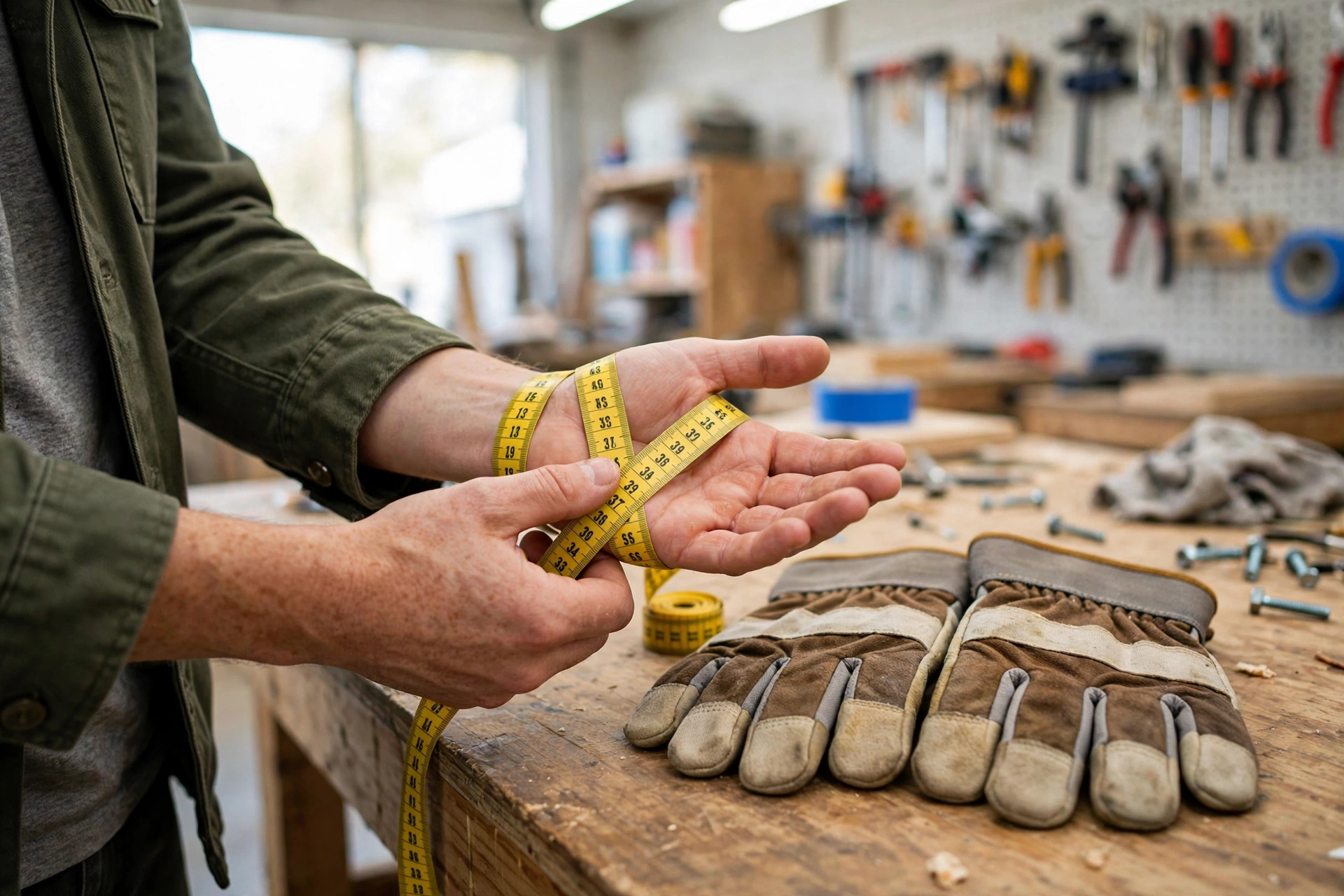
How to Measure Your Hand
You need a flexible tape measure and the hand you write with, since the dominant hand is usually slightly larger. Take both measurements with the hand relaxed and fingers together, not stretched or clenched.
- Hand circumference: wrap the tape around the palm at its widest point, just below the knuckles, excluding the thumb. Keep the tape snug but not tight. This is the primary measurement for glove sizing.
- Hand length: measure from the crease at the base of the palm (where the wrist meets the hand) to the tip of the middle finger. Length matters most when hands are long and narrow or short and wide, where circumference alone can mislead.
Measure both hands and use the larger of the two readings. If you are ordering for a crew, do not guess from one volunteer’s hand — measure a sample of the actual wearers, since hand sizes vary far more across a workforce than most buyers expect.
Safety Glove Size Chart
European glove sizing under EN ISO 21420 (which replaced EN 420) is built on hand circumference. The table below is the standard reference most manufacturers work from. Treat it as a starting point: individual brands cut slightly differently, so always check the manufacturer’s own chart for the exact model you are buying.
| EN glove size | Hand circumference (mm) | Hand circumference (inches) | Typical label |
|---|---|---|---|
| 6 | 152 | 6 | XS |
| 7 | 178 | 7 | S |
| 8 | 203 | 8 | M |
| 9 | 229 | 9 | L |
| 10 | 254 | 10 | XL |
| 11 | 279 | 11 | XXL |
Two cautions on reading this table. First, the letter labels (S, M, L, XL) are not standardized across brands — a size 9 in one brand’s “L” can fit like another brand’s “M”. The number is the reliable part; the letter is marketing. Second, the table describes the hand, not the glove. A glove’s own dimensions include wearing ease, so a size 9 glove will measure slightly larger than a 229 mm hand. That is normal and intended.
What If You Are Between Sizes?
Most people land cleanly on one size, but borderline readings are common. The rule of thumb:
- Size up if the gloves will be worn for long shifts, over liners, or in cold conditions where hands swell and circulation matters. Comfort over a full shift beats a snug first impression.
- Size down if the task is precision work — assembly, inspection, fine handling — where excess material at the fingertips costs control. Never size down so far that the glove restricts blood flow or splits at the seams.
- Coating changes fit. A heavily coated glove (latex, nitrile or PVC dipped) fits tighter than an uncoated liner glove in the same nominal size. If you are switching coating types, re-measure rather than assuming the old size carries over.
Fit Checks That Matter
Once the gloves arrive, run these checks before committing to a bulk order:
- Fingertip reach: fingers should reach the ends of the glove fingers without pressing hard, and without more than a small amount of empty material at the tips.
- Palm snugness: the palm should feel close without pulling across the knuckles when you make a fist. Bunching across the back of the hand means the glove is too big.
- Cuff and wrist: the cuff should sit comfortably without cutting into the wrist or sliding down during work.
- Dexterity test: pick up small objects — a nut, a pen, a coin — and handle them as the job requires. If the task gets noticeably harder with the glove on, the size or the glove style is wrong, and workers will quietly stop wearing it.
Sizing for Bulk and Crew Orders
For crew orders, never buy a single size in bulk and hope for the best. Start with a size-run sample kit covering the full range, let the actual wearers try them on the job, and record who wears what. That one round of fitting prevents the most common bulk-order failure: a carton of gloves in sizes nobody on site actually wears. When you place the volume order, specify sizes by EN number rather than by letter alone, and keep a small reserve of the least common sizes — running out of XXS or XXL mid-contract is a frequent and avoidable complaint.
Fit is also where suppliers earn their keep. A supplier who can document sizing, offer a size-run sample before you commit, and hold consistent cutting across repeat orders saves you far more than a slightly lower unit price on gloves that do not fit.
How Sizing Standards Differ by Region
European and American glove sizing look similar on the shelf but are built differently. The EN system under EN ISO 21420 is anchored to hand circumference in millimetres, with sizes numbered 6 through 11. US sizing leans on letter labels (XS through XXL) and, for many brands, on the same circumference numbers underneath — but the letters are not regulated, so one brand’s “large” is another brand’s “medium”. The practical consequence is simple: when you switch suppliers or regions, re-check the number, not the letter. Numbers travel across borders better than labels do.
Asian sizing adds a third wrinkle. Gloves cut for Asian markets sometimes run smaller in the same nominal size, because they are patterned on different hand-shape data. If you are sourcing from an Asian factory for a European or American workforce — or the reverse — always request the factory’s own size chart and a physical size run before committing to volume. A size chart on paper is a claim; a glove on a hand is evidence.
When to Re-Measure
Hand size is not fixed for life, and neither is the right glove size. Re-measure when any of these change:
- Switching brands or factories. Cutting patterns differ; the old size is a hint, not a guarantee.
- Switching glove types. Moving from a thin disposable to a thick coated reusable, or adding a thermal liner, changes the fit in the same nominal size.
- Workforce changes. New hires, seasonal workers, or a crew with different demographics than the last order all justify a fresh round of fitting.
- Complaints rise. If tearing, discomfort, or “I just don’t wear them” reports cluster, size is the first thing to check — before blaming the material.
Fit is also a compliance point, not just comfort: OSHA’s PPE guidance requires employers to assess hazards and select protective equipment that fits the exposure — a glove in the wrong size fails that test before the shift starts.
Specifying Gloves for Your Team?If you are choosing gloves for a crew or a resale range, put the size and the material in your hands before you commit: request a free sample kit — the samples are free, you only cover shipping. For bulk and OEM supply across our full PPE range, see our PPE manufacturer and wholesale supplier page, or send your target spec and quantity for a quote.


