



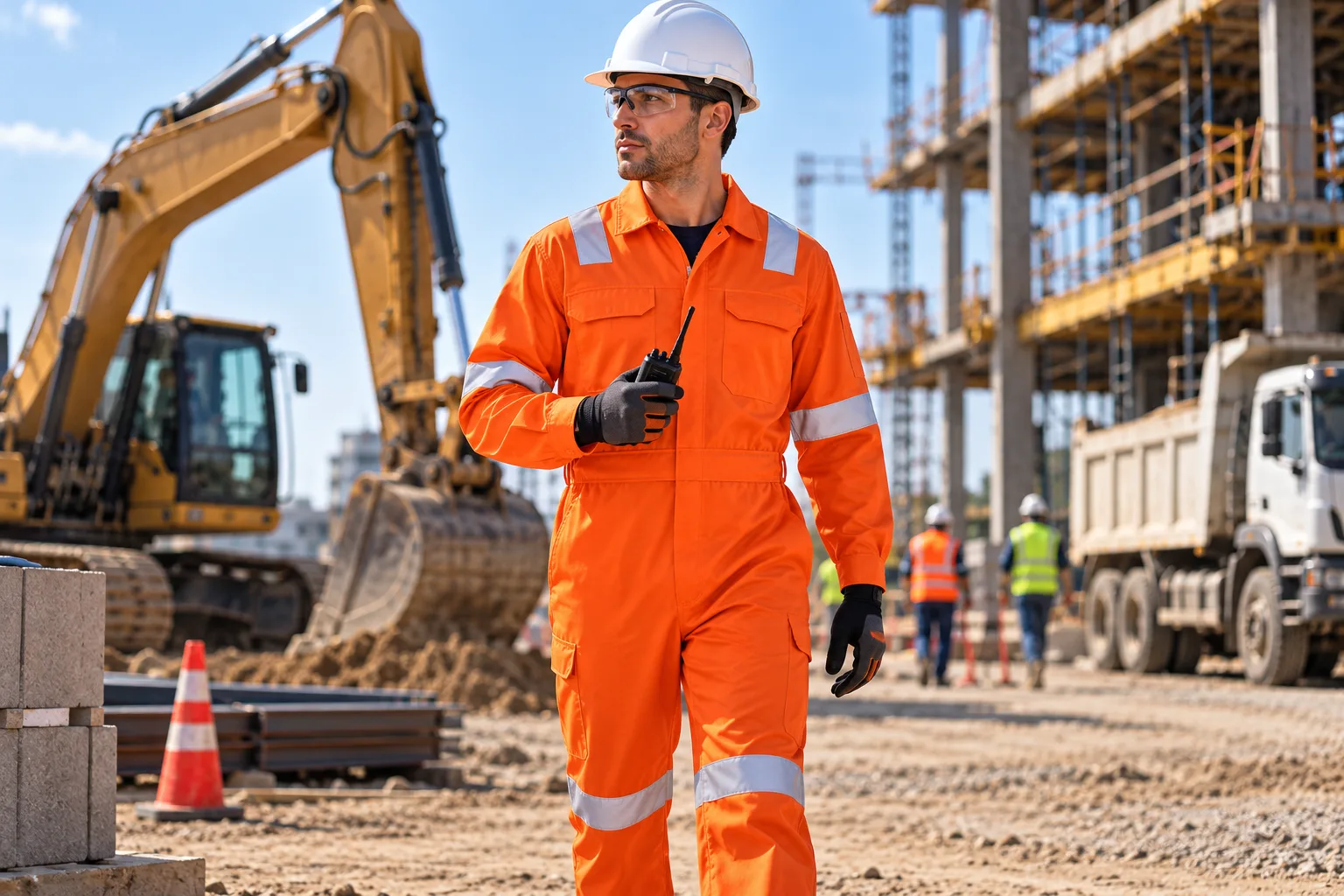
Workers operating around vehicles, heavy machinery, construction equipment, or in low-light environments need to remain easy to see. That is where high-visibility workwear becomes especially important.
High-visibility garments are designed to make workers more noticeable during both daytime and nighttime operations. Depending on the application, they may combine bright background colors with reflective or retroreflective materials that help workers stand out when illuminated by vehicle headlights or industrial lighting.
This type of workwear is commonly used in construction, road maintenance, warehousing, marine operations, manufacturing, logistics, maintenance, utilities, and other industrial environments.
Choosing the right garment, however, involves more than simply adding reflective strips to ordinary clothing. Buyers should consider the work environment, garment color, reflective material, placement, comfort, durability, and applicable safety standards.

What Is High-Visibility Workwear?
High-visibility workwear is clothing designed to improve the visibility of the wearer against the surrounding environment.
It generally relies on two main elements:
High-Visibility Background Material
Bright or fluorescent materials help workers stand out during daylight and in environments where strong visual contrast is needed.
Common high-visibility colors include fluorescent yellow-green, fluorescent orange-red, and fluorescent red, depending on the applicable standard.
Retroreflective Material
Retroreflective tape reflects light back toward its source. This makes workers more noticeable when illuminated by headlights, work lights, or other strong light sources.
Reflective material is commonly positioned on areas such as:
- Shoulders
- Arms
- Torso
- Waist
- Legs
Proper placement helps make the worker’s shape and movement more recognizable from different directions.
International standards such as ISO 20471 establish requirements for high-visibility clothing, including color, retroreflection, visible material area, and placement.
In the United States, ANSI/ISEA 107 provides requirements for high-visibility safety apparel used in occupational environments.
Why Reflective Workwear Matters
Many industrial workers operate close to moving equipment.
This may include:
- Trucks
- Forklifts
- Excavators
- Cranes
- Road traffic
- Loading equipment
- Heavy machinery
In these environments, improving worker visibility can be an important part of workplace safety.
Reflective workwear is especially useful during early morning, evening, nighttime, or poorly illuminated operations. When light strikes the reflective material, the worker becomes much easier to notice.
OSHA has also addressed the importance of high-visibility garments for workers exposed to vehicle traffic and construction equipment. More information is available in its high-visibility clothing guidance.
High-visibility clothing should still be treated as one part of a broader PPE program. Employers should evaluate all workplace hazards before selecting protective equipment.
For a wider overview of PPE selection, see our PPE Hazard Assessment Checklist.
Reflective Tape vs. High-Visibility Fabric
Reflective tape and high-visibility fabric are not the same thing.
High-visibility background material is primarily intended to increase contrast during daylight, while reflective material becomes especially effective when illuminated by a direct light source.
This means that a dark navy coverall with reflective tape may become much easier to see at night, but it should not automatically be considered certified high-visibility clothing.
Certification depends on the complete garment design, including the type and amount of background material, reflective performance, placement, and testing.
Buyers requiring certified PPE should therefore review technical documentation rather than judging a garment only by appearance.
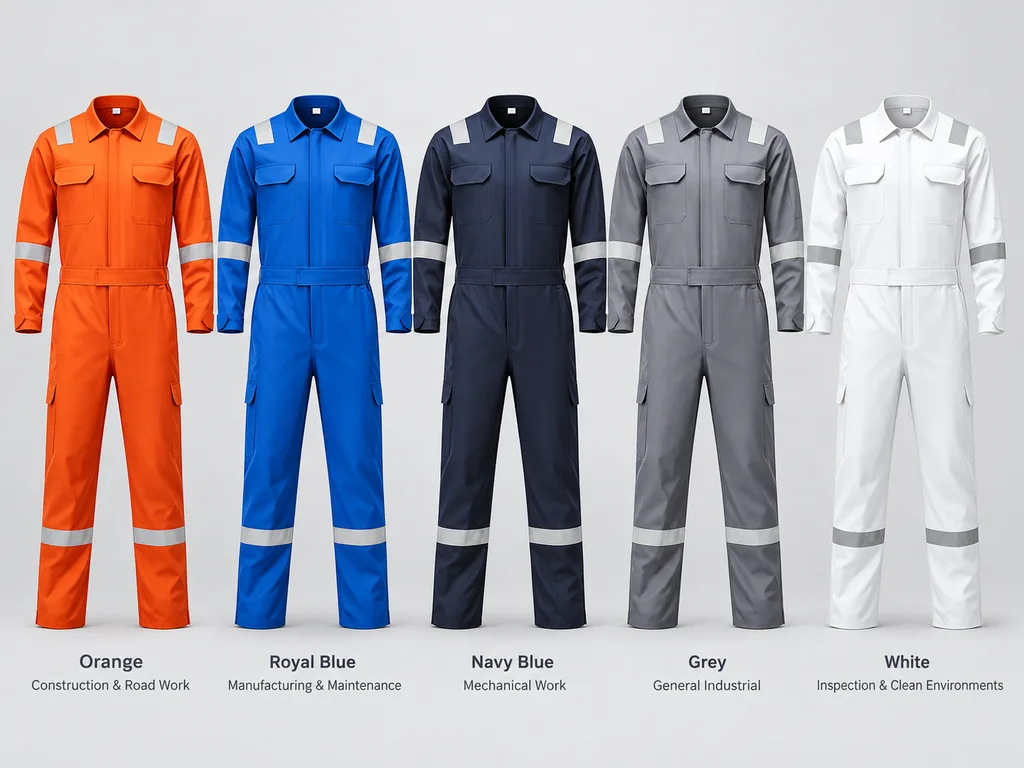
Choosing the Right Workwear Color
Workwear color may depend on visibility requirements, industry, working conditions, and company branding.
Orange
Orange is commonly associated with construction, road work, utilities, marine work, and other outdoor operations.
Its strong contrast makes it a popular choice for environments where workers need to stand out clearly.
Royal Blue
Royal blue is widely used in manufacturing, maintenance, workshops, and engineering operations.
It provides a professional industrial appearance while remaining easy to identify.
Navy Blue
Navy blue is commonly selected for mechanics, maintenance teams, engineering departments, and workshops.
It is particularly practical in environments involving grease, oil, and dirt.
Grey
Grey is frequently used for general industrial work, technical teams, factory workers, and engineering personnel.
White
White coveralls may be used in inspection, cleaner work environments, painting, or specialized industrial applications.
Color alone does not determine whether a garment is suitable for high-visibility applications. Certified projects should always follow the requirements of the relevant standard.
High-Visibility Workwear Standards
Buyers sourcing safety clothing should understand the standards requested by their market or customer.
ANSI/ISEA 107
ANSI/ISEA 107 covers high-visibility safety apparel in the United States.
The standard addresses areas including:
- Garment design
- Background materials
- Retroreflective materials
- Performance requirements
- Testing
- Product labeling
- Garment types and performance classes
Projects supplying U.S. customers should confirm the exact class and type required before production.
ISO 20471
ISO 20471 is an international standard covering high-visibility clothing for high-risk situations.
It establishes requirements relating to:
- Color
- Retroreflection
- Minimum visible material area
- Material placement
- Garment design
When certification is required, buyers should request supporting documentation from the supplier and verify that the garment offered matches the tested product.
High-Visibility Workwear for Different Industries
Construction
Construction workers frequently operate around trucks, excavators, cranes, forklifts, and other heavy equipment.
Suitable workwear may include reflective elements, practical pockets, durable fabric, and comfortable sizing.
For a complete overview of construction PPE, see our Construction PPE Checklist.
Marine and Port Operations
Marine workers may work on decks, around loading equipment, near vehicles, or during nighttime operations.
Reflective elements can improve visibility while full-body coveralls provide practical workwear for daily operations and maintenance.
Automotive and Maintenance
Mechanics and technicians regularly work around vehicles, machines, tools, oil, and grease.
Navy, blue, and grey are common colors for these environments, while reflective elements can improve visibility where vehicles or machinery are moving nearby.
Manufacturing and Warehousing
Workers in factories and warehouses may operate close to forklifts, production equipment, loading areas, and moving machinery.
Good visibility, practical pockets, durable fabric, and freedom of movement are important considerations for long working shifts.
Comfort and Practical Design
Visibility is important, but workwear must also be comfortable enough for workers to wear throughout the day.
Important features include:
- Breathable fabric
- Correct sizing
- Freedom of movement
- Strong zipper closure
- Practical pockets
- Adjustable cuffs
- Durable stitching
- Comfortable waist construction
For many general industrial applications, cotton coveralls can provide good breathability and comfort.
However, ordinary cotton coveralls should not automatically be considered flame-resistant, arc-rated, chemical-resistant, or anti-static.
Specialized hazards require specialized garments.
For chemical environments, see our Chemical Protective Coveralls Guide.
For electrostatic risks, see our Anti-Static Workwear Guide.
What Buyers Should Check Before Ordering
Before placing a bulk order for high-visibility or reflective workwear, buyers should confirm:
- The actual working environment
- Required safety standard
- Daytime or nighttime use
- Garment color
- Reflective tape specification
- Reflective tape placement
- Fabric composition
- Fabric weight
- Size range
- Men’s and women’s sizing requirements
- Pocket configuration
- Logo requirements
- Test reports
- Certificates
- Sample approval
- Production lead time
One important rule is simple: do not judge high-visibility workwear only by appearance.
A garment may contain bright colors and reflective strips while still not meeting a required safety standard.
If certification is required, always verify the relevant technical documentation.
High-Visibility Workwear vs. Safety Vests
Safety vests and reflective coveralls can both improve visibility, but they serve different purposes.
Safety vests are lightweight, easy to put on, and suitable for visitors, traffic control, or workers who only need an additional visible outer layer.
Reflective coveralls provide full-body workwear and may offer more pockets, greater coverage, and better protection from general dirt and workplace conditions.
For more information about visibility classes and vest selection, see our Safety Vests Guide: ANSI Class 2 vs Class 3.
Can High-Visibility Workwear Be Customized?
Yes. Industrial workwear can often be customized for large orders.
Common options include:
- Company logos
- Embroidery
- Printing
- Custom colors
- Reflective tape placement
- Pocket designs
- Men’s and women’s sizing
- Custom labels
- Packaging
However, customization should be handled carefully when certified high-visibility performance is required.
Large logos, different tape placement, or other garment changes may affect the visible surface area or design of the tested garment.
Frequently Asked Questions
Is reflective clothing the same as high-visibility clothing?
Not always. Reflective clothing contains material that reflects light, while certified high-visibility clothing must meet specific requirements related to color, reflective performance, visible material area, and garment design.
Are navy or grey coveralls with reflective strips considered high-visibility PPE?
Not automatically. They may improve nighttime visibility, but compliance depends on the applicable standard and the complete garment design.
What is the best color for high-visibility workwear?
The correct color depends on the required standard and work environment. Fluorescent orange-red and yellow-green are common options for certified high-visibility clothing.
Can company logos be added?
Yes, but logos should not interfere with required visible or reflective areas when certification applies.
Can reflective tape be customized?
In many cases, yes. Tape width, position, and design can be adjusted for custom orders, but certified garments should remain consistent with applicable standard requirements.
Conclusion
High-visibility workwear can help workers remain easier to see in environments involving vehicles, machinery, poor lighting, and other visibility hazards.
The right garment should balance visibility, comfort, durability, fit, and certification requirements.
Before purchasing, buyers should determine whether they simply need reflective industrial workwear or formally certified high-visibility safety clothing.
ACEPPE PRO supplies industrial workwear and PPE solutions for contractors, distributors, construction projects, maintenance companies, marine operations, and industrial customers worldwide.
Our available options include reflective industrial coveralls, cotton workwear, custom colors, company logos, different size ranges, reflective tape customization, and bulk production.
Contact ACEPPE PRO for specifications, samples, certification options, pricing, and customized industrial workwear solutions.