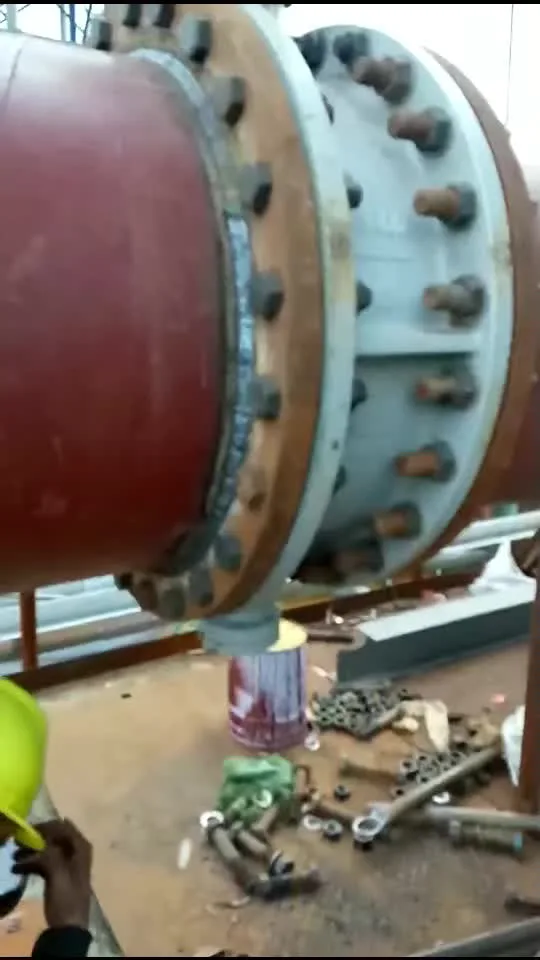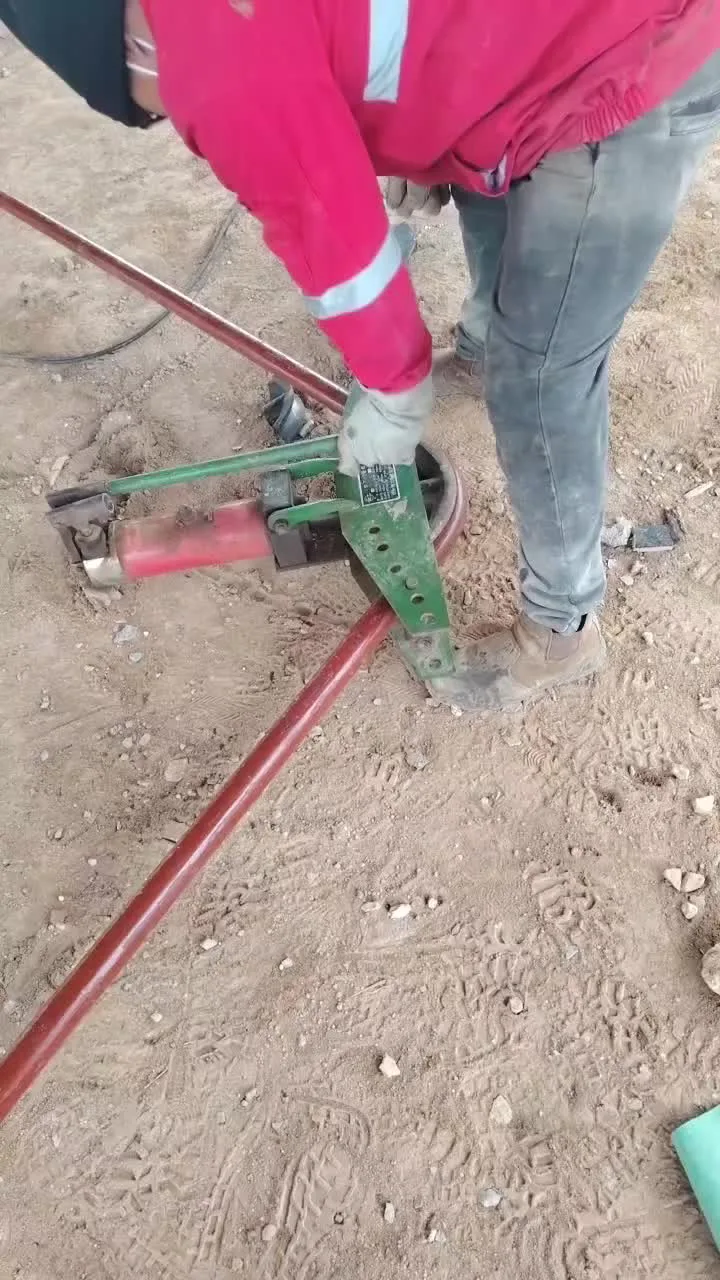




Construction sites are full of changing hazards. Workers may face falling objects, sharp materials, dust, moving vehicles, heavy equipment, loud tools, chemicals, sparks, heat, and unstable ground. Because of this, construction PPE must be practical, task-specific, comfortable, and suitable for the actual job site.
A worker doing road construction may not need the same PPE as a welder, painter, warehouse loader, scaffolding worker, or machine operator. The best PPE checklist starts with the task and the hazard.
In this guide, we provide a practical construction PPE checklist for building, road, bridge, and industrial job sites.
Why Construction PPE Must Be Task-Specific
Not every construction worker needs the same PPE. Some workers handle concrete, some handle steel, some work near traffic, some weld, and some work at height. Each task has different risks.
Before buying PPE for construction workers, ask:
- What job will the worker perform?
- What tools and machines will be used?
- What materials will the worker handle?
- Is there dust, splash, heat, traffic, or height risk?
- Will the work be indoors or outdoors?
- Is the work during daytime or nighttime?
- Does the PPE need to be worn for a full shift?
- Are there required standards, colors, or certificates?
- Does the company need logo customization?
This helps the purchasing team build a clear PPE list instead of buying random safety equipment.
Complete Construction PPE Checklist
Use the checklist below to review the main PPE categories for construction workers.
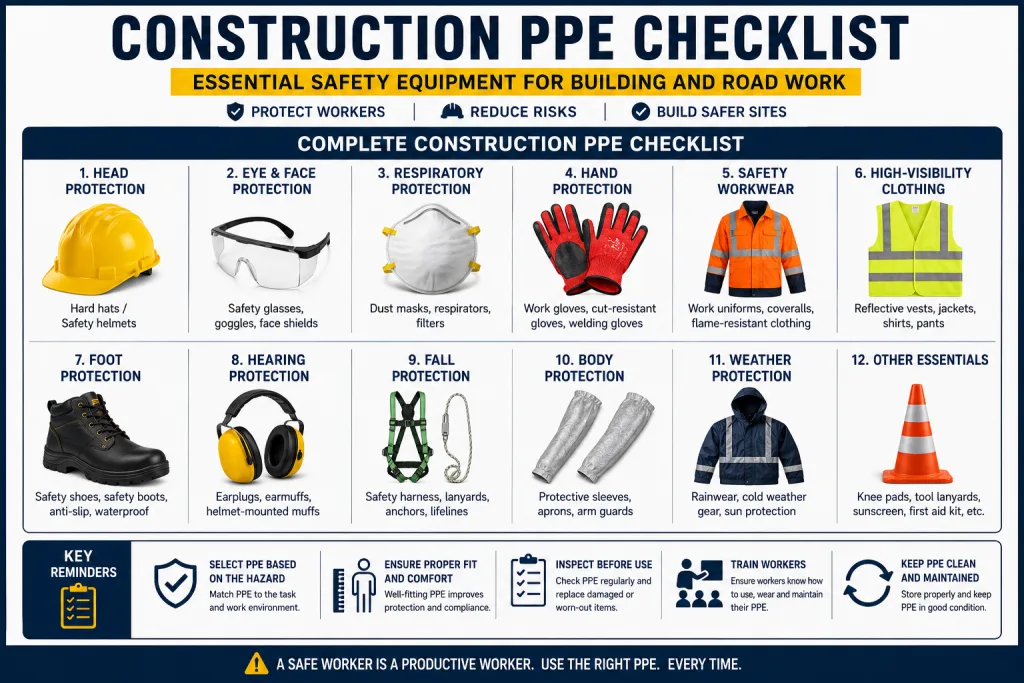
1. Head Protection
Head protection is one of the most common PPE requirements on construction sites. Workers may face falling objects, bumps, impacts, tools dropped from height, or contact with overhead structures.
Common applications include:
- Building construction
- Road and bridge work
- Scaffolding
- Warehouse loading areas
- Machinery maintenance
- Demolition
- Crane and lifting operations
- Work at height
Recommended PPE may include:
- Hard hats
- Safety helmets
- Chin-strap helmets
- Bump caps for low-impact areas
- Welding helmets for welding tasks
- Heat-resistant hoods for hot work
When choosing head protection, check impact protection, comfort, adjustability, ventilation, and compatibility with face shields, earmuffs, or chin straps.
2. Eye and Face Protection
Construction work can create flying particles, dust, sparks, chemical splash, bright light, and wind-blown debris. Eye and face protection should match the job.
Common applications include:
- Cutting
- Grinding
- Drilling
- Welding
- Painting
- Concrete work
- Wood cutting
- Metal fabrication
- Chemical handling
- Demolition
Recommended PPE may include:
- Safety glasses
- Safety goggles
- Face shields
- Welding shields
- Tinted safety lenses
- Chemical splash goggles
Safety glasses may be enough for some impact hazards, but goggles or face shields may be required for splash, dust, or grinding work.
3. Respiratory Protection
Construction sites often produce dust, fumes, smoke, paint spray, and other airborne hazards. Respiratory protection is especially important during cutting, sanding, grinding, demolition, painting, and work with powders or chemicals.
Common respiratory hazards include:
- Concrete dust
- Cement dust
- Wood dust
- Welding fumes
- Paint spray
- Chemical vapors
- Silica dust
- Demolition dust
- Smoke
- Powder materials
Recommended PPE may include:
- Disposable dust masks
- N95 or KN95 masks
- Half-face respirators
- Full-face respirators
- Gas masks
- Replacement filters or cartridges
A simple dust mask may not protect against gases, vapors, or welding fumes. Respiratory PPE must be selected based on the actual airborne hazard.
4. Hand Protection
Construction workers use their hands constantly. They lift, cut, carry, grip, install, repair, weld, and handle rough materials. Gloves should be selected according to the task.
Common hand hazards include:
- Cuts
- Abrasion
- Punctures
- Chemicals
- Cement
- Oil
- Heat
- Sparks
- Vibration
- Impact
- Sharp materials
Recommended PPE may include:
- Cut-resistant gloves
- Leather work gloves
- Nitrile-coated gloves
- PU-coated gloves
- Latex-coated gloves
- Welding gloves
- Chemical-resistant gloves
- Impact-resistant gloves
- Heat-resistant gloves
- Protective sleeves
For construction work, grip and durability are very important. Workers handling sharp metal may need cut-resistant gloves, while welders need heat and spark protection.
5. Safety Workwear
Protective workwear helps protect the body from dirt, sparks, heat, chemicals, weather, and workplace contamination. It also helps workers look professional and consistent on site.
Common applications include:
- General construction
- Road work
- Welding
- Painting
- Industrial maintenance
- Chemical handling
- Outdoor work
- Rainy or cold environments
- High-temperature environments
Recommended PPE may include:
- Work uniforms
- Long-sleeve work shirts
- Work pants
- Coveralls
- Flame-resistant clothing
- Welding jackets
- Chemical protective coveralls
- Disposable coveralls
- Rainwear
- Anti-static workwear
- Aluminized heat-resistant clothing
When choosing workwear, check fabric, durability, comfort, breathability, size range, washing requirements, and whether reflective tape or logo printing is needed.
6. High-Visibility Clothing
High-visibility clothing is critical for workers near vehicles, forklifts, cranes, road traffic, and heavy equipment. It helps workers remain visible in busy or low-light environments.
Common applications include:
- Road construction
- Bridge work
- Traffic control
- Airport ground work
- Port operations
- Warehouse loading
- Night work
- Work near forklifts
- Outdoor construction
- Heavy equipment areas
Recommended PPE may include:
- Reflective safety vests
- High-visibility jackets
- High-visibility shirts
- Reflective rainwear
- Reflective pants
- Class 2 or Class 3 high-visibility clothing
For road work, nighttime work, and high-traffic areas, visibility requirements become more important. Buyers should check the work environment before choosing vest class, color, and reflective tape design.
7. Foot Protection
Construction workers may face falling objects, sharp materials, slippery ground, wet surfaces, chemicals, puncture hazards, and heavy equipment.
Common applications include:
- Building construction
- Road work
- Warehouse loading
- Steel handling
- Concrete work
- Machinery areas
- Outdoor sites
- Wet or muddy areas
Recommended PPE may include:
- Steel toe safety shoes
- Composite toe safety shoes
- Anti-slip safety boots
- Puncture-resistant safety shoes
- Waterproof safety boots
- Chemical-resistant boots
- Protective shoe covers
When choosing safety footwear, check toe protection, sole grip, puncture resistance, waterproofing, comfort, weight, and the working surface.
8. Hearing Protection
Construction sites can be very loud. Workers may be exposed to noise from drilling, cutting, grinding, hammering, generators, machinery, and vehicles.
Common noise sources include:
- Jackhammers
- Drills
- Grinders
- Saws
- Compressors
- Generators
- Heavy machinery
- Demolition equipment
- Metal cutting
Recommended PPE may include:
- Earplugs
- Earmuffs
- Helmet-mounted earmuffs
- Reusable earplugs
- Disposable earplugs
Hearing protection should be comfortable enough for workers to wear consistently during noisy tasks.
PPE for Road Construction
Road construction workers face traffic, moving vehicles, heavy equipment, dust, heat, and changing weather. Visibility is one of the most important safety factors.
Road construction PPE may include:
- High-visibility vest or jacket
- Reflective pants
- Hard hat or safety helmet
- Safety glasses
- Work gloves
- Safety shoes
- Dust mask or respirator when needed
- Rainwear
- Hearing protection
- Sun protection for outdoor work
For night work, reflective clothing should be clearly visible from all directions. Workers near high-speed traffic may need higher visibility levels than workers in controlled construction zones.
PPE for Building Construction
Building construction workers may face falling objects, sharp materials, dust, tools, machinery, and work at height.
Building construction PPE may include:
- Hard hat
- Safety glasses
- Work gloves
- Safety shoes
- High-visibility vest
- Dust mask or respirator
- Hearing protection
- Fall protection when required
- Workwear or coveralls
The exact PPE list depends on the site rules and worker task.
PPE for Welding and Metal Work on Construction Sites
Many construction projects include welding, cutting, grinding, and metal installation. These jobs require more specialized PPE than general construction work.
Welding and metal work PPE may include:
- Welding helmet
- Safety glasses
- Welding gloves
- Flame-resistant clothing
- Leather apron
- Protective sleeves
- Safety shoes
- Respiratory protection when needed
- Hearing protection
- Face shield for grinding
Ordinary workwear should not be used as welding protection. Sparks and welding spatter can quickly damage unsuitable clothing.
PPE for Painting and Chemical Work
Painting, spraying, cleaning, and chemical handling can expose workers to liquid splash, fumes, overspray, and skin contamination.
Painting and chemical work PPE may include:
- Chemical protective coveralls
- Gloves suitable for the chemical
- Safety goggles
- Face shield when needed
- Respirator or mask
- Safety boots
- Shoe covers
- Disposable coveralls
The correct PPE depends on the chemical, exposure time, ventilation, and work method.
PPE for Hot Weather and Outdoor Construction
Outdoor construction workers may face heat, sun exposure, sweat, and fatigue. PPE should still protect workers without making heat stress worse.
Useful PPE options may include:
- Breathable high-visibility clothing
- Lightweight safety helmets
- Cooling towels or accessories
- Safety glasses with UV protection
- Breathable gloves
- Sun protection
- Proper hydration planning
Comfort matters. If PPE is too hot or uncomfortable, workers may remove it, creating safety risks.
PPE for Rainy or Wet Construction Sites
Wet environments increase slip risk and discomfort. Rain can also reduce visibility and make gloves or footwear less effective.
Rainy construction PPE may include:
- Reflective rainwear
- Waterproof safety boots
- Anti-slip soles
- Waterproof gloves
- High-visibility jackets
- Protective covers for equipment when needed
For road work, rainwear should still include reflective tape and bright colors.
Common Mistakes When Buying Construction PPE
Construction PPE should be selected carefully. Buying only based on price can create safety and quality problems.
Common mistakes include:
- Buying one PPE set for all workers
- Ignoring the actual task and hazard
- Choosing gloves without checking cut level or grip
- Using ordinary clothing for welding or heat work
- Not checking high-visibility class
- Buying uncomfortable PPE that workers avoid wearing
- Not ordering the correct size range
- Forgetting replacement filters, cartridges, or accessories
- Ignoring certificates or project requirements
- Not replacing damaged PPE
- Forgetting weather conditions
- Not considering logo customization or uniform consistency
The best construction PPE protects workers, fits properly, and works well in the real job site environment.
Bulk Ordering Tips for Construction Companies
Before requesting a quotation, prepare a clear PPE list. This helps suppliers quote faster and reduces mistakes.
Prepare the following information:
- Product name
- Quantity per item
- Size breakdown
- Color requirements
- Reflective tape requirements
- Logo or customization needs
- Required standards or certificates
- Packaging requirements
- Shipping destination
- Delivery timeline
- Whether products are for road work, building construction, welding, chemical work, or general use
For example, instead of asking only for “safety gloves,” provide more detail:
“Cut-resistant gloves for construction workers, nitrile-coated palm, sizes L/XL/XXL, 1,000 pairs.”
Clear specifications save time and help suppliers prepare accurate quotations.
Construction PPE Checklist Summary
A complete construction PPE checklist may include:
- Hard hats or safety helmets
- Safety glasses or goggles
- Face shields
- Dust masks or respirators
- Work gloves
- Cut-resistant gloves
- Welding gloves
- Safety workwear
- Flame-resistant clothing
- Chemical protective coveralls
- High-visibility vests
- Reflective jackets
- Rainwear
- Safety shoes or boots
- Hearing protection
- Protective sleeves
- Aprons
- Shoe covers
- Replacement filters or cartridges
The final list should always match the specific task and workplace hazard.
FAQ
What PPE is required on a construction site?
Common construction PPE includes hard hats, safety glasses, gloves, safety shoes, high-visibility clothing, respiratory protection, hearing protection, and task-specific workwear.
Do all construction workers need the same PPE?
No. PPE should be selected based on the worker’s task, hazard, and work location. A welder, road worker, painter, and general laborer may each need different PPE.
What PPE is needed for road construction?
Road construction workers commonly need high-visibility clothing, hard hats, safety shoes, gloves, eye protection, and respiratory protection when dust or fumes are present.
What gloves are best for construction work?
It depends on the task. General handling may need coated work gloves, sharp material handling may need cut-resistant gloves, and welding requires welding gloves.
Is high-visibility clothing required for construction?
High-visibility clothing is important when workers are near vehicles, forklifts, cranes, road traffic, or heavy machinery. Road and night work usually require stronger visibility protection.
What PPE is needed for welding on a construction site?
Welding PPE may include a welding helmet, welding gloves, flame-resistant clothing, safety glasses, protective sleeves, safety shoes, and respiratory protection when needed.
How can construction companies order PPE in bulk?
Prepare a detailed list with item names, quantities, sizes, colors, standards, logo requirements, packaging, and destination. Then request a quotation from a PPE supplier.
Need Construction PPE for Your Project?
Choosing the right construction PPE depends on the job site, task, hazard, and worker requirements. ACEPPE supplies a wide range of safety equipment for construction, road work, bridge work, welding, industrial maintenance, chemical handling, and general workplace safety.
If you need hard hats, safety helmets, gloves, high-visibility clothing, safety shoes, respirators, workwear, coveralls, rainwear, or other construction PPE, send us your item list, quantities, size breakdown, destination, and certificate requirements.
Our team can help recommend suitable PPE products and prepare a professional quotation for your project.
Contact ACEPPE today to request a construction PPE quotation.
References & Further Reading
- OSHA: Personal Protective Equipment overview
- Related guide: PPE Hazard Assessment Checklist: How to Choose the Right Safety Equipment for Your Workplace
- Related guide: Heat-Resistant PPE Guide: Aluminized Clothing, Gloves and Hoods for High-Temperature Work
Gear Up with AceppePro
Our PPE bestsellers on Amazon US:
- TIG Welding Gloves — premium leather, EN 388/407/12477
- Chemical-Resistant Rubber Gloves
- Heavy-Duty Disposable Nitrile Gloves
Frequently Asked Questions
Core construction PPE typically includes head protection, eye and face protection, hearing protection, gloves matched to the task, high-visibility clothing, safety footwear, respiratory protection where dust or fumes are present, and fall protection for work at height. OSHA 29 CFR 1926 requires employers to assess hazards and select PPE accordingly.
The employer. Under OSHA 1926.95, employers must provide required PPE at no cost to employees in most cases, ensure it fits properly, and train workers on what PPE to use, how to wear it, and how to care for it. Employees are responsible for using it correctly and reporting damage.
A hazard assessment is the documented process — required by OSHA 1926.95(d) — in which the employer surveys the workplace for physical and health hazards such as impact, penetration, chemical, electrical, noise, and dust, then selects PPE for each one. The employer must certify in writing that the assessment was performed, including who did it and when.
Users should inspect PPE before each use for damage, wear, and missing parts. Fall protection equipment needs competent-person inspections before each use plus documented periodic inspections (often annual, or per manufacturer instructions). Any PPE that fails inspection should be removed from service immediately.
A bump cap protects against minor bumps and scrapes on low obstacles but is not tested for falling-object impacts. A hard hat certified to ANSI/ISEA Z89.1 is designed and tested for impact and penetration from above. Never substitute a bump cap where falling-object hazards exist — they are not interchangeable.
2026 Update: What Has Changed on Construction Sites
Three developments since 2025 are reshaping construction PPE programs. First, heat stress is now a formal planning item: following OSHA’s proposed heat injury and illness rule, leading contractors build water, rest, and shade into every summer schedule, and heat-rated PPE — breathable high-vis, cooling towels under helmets, UV-rated eyewear — is specified rather than improvised. Second, roadway high-vis minimums keep tightening: most DOT specs now expect ANSI/ISEA 107 Type R Class 2 as the floor for anyone near live traffic, not Class 1.
Third, the construction mix itself is shifting: data centers, battery plants, and advanced manufacturing facilities now account for a large share of industrial construction. On those jobsites, ESD control starts during fit-out — installers handling racks and control gear need static-control garments from day one. Our guides on ESD workwear requirements and how to choose ESD gloves cover that side of the PPE plan.
On the management side, digital PPE tracking is replacing paper checklists: QR-coded inspection tags on harnesses and lanyards, and consumption dashboards that flag when glove or filter usage spikes. If you are still doing paper, the free PPE Replacement Tracker is a zero-cost way to start, and the EPA Compliance Checklist doubles as an audit-ready review for controlled environments on your sites.
Sourcing PPE for Your Crews?
If this checklist is turning into a shopping list, one supplier can cover it: Aceppe is a PPE manufacturer and wholesale supplier for contractors — gloves, respiratory, footwear, helmets and high-visibility apparel in one shipment, with size ratios matched to your crew. Start with a free sample kit (you only cover shipping) or send your spec and quantity for a quote.