


Cut-resistant gloves are essential for workers who handle sharp materials such as glass, sheet metal, blades, tools, cables, rough parts, and industrial components. In many workplaces, hand injuries can happen quickly, especially when workers are cutting, lifting, assembling, repairing, or handling sharp-edged materials.
For buyers, the most important question is not only “Are these gloves cut resistant?” The better question is: “What cut level is right for this job?”
A warehouse worker, construction worker, glass handler, metal fabricator, and oilfield worker may all need cut-resistant gloves, but they may not need the same level of protection. Choosing the right glove helps protect workers while still allowing them to grip, move, and work comfortably.
In this guide, we explain ANSI cut levels, EN 388 ratings, common applications, and how to choose the right cut-resistant gloves for your workplace.
What Are Cut-Resistant Gloves?
Cut-resistant gloves are safety gloves designed to help protect hands from cuts, slashes, and sharp edges. They are commonly made with high-performance fibers, coated palms, reinforced materials, or blended yarns that improve resistance against sharp objects.
These gloves are widely used in industries such as:
- Construction
- Glass handling
- Metal fabrication
- Automotive manufacturing
- Warehousing
- Logistics
- Oil and gas
- Machinery maintenance
- Recycling
- Sheet metal work
- Assembly lines
- General industrial work
Cut-resistant gloves are not all the same. Some are designed for light handling and flexibility, while others are designed for higher-risk jobs involving sharp metal, glass, blades, or heavy-duty materials.
Why Cut Resistance Matters
Hands are one of the most exposed parts of the body during industrial work. Workers use their hands to lift, grip, cut, repair, install, assemble, and move materials. When sharp edges are involved, ordinary work gloves may not provide enough protection.
Common cut hazards include:
- Sheet metal edges
- Broken glass
- Sharp tools
- Knives and blades
- Cable ends
- Rough machine parts
- Construction materials
- Scrap metal
- Packaging cutters
- Industrial components
The right cut-resistant glove can help reduce the risk of hand injuries while improving grip and confidence during work.
ANSI Cut Levels Explained
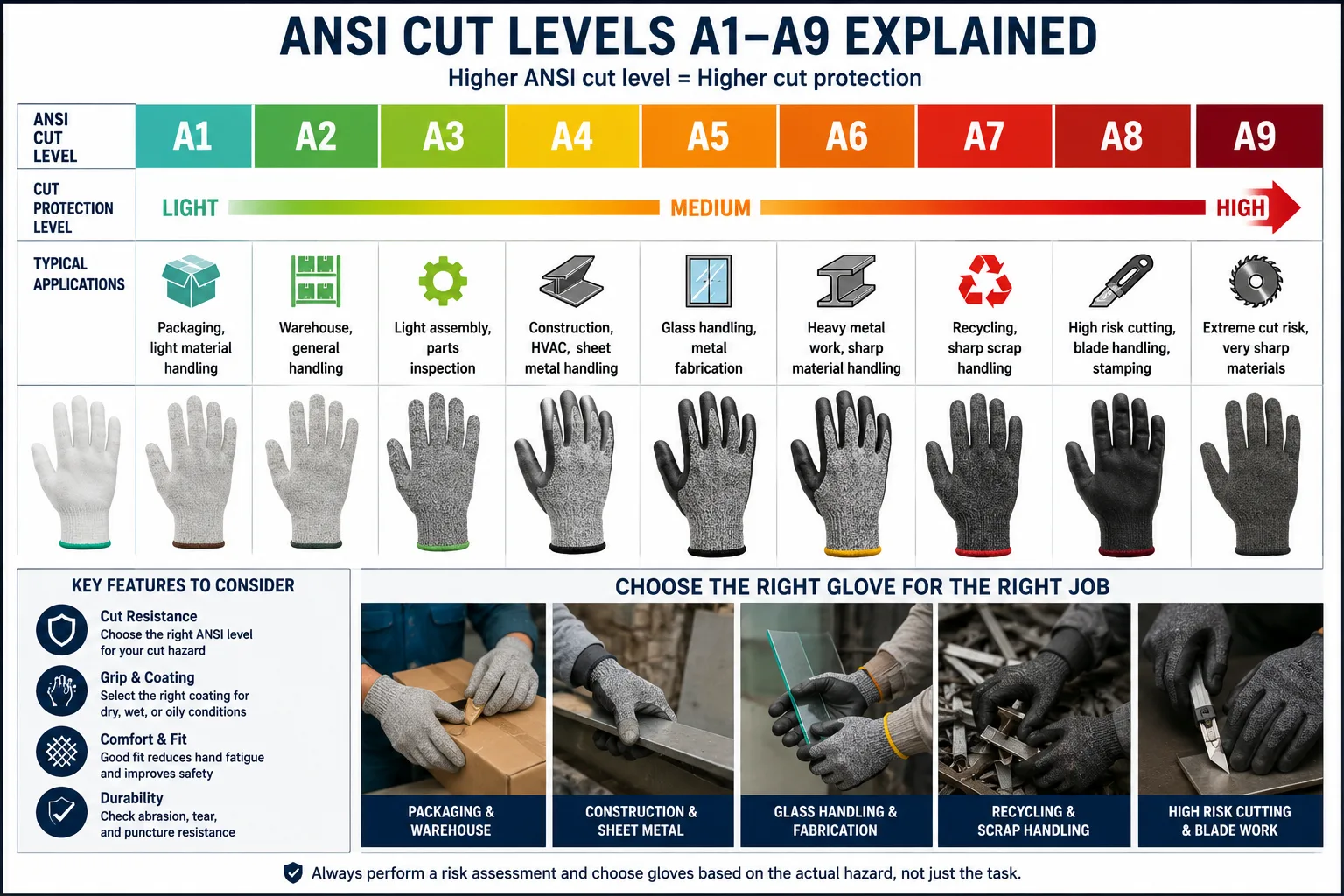
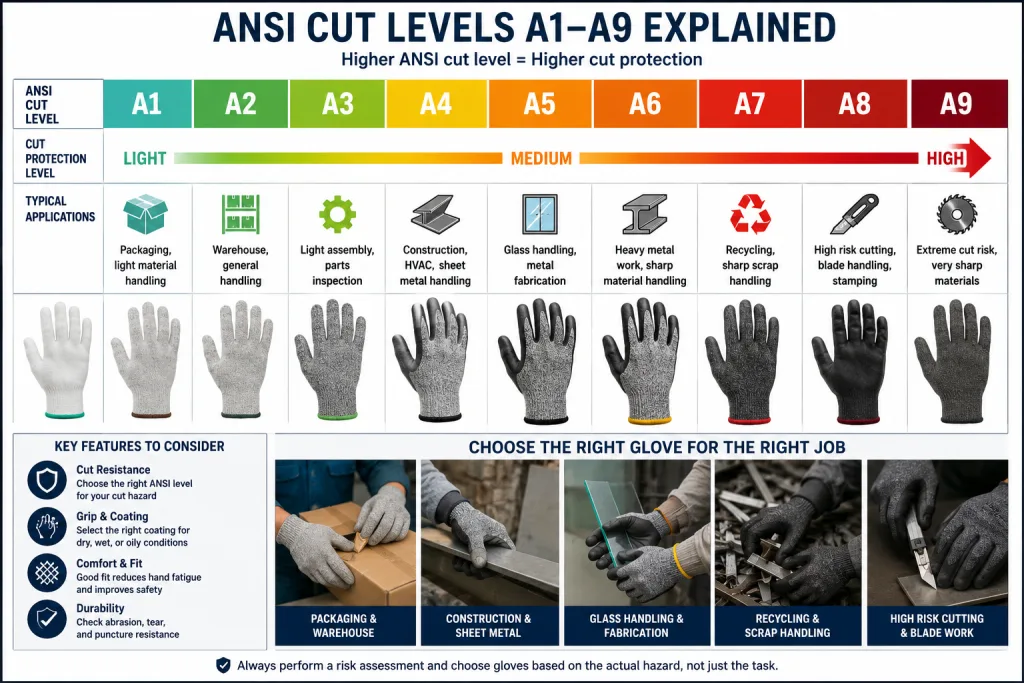
ANSI/ISEA cut levels are commonly used to classify cut-resistant gloves. The scale runs from A1 to A9, with A1 offering lower cut resistance and A9 offering higher cut resistance.
The higher the ANSI cut level, the stronger the glove’s resistance to cutting force.
ANSI A1–A3: Light Cut Protection
ANSI A1 to A3 gloves are usually suitable for lower-risk jobs where workers need comfort, flexibility, and light cut protection.
Common applications include:
- Packaging
- General warehouse work
- Light assembly
- Small parts handling
- Inspection work
- Cardboard handling
- Light maintenance
These gloves are useful when workers need good dexterity and only face minor cut hazards.
ANSI A4–A6: Medium to High Cut Protection
ANSI A4 to A6 gloves are commonly used for jobs with sharper materials and higher injury risk.
Common applications include:
- Construction
- Sheet metal handling
- Glass handling
- Metal fabrication
- HVAC work
- Automotive parts handling
- Cable handling
- Machinery maintenance
This range is often a good choice for industrial buyers because it balances protection, flexibility, grip, and comfort.
ANSI A7–A9: High Cut Protection
ANSI A7 to A9 gloves are designed for high-risk cut hazards. These gloves are used when workers handle very sharp, heavy, or dangerous materials.
Common applications include:
- Heavy metal fabrication
- Glass manufacturing
- Recycling
- Blade handling
- Sharp scrap handling
- Oil and gas work
- Heavy-duty industrial processing
- High-risk maintenance tasks
Higher cut protection can be very useful, but buyers should remember that higher protection may also affect flexibility. The glove should still allow workers to safely grip and complete the job.
Quick ANSI Cut Level Guide
| ANSI Cut Level | General Protection Level | Common Applications |
| A1–A3 | Light cut protection | Packaging, warehouse work, light assembly |
| A4–A6 | Medium to high cut protection | Construction, glass handling, metal work |
| A7–A9 | High cut protection | Heavy fabrication, sharp metal, high-risk cutting tasks |
This table is a general guide. The final glove selection should always be based on the actual hazard, material handled, and work environment.
What Is EN 388?
EN 388 is a European standard used for protective gloves against mechanical risks. It helps buyers understand how a glove performs against hazards such as abrasion, blade cut, tear, puncture, and impact.
You may see EN 388 markings printed on gloves or listed in product specifications. These markings help buyers compare glove performance.
However, EN 388 and ANSI cut levels are not the same system. Do not assume that an EN 388 cut rating is equal to an ANSI cut rating. Always check the full product datasheet before buying.
ANSI vs EN 388: What Buyers Should Know
Both ANSI and EN 388 help buyers compare glove protection, but they use different testing systems and markings.
ANSI cut levels are often shown as A1 to A9. EN 388 ratings usually include several performance numbers or letters for mechanical risks.
When comparing gloves, check:
- ANSI cut level
- EN 388 marking
- Abrasion resistance
- Tear resistance
- Puncture resistance
- Impact protection if required
- Glove coating
- Grip performance
- Material and liner
- Size range
- Comfort and flexibility
A glove with strong cut resistance may still not be suitable if it has poor grip, poor fit, or weak abrasion resistance for the job.
How to Choose the Right Cut-Resistant Gloves
Choosing the right cut-resistant glove depends on the task, hazard, and working environment.
1. Identify the Material Being Handled
Start by checking what workers are touching.
Examples include:
- Cardboard
- Plastic parts
- Glass panels
- Sheet metal
- Steel cables
- Machinery parts
- Scrap metal
- Sharp tools
- Construction materials
The sharper and heavier the material, the higher the cut protection may need to be.
2. Check the Cut Risk Level
Not all cut hazards are equal. Light packaging work may only need lower protection, while glass and metal work may need higher protection.
Ask:
- Are workers handling sharp edges?
- Are materials heavy or light?
- Is there a risk of slipping?
- Are workers using knives or blades?
- Is the hazard occasional or constant?
- Has the workplace had hand injuries before?
This will help you choose a more suitable cut level.
3. Consider Grip Requirements
Grip is extremely important. A worker handling sharp material needs protection, but they also need to hold the material securely.
For dry work, a standard coated palm may be enough. For wet, oily, or slippery environments, buyers should choose gloves with stronger grip performance.
Common palm coatings include:
- Nitrile coating
- PU coating
- Latex coating
- Foam nitrile coating
- Sandy nitrile coating
The best coating depends on the surface, oil exposure, and required flexibility.
4. Check Comfort and Dexterity
A glove that protects well but feels uncomfortable may not be used correctly. Workers may remove it, cut the fingertips, or switch to a lighter glove if the glove is too stiff.
Comfort factors include:
- Correct size
- Breathable liner
- Flexible coating
- Good finger movement
- Light weight
- Soft inner material
- Proper cuff style
For assembly work, dexterity may be very important. For heavy fabrication, higher protection may be more important.
5. Review Abrasion and Puncture Resistance
Cut protection is important, but it is not the only factor. Some jobs also require abrasion resistance or puncture resistance.
For example:
- Construction workers may need abrasion resistance.
- Metal workers may need cut and puncture resistance.
- Glass handlers may need cut protection and grip.
- Oilfield workers may need cut, impact, and oil grip.
- Recycling workers may need high cut and puncture protection.
Always consider the full hazard, not only the cut level.
6. Choose the Right Size Range
Poor sizing reduces protection and comfort. If gloves are too loose, they can slip, reduce grip, or catch on tools. If gloves are too tight, they can cause hand fatigue and reduce movement.
For bulk orders, prepare a size breakdown before requesting a quotation.
Common sizes include:
- S
- M
- L
- XL
- XXL
Some projects may require a wider size range depending on the workforce.
7. Check Certifications and Product Markings
Before buying cut-resistant gloves in bulk, check whether your project requires specific standards or documentation.
Buyers may need:
- ANSI cut level
- EN 388 marking
- Product datasheet
- Test report
- Certificate
- Packaging details
- Labeling requirements
- Country-specific compliance documents
This is especially important for government projects, oil and gas companies, construction contractors, and industrial tenders.
Choosing Cut-Resistant Gloves by Industry
Construction
Construction workers handle rough materials, sharp edges, tools, cables, and metal parts. They usually need gloves with cut resistance, abrasion resistance, and strong grip.
Recommended features:
- Medium to high cut protection
- Durable palm coating
- Good abrasion resistance
- Comfortable liner
- Secure wrist fit
Glass Handling
Glass handling requires strong cut protection and reliable grip. The glove must protect against sharp edges while allowing workers to hold panels safely.
Recommended features:
- Higher cut resistance
- Strong grip coating
- Good dexterity
- Reinforced palm if needed
- Comfortable fit
Metal Fabrication
Metal fabrication involves sheet metal, sharp parts, welding preparation, grinding, and assembly. Workers may need cut resistance, abrasion resistance, and sometimes heat protection.
Recommended features:
- Medium to high cut protection
- Abrasion resistance
- Strong coating
- Optional heat resistance depending on task
- Good durability
Warehouse and Logistics
Warehouse workers may handle boxes, pallets, plastic wrapping, cutters, straps, and light materials. They often need comfort and grip more than extreme cut protection.
Recommended features:
- Light to medium cut protection
- Breathable liner
- Flexible coating
- Good grip
- Low hand fatigue
Oil and Gas
Oil and gas workers may face sharp metal, cables, tools, impact hazards, oil, and slippery surfaces.
Recommended features:
- Cut resistance
- Oil grip coating
- Impact protection if required
- Abrasion resistance
- Strong durability
- High-visibility details if needed
Common Mistakes When Buying Cut-Resistant Gloves
Many buyers focus only on cut level, but that is not enough. The glove must match the full job.
Common mistakes include:
- Choosing the highest cut level without checking dexterity
- Buying gloves that are too thick for detailed work
- Ignoring grip in wet or oily conditions
- Not checking EN 388 or ANSI markings
- Ordering the wrong size range
- Using one glove for every task
- Ignoring abrasion or puncture resistance
- Choosing low-quality gloves that wear out quickly
- Not replacing damaged gloves
- Not training workers on correct glove use
The best glove is not always the thickest or most expensive one. The best glove is the one that matches the hazard and allows the worker to do the job safely.
Buyer Checklist for Bulk Orders
Before requesting a quotation for cut-resistant gloves, prepare the following information:
- Industry
- Job task
- Material being handled
- Required cut level
- ANSI or EN 388 requirement
- Coating preference
- Dry, wet, or oily working condition
- Size range
- Quantity
- Packaging requirement
- Color requirement
- Logo or customization requirement
- Certificate requirement
- Destination country
- Delivery timeline
This information helps suppliers recommend suitable gloves faster and prepare a more accurate quotation.
FAQ
What are cut-resistant gloves used for?
Cut-resistant gloves are used to protect workers from sharp materials such as glass, sheet metal, blades, tools, rough parts, cables, and industrial components.
What cut-resistant glove level do I need?
It depends on the task and hazard. Light warehouse work may need lower cut protection, while glass handling, metal fabrication, and heavy industrial work usually require higher cut protection.
Are higher cut levels always better?
Not always. Higher cut levels may reduce flexibility or comfort. Choose the level that matches the hazard while still allowing workers to grip and move properly.
Is EN 388 Level 5 the same as ANSI A5?
No. EN 388 and ANSI use different testing systems and markings. Always check the full product datasheet before comparing gloves.
Which coating is best for cut-resistant gloves?
It depends on the work environment. Nitrile coatings are often used for oil grip and durability. PU coatings are often used for flexibility and precision work. Latex coatings can provide strong grip in some dry or wet conditions.
Can cut-resistant gloves prevent all hand injuries?
No glove can prevent every injury. Cut-resistant gloves help reduce risk, but workers still need training, safe work procedures, and the correct glove for the specific hazard.
When should cut-resistant gloves be replaced?
Replace gloves when they are torn, heavily worn, contaminated, punctured, lose grip, or no longer provide proper protection.
Need Cut-Resistant Gloves for Your Team?
Choosing the right cut-resistant gloves depends on your industry, task, material, required cut level, and working environment. ACEPPE supplies protective gloves for construction, glass handling, metal fabrication, warehouse work, oil and gas, and general industrial safety.
If you need anti-cut work gloves, send us your required cut level, coating preference, size range, quantity, destination, and certificate requirements.
Our team can help recommend suitable work gloves and prepare a professional quotation for your project.
Contact ACEPPE today to request a cut-resistant gloves quotation.