


Introduction
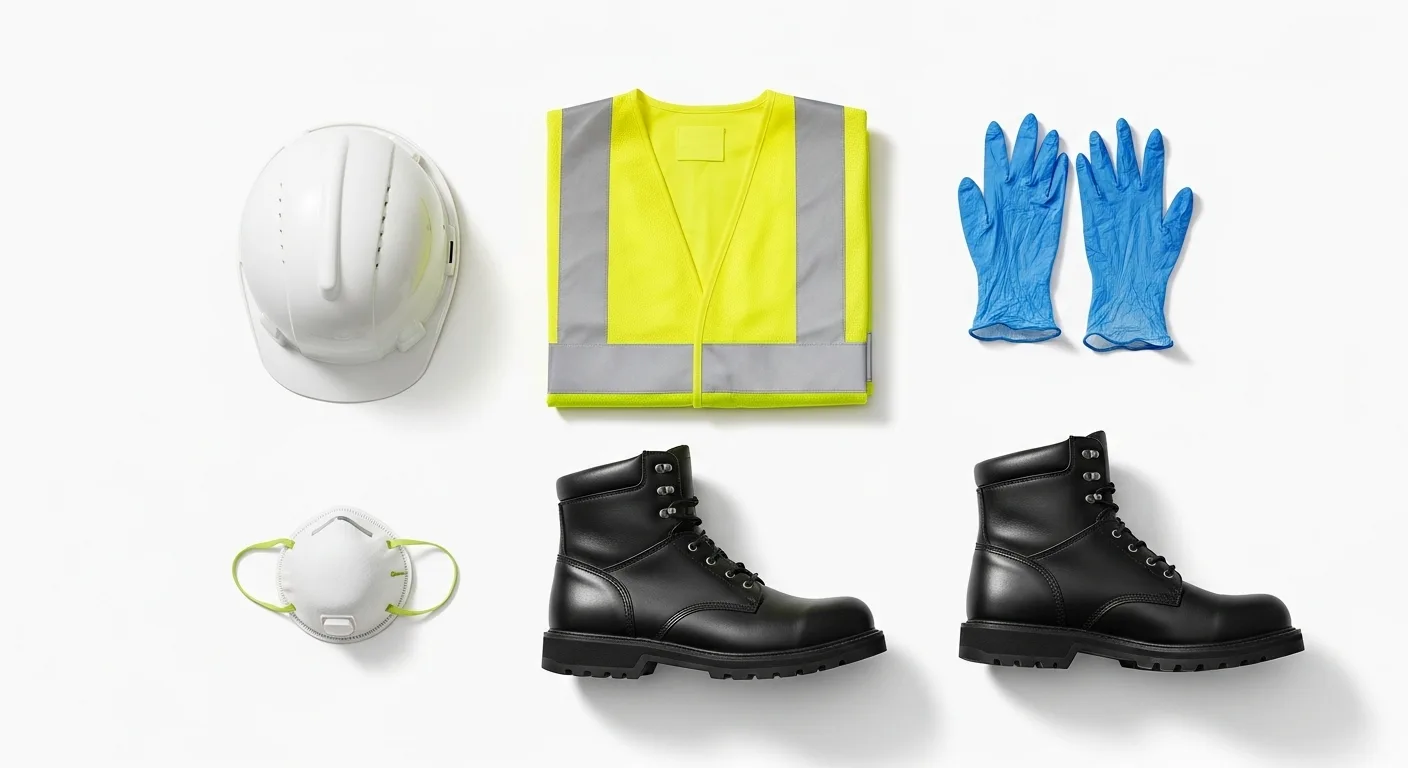
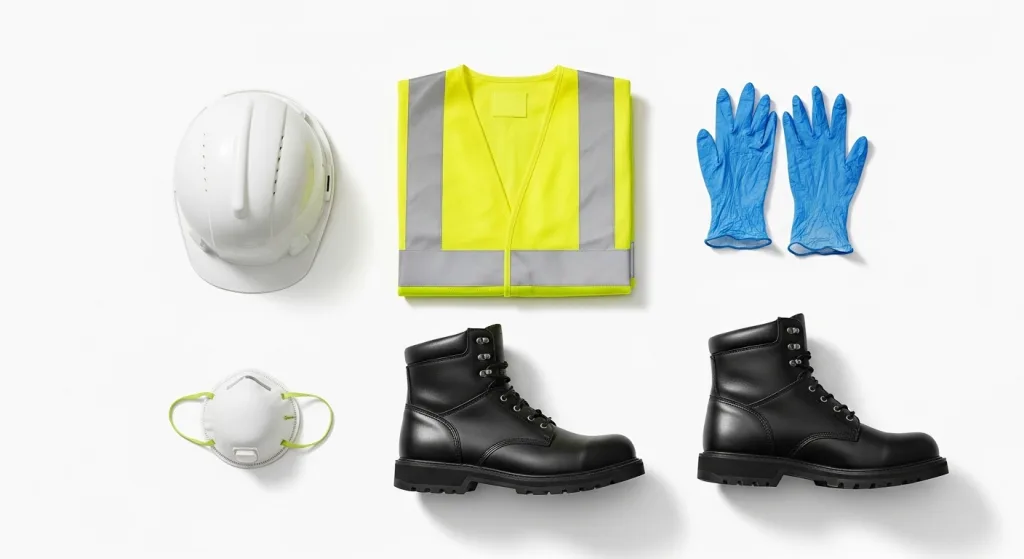
If you are looking for a comprehensive PPE Buyer’s Guide, you are in the right place. In fact, navigating the world of safety gear can be undeniably overwhelming. For instance, with thousands of options for masks, gloves, and boots, how do you know what is right for your team? Therefore, understanding the basics is essential for avoiding fines. Ultimately, the right gear is the only thing standing between your crew and a serious injury.
According to OSHA Personal Protective Equipment, employers must assess hazards and provide compliant gear. However, simply buying generic “safety gear” is not enough. Specifically, you must choose the type that matches your risk.
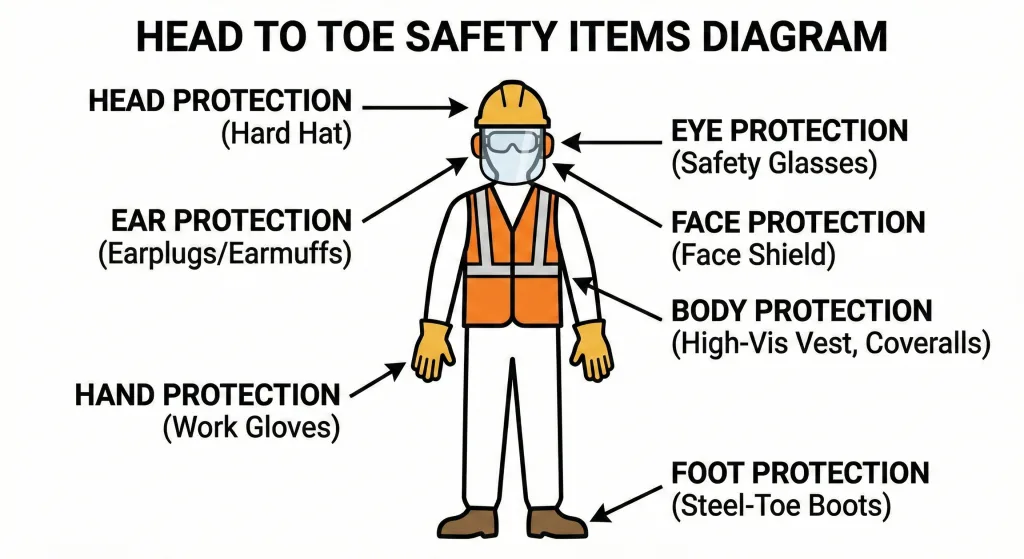
In this PPE Buyer’s Guide, we break down protection from Head-to-Toe. By reading this, you will understand the key differences in every major category.
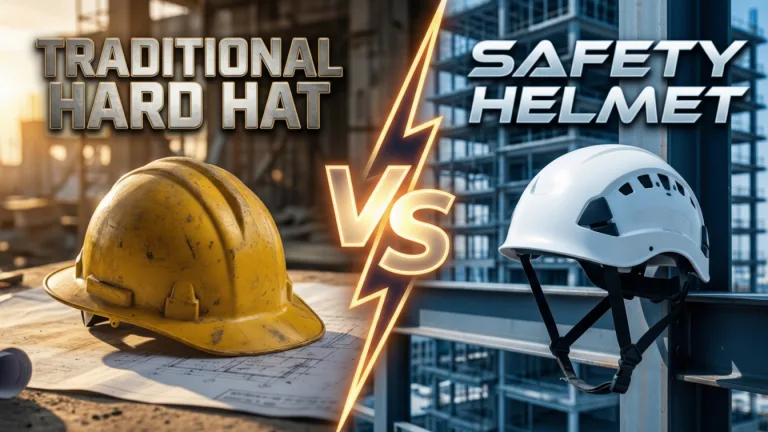
1. Head Protection: Hard Hats vs. Helmets
The first step in our PPE Buyer’s Guide starts at the top. Currently, the debate between traditional hard hats and modern safety helmets is growing.
- The Hard Hat: Best for ground-level work. Generally, it protects against falling objects but can fall off easily.
- The Safety Helmet: Features a chin strap. Consequently, it is essential for working at heights because it stays on during a fall.
- The Key takeaway: Always check for ANSI Type I (Top impact) vs. Type II (Side impact) ratings.
Read the Full Guide: Hard Hats vs. Safety Helmets
2. Face Protection: N95 vs. KN95
Respiratory safety is critical for any buyer. Specifically, understanding the filtration difference is vital for health.
- N95 Masks: The US standard. Crucially, these use headbands to create a tight, air-sealed fit.
- KN95 Masks: The international standard. These use ear loops. Therefore, they are more comfortable for daily use but may not fit as tightly as N95s.
- The Key Takeaway: For example, in medical or high-dust zones, choose N95. On the other hand, for general industrial use, KN95 is often sufficient.
Read the Full Guide: N95 vs. KN95 Masks
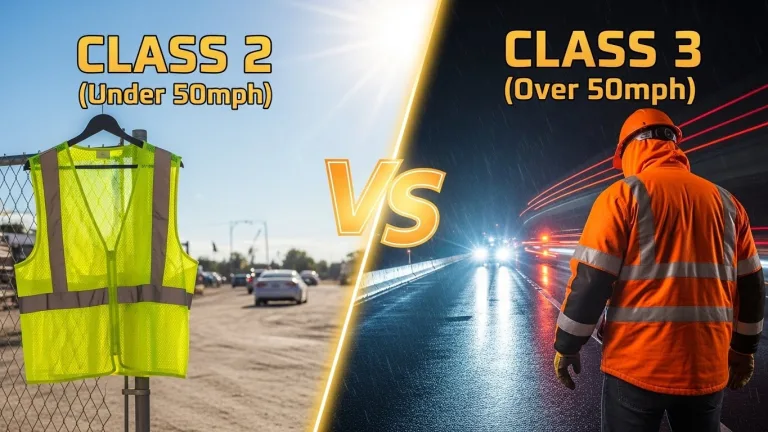
3. Body Protection: Class 2 vs. Class 3 Vests
Visibility prevents accidents. However, not all neon vests are the same. Thus, this section of the PPE Buyer’s Guide focuses on traffic speed.
- Class 2 (Sleeveless): For traffic moving under 50 mph. Typically, these are perfect for parking lots and survey crews.
- Class 3 (With Sleeves): For traffic moving over 50 mph. Furthermore, the sleeves add reflective material, so drivers recognize you as a human instantly.
- The Key Takeaway: Ultimately, if cars are driving fast, you legally need sleeves.
Read the Full Guide: ANSI Class 2 vs. Class 3 Vests
4. Hand Protection: Nitrile vs. Latex
Hand injuries are the most common recordable incident. As a result, choosing the right glove material is non-negotiable.
- Latex: Great for sensitivity. However, it causes common allergic reactions.
- Nitrile: The modern standard. It is stronger, chemical-resistant, and 100% allergy-free.
- The Key Takeaway: Therefore, stop using Latex. Instead, switch your entire team to Nitrile to avoid allergy liability.
Read the Full Guide: Nitrile vs. Latex Gloves
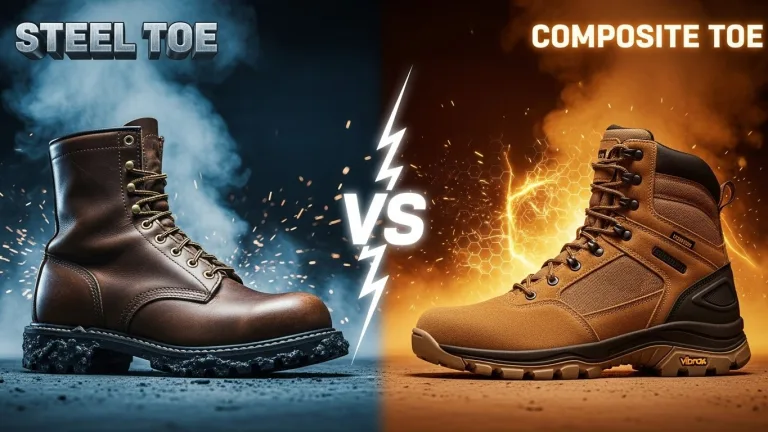
5. Foot Protection: Steel vs. Composite Toe
Finally, our PPE Buyer’s Guide ends at the feet. Basically, you need to protect toes from crushing weight.
- Steel Toe: The classic choice. It is cheaper and thinner. However, it gets cold in winter and sets off metal detectors.
- Composite Toe: Made of carbon fiber or plastic. It is lighter and non-metallic. Therefore, it is perfect for airports and security zones.
- The Key Takeaway: Both meet the same ASTM safety standards. Consequently, you should choose based on comfort and metal detector requirements.
Read the Full Guide: Steel Toe vs. Composite Toe Shoes
Conclusion
Safety is not one-size-fits-all. Ultimately, building a compliant safety program requires understanding the details. Whether you need a Class 3 vest or a Composite toe shoe, this PPE Buyer’s Guide has you covered.