


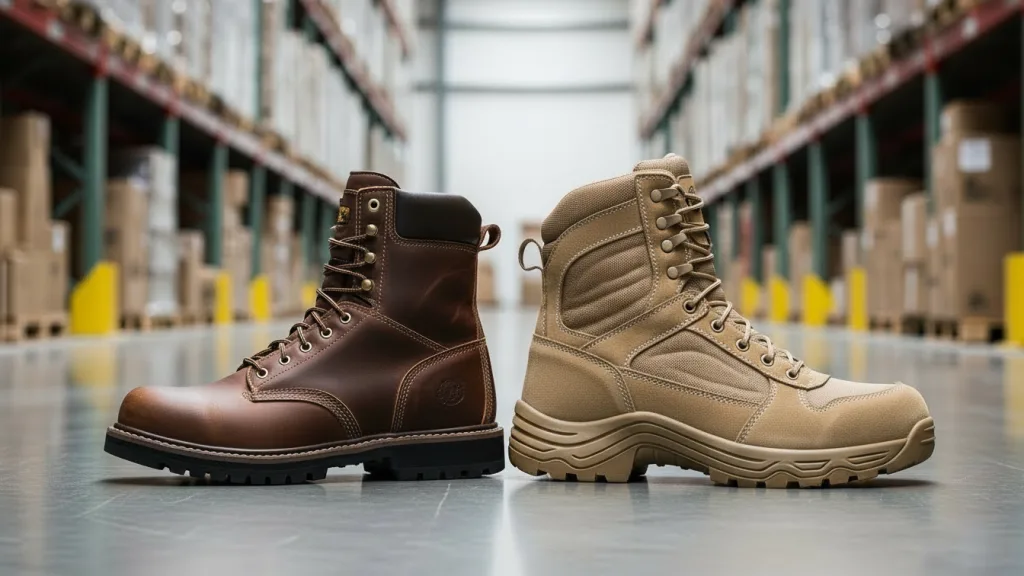
Introduction
Finding the right pair of safety shoes is the most critical decision you will make for your daily comfort. In fact, your feet are often the first victims of a long shift. For example, whether it is a falling pallet, a rusty nail, or just the fatigue of standing on concrete for 10 hours, the wrong footwear can ruin your career. Therefore, choosing high-quality safety shoes is not optional; it is essential.
According to OSHA Foot Protection Standards, employers must ensure workers use protective footwear when hazards exist. However, meeting the legal standard is just the baseline. Additionally, you need comfort.
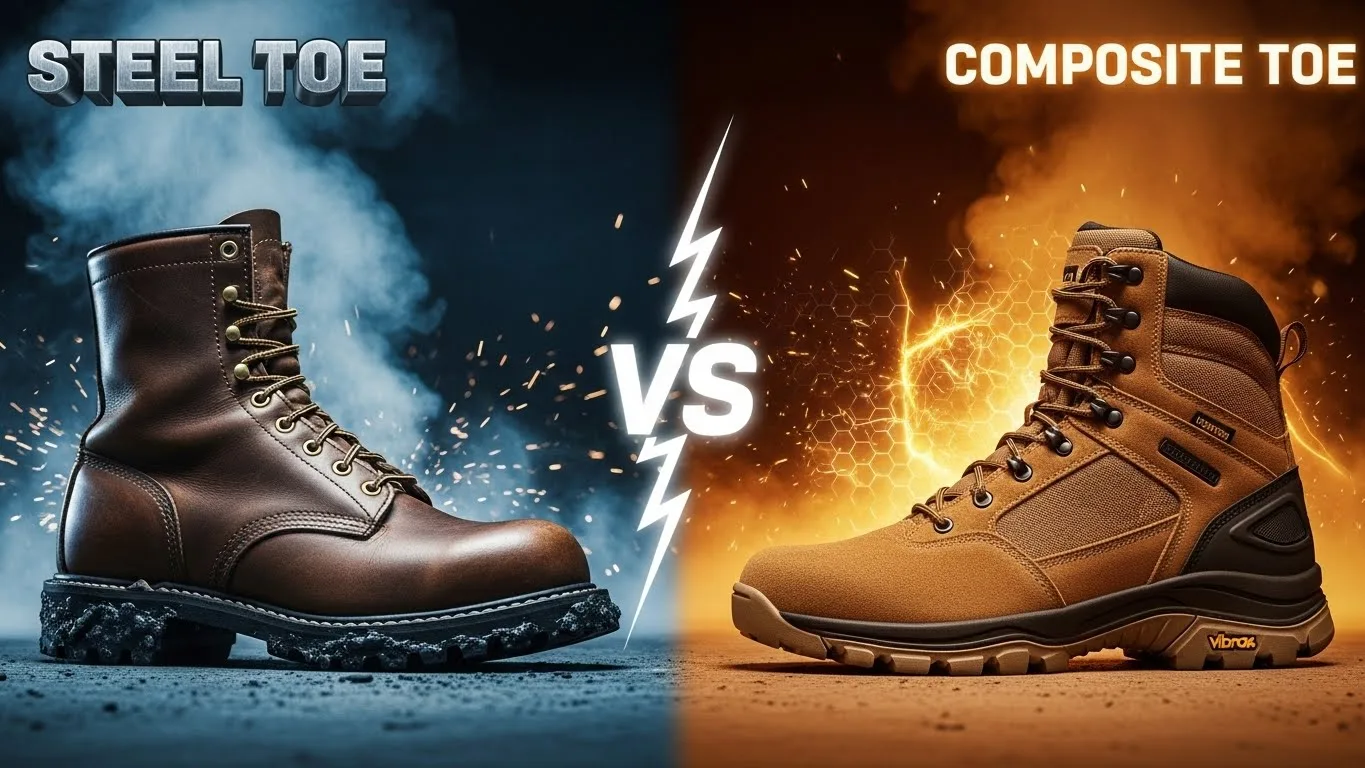
The biggest debate in the industry is simple: Steel Toe vs. Composite Toe. Which safety shoes are better? As experienced suppliers, we are here to settle the score.
1. Steel Toe Boots: The Heavyweight Champion
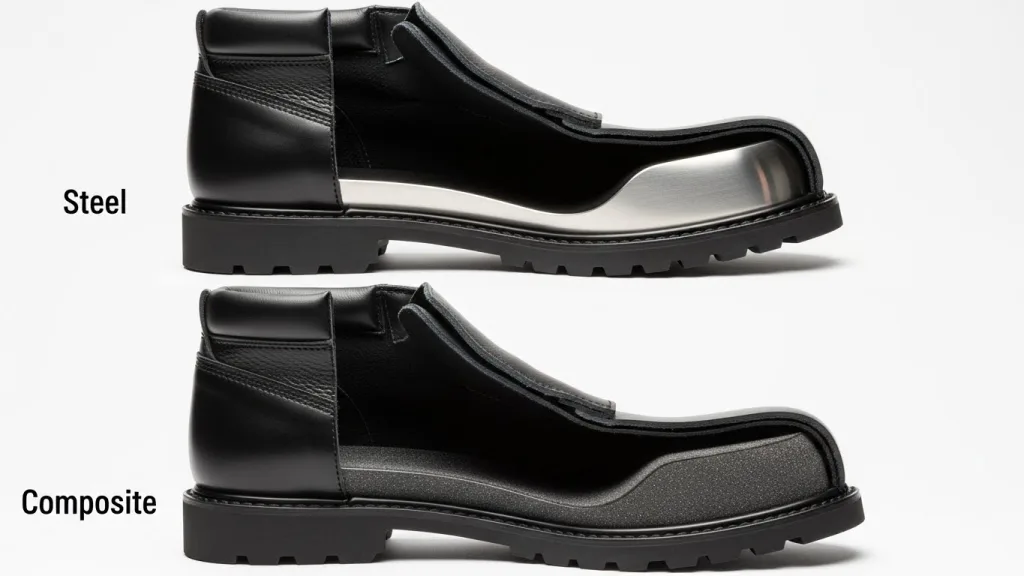
For over 100 years, steel toe safety shoes have been the undisputed industry standard. Specifically, they feature a heavy-duty steel cap inserted into the toe box to crush-proof the boot.
- Best For: Heavy construction, demolition, and environments with heavy falling objects (like bricks or beams).
- The Pros:
- Maximum Protection: First and foremost, steel is still the strongest material against crushing forces. It bends but rarely shatters.
- Cost-Effective: Moreover, they are generally cheaper to manufacture than advanced composites.
- The Cons:
- Weight: They are heavy. Consequently, this can increase fatigue over a 12-hour shift.
- Temperature Sensitivity: Steel conducts cold. Thus, if you work in a freezer or outside in winter, your toes will freeze faster.
2. Composite Toe Safety Shoes: The Modern Contender
In contrast, composite toe safety shoes are made from non-metal materials like Kevlar, carbon fiber, or tough plastic. Furthermore, they meet the same safety standards as steel but behave very differently.
- Best For: Electricians, warehouse workers, airport security, and cold weather work.
- The Pros:
- Lightweight: They are often 30-50% lighter than steel, which significantly reduces leg strain.
- Non-Conductive: Additionally, they do not conduct electricity, making them crucial for electricians.
- Temperature Neutral: As a result, they won’t freeze your toes in winter or burn them in summer.
- The Cons:
- Bulky: However, to get the same strength as steel, the composite cap needs to be thicker, making the shoe look slightly wider.
Shop Our Lightweight Composite Safety Shoes
3. Understanding the Safety Ratings (ASTM & EN)
A pair of safety shoes isn’t safe just because it looks tough. Instead, it must be certified to protect you. Therefore, you should look for these codes on the tongue label:
- ASTM F2413 (USA): The official standard for protective footwear. You can learn more about these testing methods at ASTM International.
- I/75: Impact resistance (protects against a 50lb weight).
- C/75: Compression resistance (withstands 2,500 lbs of pressure).
- EN ISO 20345 (Europe):
- SB: Basic safety shoes (Toe protection only).
- S3: Finally, the highest standard (Toe protection + Water resistant + Anti-puncture).
4. The Hidden Danger: Sole Protection
The toe protects you from falling objects, but the sole protects you from what you step on. Because of this, you must check the bottom of your safety shoes.
- Slip Resistance: For instance, this is essential for restaurant or factory work with oily floors. Look for “SRC” rated soles.
- Puncture Resistance: Similarly, if you work on construction sites with loose nails, you need a steel or woven plate in the sole.
According to the Canadian Centre for Occupational Health (CCOHS), slips and trips are among the most common workplace accidents. Consequently, sole grip is just as important as toe protection.
Conclusion
Your feet are the foundation of your work. Ultimately, if they hurt, your back hurts, and your focus drops. Whether you choose the classic durability of steel toe safety shoes or the lightweight comfort of composite, make sure they are certified.