


Introduction
Choosing between Hard Hats vs Safety Helmets is arguably the most critical decision for your team’s safety. In fact, head injuries are a major risk on any job site. Therefore, picking the right gear is vital. Ultimately, it is not just about avoiding fines; it is about saving lives. For example, a falling brick can be fatal in seconds.
According to OSHA Head Protection Standards, employers must provide helmets where falling object hazards exist. However, the old rules are changing. Consequently, the debate regarding Hard Hats vs Safety Helmets is growing. Recently, modern “climbing-style” helmets have gained massive popularity.
We are here to explain the key differences. By reading this guide, you can decide which option is safer for your crew.
1. The Key Differences Explained
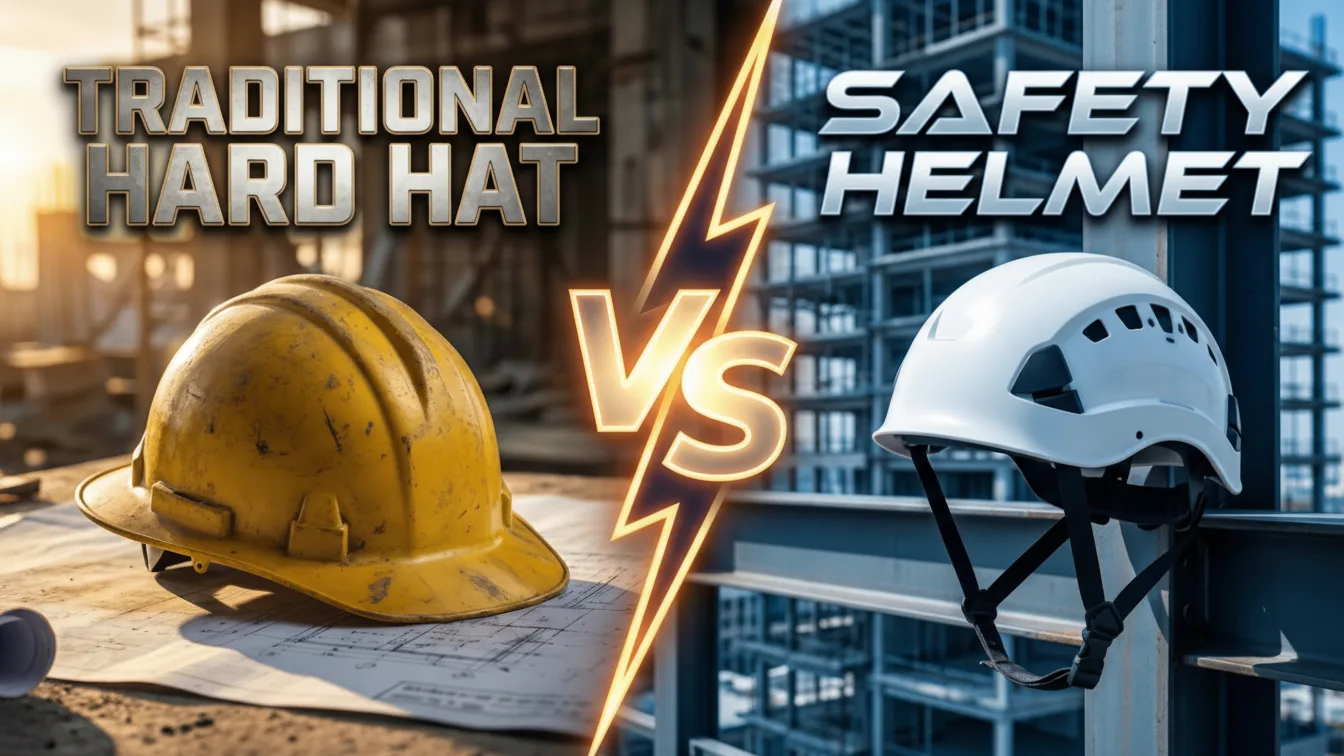
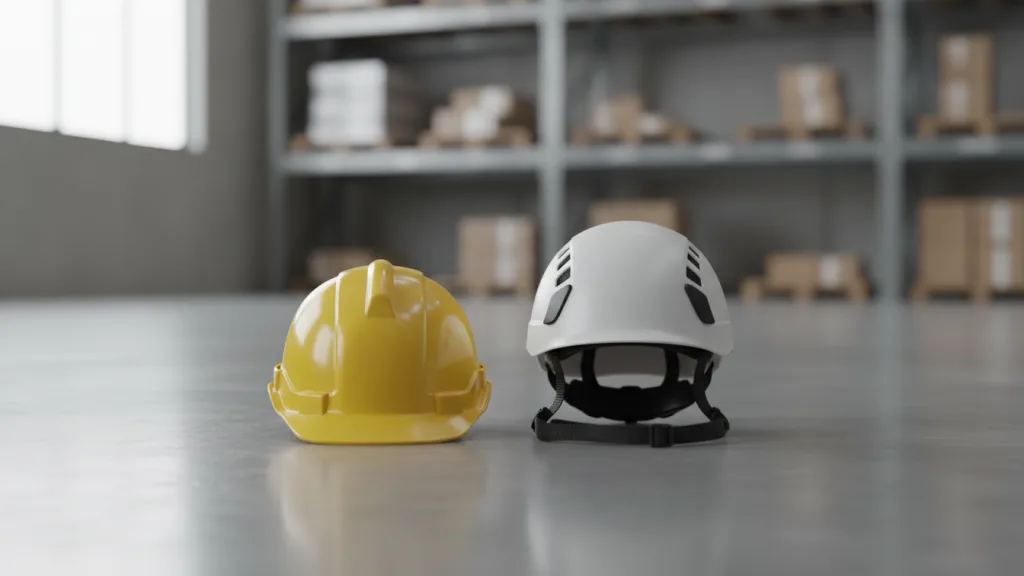
The main difference in the Hard Hats vs Safety Helmets battle is the design structure. Specifically, traditional hard hats are loose, whereas safety helmets are secure.
- The Traditional Hard Hat: This has been the standard for decades. Typically, it features a rigid shell and a simple suspension system.
- Pros: First, they are cost-effective. Additionally, they have a brim for sun shade.
- Cons: Unfortunately, they fall off easily. Moreover, they often lack side protection.
- The Modern Safety Helmet: These look like climbing helmets. Furthermore, they have gained massive popularity recently.
- Pros: Crucially, they have chin straps. As a result, they stay on during a fall.
- Cons: However, they cost more than standard hats.
2. Why the Chin Strap Matters
When comparing these two types of head protection, the chin strap is the game changer. For instance, a standard hard hat can fall off if you look down. If you trip, your hat flies off before your head hits the ground.
In contrast, a safety helmet stays locked on. Therefore, it protects you during the entire fall. For this reason, safety helmets are widely considered the best option for working at heights.
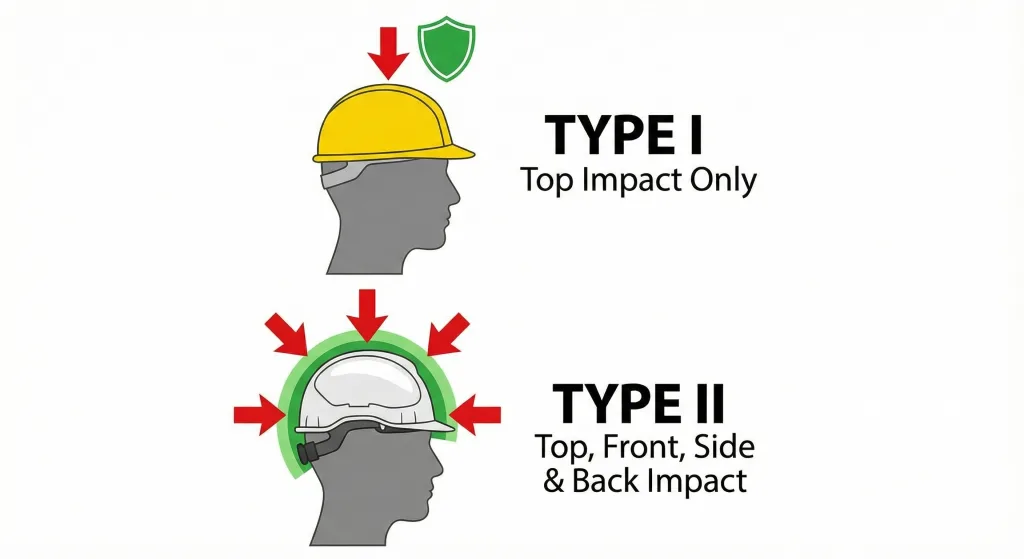
3. Understanding ANSI Ratings (Type I vs Type II)
Besides the shape, you must look at the safety rating. Always check for the ANSI Z89.1 label.
- Type I (Top Only): These only protect the top of the head. Generally, most cheap hard hats are Type I.
- Type II (All Sides): These have foam liners. Consequently, they protect the front, back, and sides. Thus, they are safer for active sites.
You can read more at the International Safety Equipment Association (ISEA).
4. When Should You Retire Your Helmet?
A critical part of the Hard Hats vs Safety Helmets discussion is lifespan. Surprisingly, helmets do expire.
- UV Damage: Sunlight weakens the plastic shell over time. If the shell looks chalky or faded, replace it immediately.
- Impact: Crucially, if your helmet takes a heavy hit, you must throw it away. Even if you cannot see a crack, the structural integrity is compromised.
- The 5-Year Rule: As a general rule, manufacturers recommend replacing the suspension every 12 months and the shell every 5 years.
5. What About Bump Caps?
Finally, there is a third option: the Bump Cap. However, do not confuse this with industrial headgear.
- What it is: A light plastic shell inside a baseball cap.
- Use: Primarily for mechanics or airline workers.
- Warning: Never use them on construction sites. In short, they do not stop falling objects.
See the CDC NIOSH Construction Safety guide for more details.
6. Frequently Asked Questions (FAQ)
Can I wear a baseball cap under my hard hat?
No. Putting a cap under your helmet interferes with the suspension system. Consequently, the helmet may not absorb impact correctly. You should only use manufacturer-approved winter liners.
Are stickers allowed on Hard Hats vs Safety Helmets?
Generally, yes. However, you must not place stickers too close to the brim or cover damage. Specifically, stickers can hide cracks or stress marks that inspectors need to see.
What is the difference between Vented and Non-Vented helmets?
Vented helmets allow airflow to keep you cool. On the other hand, non-vented helmets (Class E) are required for electrical work. Therefore, if you work near high voltage, never use a vented helmet.
Do safety helmets expire?
Yes. Just like hard hats, safety helmets have a lifespan. Usually, the manufacturing date is stamped inside the brim. check it regularly.
Conclusion
The choice of Hard Hats vs Safety Helmets depends on your job. Ultimately, if you work at heights, you need a safety helmet. On the other hand, for ground crews, a hard hat is fine. To summarize, make sure you check the ANSI rating before you buy.