


People outside the trade often think welding is just about joining metal.
But anyone who’s actually done it knows it’s constant exposure to:
- Flying sparks and molten metal
- Intense UV and infrared radiation
- Heat that builds up over time, not just instantly
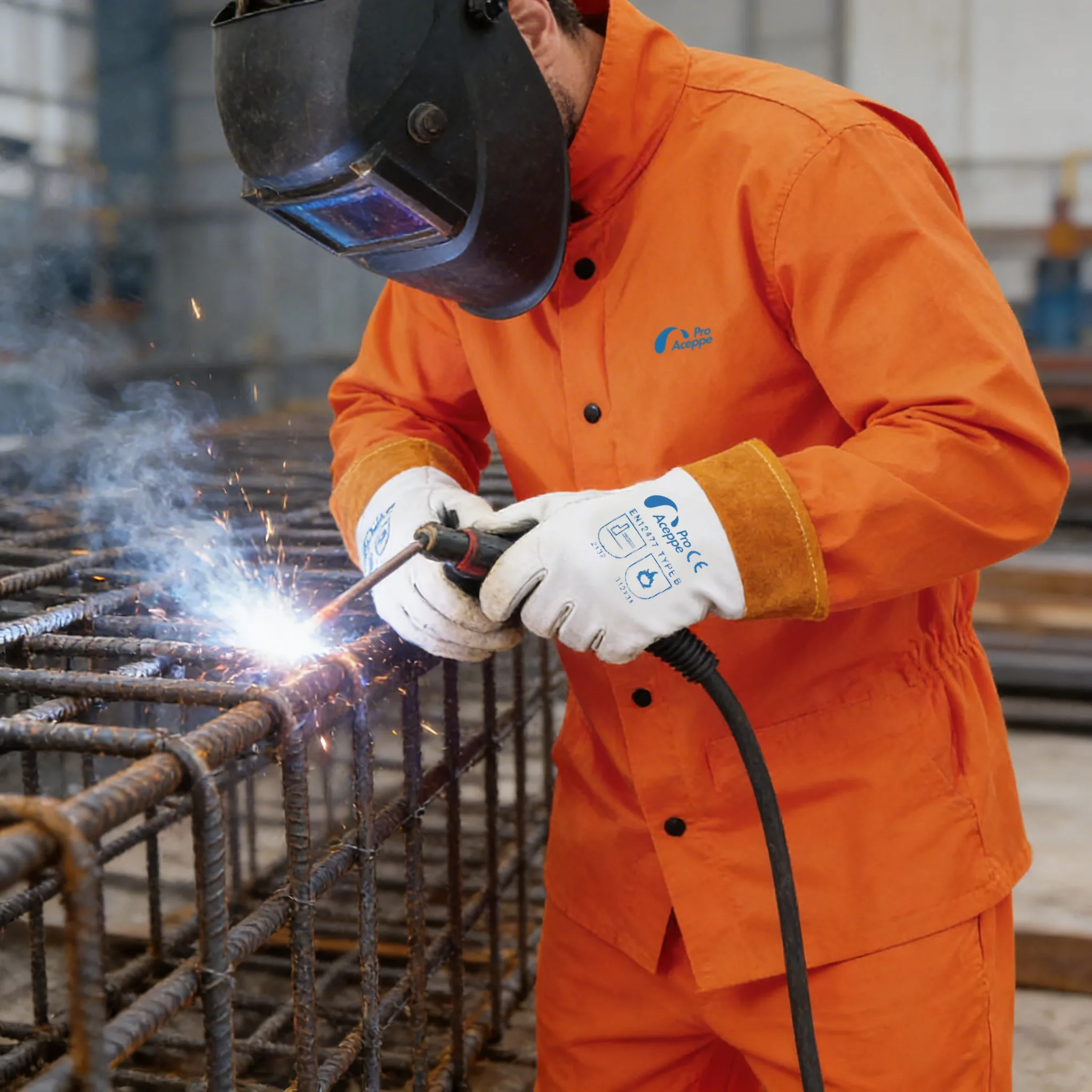
Even basic guides point out that welding exposes you to “sparks, radiation, heat, fumes and metal spatter” () — and none of those are forgiving if you’re not properly covered.
Welding Apparel: You Don’t Notice It… Until It Fails
A lot of beginners treat welding clothing like regular workwear.
It’s not.
Good welding apparel is designed for very specific problems:
- Sparks that don’t just land — they stick
- Heat that doesn’t burn immediately, but builds
- Small gaps where molten metal finds its way in
And that last one happens more often than people admit.
There’s a reason experienced welders pay attention to things like:
- No open pockets facing upward
- Proper cuffs instead of loose sleeves
- Full coverage, even in “quick jobs”
Because the job doesn’t care if it’s quick.
Real Talk from Welders
If you look at how welders talk about safety among themselves, it’s very different from official guides.
“You’ll get the worst sunburn… your skin and eyes will suffer.” ()
“PPE protects you from 99% of dangers — if you actually wear it.” ()
That’s the part most articles don’t emphasize enough:
It’s not that people don’t have the gear.
It’s that they don’t always use it properly.
It’s Not Just Protection — It’s Consistency
A lot of safety content says PPE is the “first line of defense” ().
That’s true — but in real work environments, consistency matters more than theory.
If gear is:
- Too heavy
- Too hot
- Too restrictive
People adjust it. Or worse, skip it.
That’s when small risks stack up.
Good welding apparel isn’t just about protection ratings.
It’s about whether someone will actually wear it for a full shift.
The Accessories Matter More Than People Think
Clothing alone doesn’t solve the problem.
In most welding setups, you still need:
- A reliable helmet for eye and face protection
- Gloves that balance heat resistance with control
- Boots that can handle both impact and hot surfaces
- Additional layers (sleeves, aprons) depending on the job
Most safety guides list these as “required PPE” (), but in practice, each one covers a gap the others can’t.
Miss one, and that’s usually where the injury happens.
Why This Still Gets Ignored
Here’s the uncomfortable truth:
The more experienced someone is, the more likely they are to take shortcuts.
Not because they don’t know better —
but because they’ve “gotten away with it before.”
And that’s usually how habits form.
At the End of the Day
Welding will always involve risk. That’s part of the trade.
But most injuries in this field aren’t unavoidable.
They’re preventable — often with small decisions.
What you wear isn’t just about compliance.
It’s part of how you work, how long you last in the trade, and how safely you get through each day.