


Introduction
In the world of industrial safety, your hands are your most valuable tools—and the most vulnerable. According to the U.S. Bureau of Labor Statistics, hand injuries account for over 20% of all workplace accidents.
The tragedy is that most of these injuries are preventable with the right work gloves. But with so many options on the market, how do you choose? Should you use nitrile gloves for chemicals? Are leather gloves still the best for construction?
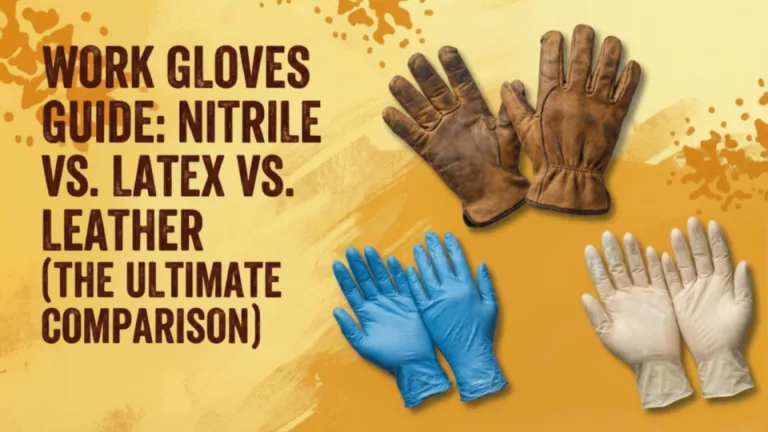
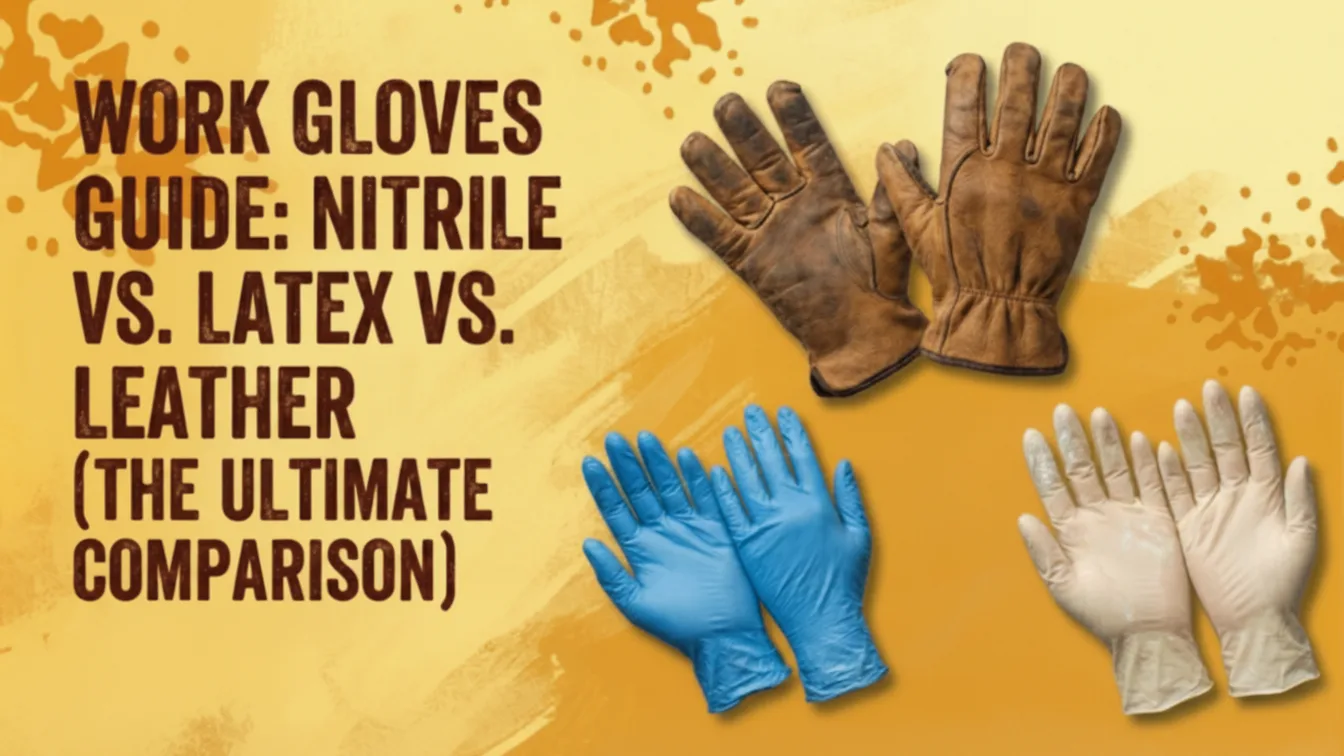
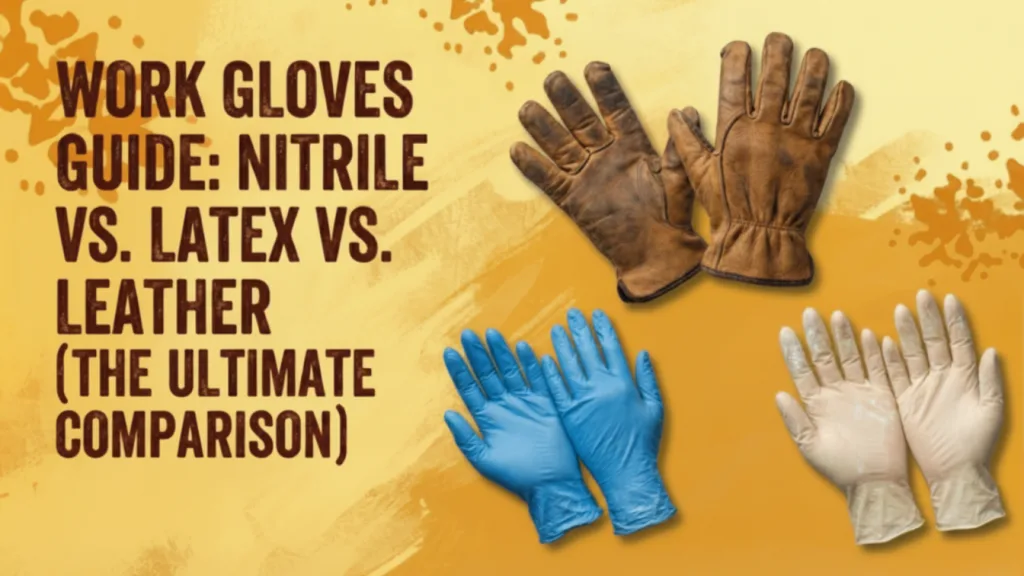
As experienced safety equipment suppliers, we have tested them all. In this guide, we break down the pros and cons of the three most common glove materials: Nitrile, Latex, and Leather, to help you make the safe choice.
1. Nitrile Gloves: The Chemical Champion
Nitrile gloves are made from a synthetic rubber compound. They have rapidly become the industry standard for tough environments.
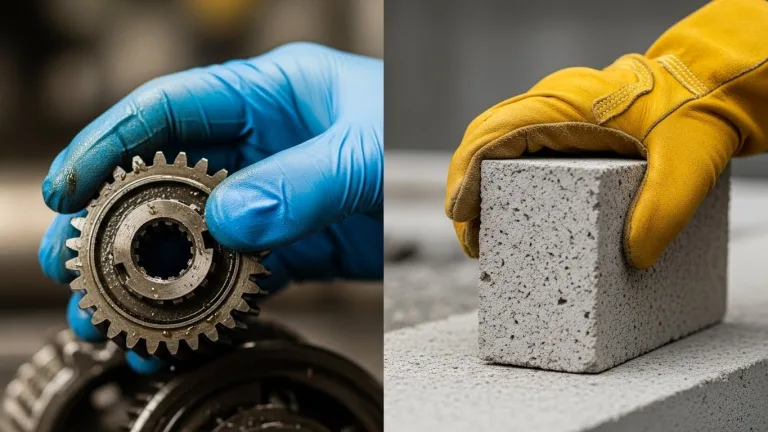
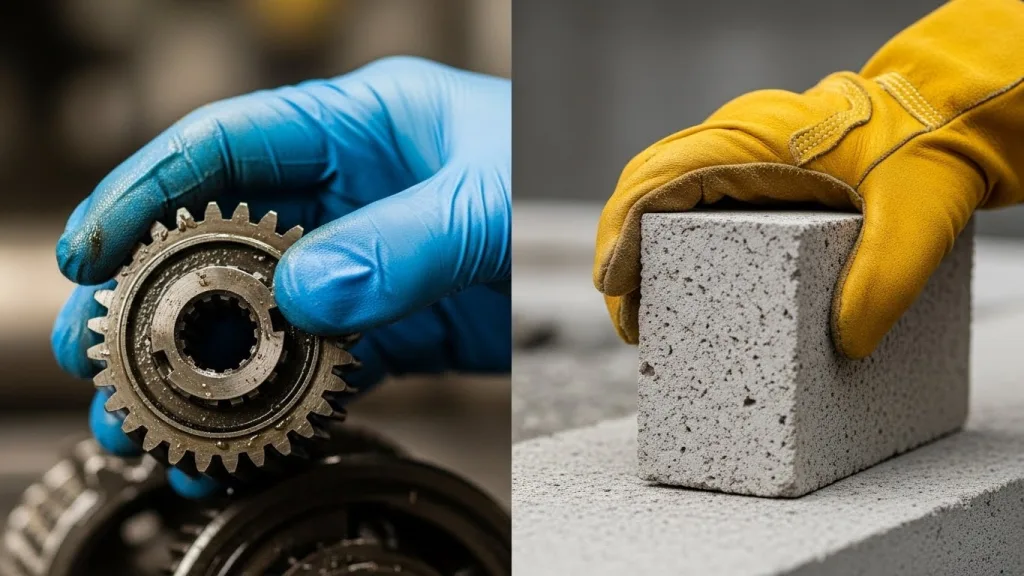
- Best For: Chemical handling, oily mechanical work, and medical tasks.
- The Pros:
- Chemical Resistance: Nitrile offers superior resistance to oils, acids, and petroleum-based chemicals compared to latex.
- Puncture Resistance: They are 3x more puncture-resistant than natural rubber.
- Hypoallergenic: Perfect for workers with latex allergies.
- The Cons: They offer less “stretch” and tactile sensitivity than latex.
2. Latex Gloves: The King of Comfort
Latex is natural rubber. For decades, it was the only option, and it is still popular for specific tasks.
- Best For: Medical examinations, janitorial work, and precision assembly.
- The Pros:
- Fit & Feel: Latex fits like a “second skin,” offering the highest level of touch sensitivity.
- Elasticity: It is incredibly stretchy and comfortable for long shifts.
- The Cons:
- Allergies: Many workers develop latex allergies, which can cause severe skin reactions.
- Chemical Weakness: Latex breaks down quickly when exposed to oil or gas.
3. Leather Gloves: The Construction Classic
When you think of “heavy duty,” you think of leather. Cowhide, pigskin, and goatskin gloves are staples on construction sites.
- Best For: Welding, heavy lifting, masonry, and carpentry.
- The Pros:
- Heat Resistance: Leather protects against sparks and moderate heat, making it essential for welders.
- Abrasion Resistance: It is tough to tear leather, making it great for handling rough bricks or lumber.
- The Cons:
- Poor Dexterity: You cannot handle small screws or parts easily.
- Absorbent: Leather soaks up oil and chemicals, keeping them against your skin (dangerous).
4. Cut Resistant Gloves (The Modern Solution)
If your team handles glass, sheet metal, or sharp blades, material alone isn’t enough. You need Cut Resistant Gloves. These are rated by specific standards:
- ANSI/ISEA 105 (USA): Rated from A1 (Low) to A9 (Extreme).
- EN 388 (Europe): Rated from A to F.
Recommendation: For general warehouse work, look for ANSI Level A3. For glass handling, you need Level A5 or higher. You can verify these standards at ANSI Safety Standards.
Shop Cut-Resistant Safety Gloves
5. How to Choose the Right Size
A glove that doesn’t fit is a safety hazard.
- Too Tight: It restricts blood flow and causes fatigue.
- Too Loose: It can get caught in machinery, leading to “degloving” injuries.
The “Hand Width” Test: Measure across your palm (excluding the thumb).
- 3 inches: Small (S)
- 3.5 inches: Medium (M)
- 4 inches: Large (L)
- 4.5+ inches: Extra Large (XL)
6. Frequently Asked Questions (FAQ)
Can I wash my work gloves?
Nitrile coated gloves and knit gloves can usually be machine washed on cold and air-dried. Never wash-leather gloves in a machine; they will shrink and crack. Use saddle soap instead.
Are nitrile gloves anti-static?
Not automatically. If you work with electronics, you must look for “ESD” (Electro-Static Discharge) rated gloves to prevent zapping sensitive components.
What is the difference between “mil” thickness? “
Mil” measures thickness (1 mil = 0.001 inch). A standard exam glove is 3-4 mil. Heavy-duty industrial nitrile gloves are often 6-8 mil for extra durability.
Conclusion
Your hands earn your living. Don’t protect them with the cheapest option you find at a gas station.
Whether you need the chemical defense of nitrile, the heat resistance of leather, or the modern protection of cut-resistant fibers, making the right choice prevents injury. Check the safety ratings, check the fit, and keep your team safe.