




Introduction
Do you need a professional respirator mask or just a simple dust mask? In the world of industrial safety, you often cannot see the most dangerous hazards. Airborne particles, invisible fumes, and chemical vapors can cause permanent lung damage long before you notice them. Therefore, choosing the right gear is critical.
Many buyers get confused. For example, should you buy a disposable dust mask, a standard N95 mask, or a heavy-duty gas mask with cartridges? As experienced safety equipment suppliers, we know that making the wrong choice isn’t just a waste of money, it’s a safety violation.
According to OSHA Respiratory Protection Standards, using the wrong mask is legally the same as using no mask at all. Below, we break down the differences so you can choose with confidence.
1. What is the Difference: Dust Mask vs. Respirator Mask?
These masks might look similar, but they protect you differently. Therefore, do not mix them up.
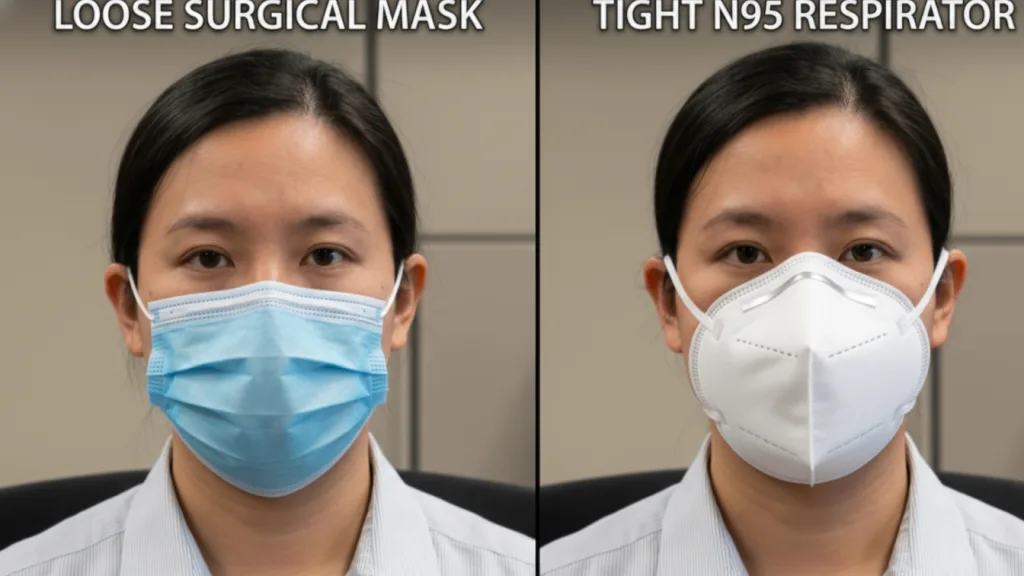
- Dust Masks (Loose-Fitting):Specifically, these are loose-fitting paper masks with one strap. They protect only against non-toxic “nuisance” dusts like pollen, limestone, or sawdust.
- Warning: They do not seal tightly against your face and do not filter small virus particles or hazardous fibers like asbestos.
- Respirator Masks (Tight-Fitting): In contrast, a true respirator mask (like an N95 or Half-Face mask) is designed to fit tightly. It creates a seal against your skin so that air is forced to pass through the filter, not around the edges.
2. Decoding the Ratings: N95 vs. KN95 vs. FFP2
You will often see different letters stamped on masks. Here is the global translation guide:
- N95 (USA Standard): This mask filters at least 95% of airborne particles. It is the gold standard for construction and medical use in the US, certified by NIOSH.
- KN95 (China Standard): Almost identical to the N95 in performance (filtering 95% of particles) but tested under Chinese regulations (GB2626).
- FFP2 / FFP3 (Europe Standard): The European equivalent. FFP2 is roughly equal to N95 (94% filtration), while FFP3 is higher grade (99% filtration).
3. When Do You Need a Gas Mask? (The Cartridge Guide)
Fabric masks (N95) only stop particles (dust, smoke, viruses). They do not stop gases or vapors.
If your team works with chemicals, spray paint, or ammonia, you need a Chemical Cartridge Respirator (often called a Gas Mask). This use activated charcoal to absorb toxins. You must match the color of the cartridge to the hazard:
- Organic Vapor (Black): For paint thinner, lacquer, and glue fumes.
- Acid Gas (White): For chlorine, hydrogen chloride, and sulfur dioxide.
- Ammonia (Green): Specifically for ammonia gas.
- Multi-Gas (Yellow): A combination filter for multiple hazards.
4. Safety Maintenance: When to Throw It Away?
A common mistake in industrial safety is reusing disposable masks for too long.
Pro Tip: If you can smell or taste the chemical inside the mask, the filter is dead. Change it immediately.
Disposable Respirators (N95): These are “single-use.” You should discard them when they become damaged, wet, or hard to breathe through. Never wash an N95 mask.
Reusable Half-Masks: The rubber facepiece can last for years if cleaned. However, the filters/cartridges must be replaced regularly.
5. How to Wear Your Mask Correctly (The Fit Check)
Even the most expensive respirator mask fails if worn incorrectly.
Shave: Facial hair prevents a tight seal. Even a day of stubble can cause a leak. You can check the official CDC Facial Hair Guide to see if your beard style is compatible with a respirator.
Pinch the Nose: Mold the metal clip firmly around your nose bridge to stop air from leaking into your eyes.
The User Seal Check: Cover the mask with your hands and exhale sharply. If air escapes near your eyes or chin, the mask is leaking. Adjust the straps and try again.
6. Frequently Asked Questions (FAQ)
Can I use an N95 mask for painting?
For sanding the paint, yes (N95 stops dust). For spraying the paint, no. You need a respirator with an Organic Vapor cartridge to stop the chemical fumes.
What is the difference between N95 and R95?
The “N” stands for “Not resistant to oil.” The “R” stands for “Resistant to oil.” If you are working in a factory with oil mists, use an R95 or P95 mask.
Does a surgical mask count as PPE?
In a medical setting, yes (for splash protection). In an industrial safety setting, no. Surgical masks are loose-fitting and do not protect the wearer from breathing in hazardous dusts.
Conclusion
Your lungs cannot be replaced. Whether you need a box of N95 masks for dry wall sanding or full-face chemical protection, quality is key. Don’t gamble with cheap imitations.